
Servo's latest updates demonstrate significant strides in embedding capabilities, web compatibility, and performance optimizations, positioning it as a serious contender in the embedded browser engine space.
The December updates to Servo represent more than incremental improvements—they signal a maturation point for this once-experimental browser engine. Originally conceived as Mozilla's next-generation rendering engine, Servo has evolved into a specialized tool for developers needing lightweight web technology embedding. This month's release showcases foundational enhancements that collectively advance its viability as a production-ready component.
Embedding Capabilities Reach New Heights
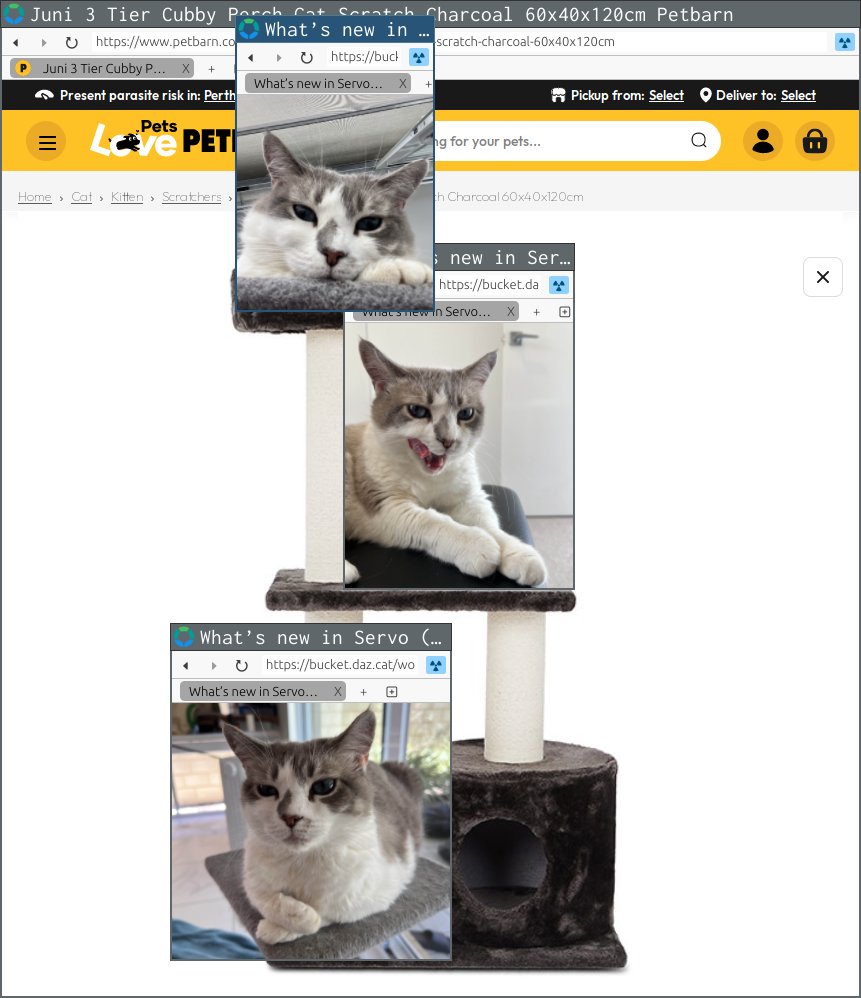
The headline feature—multiple window support—marks a critical milestone. By enabling concurrent browser instances through the embedding API, Servo now accommodates complex application architectures that require isolated browsing contexts. This isn't merely a rendering improvement but an architectural shift enabling richer application design patterns. Complementing this, the new SimpleDialog interface streamlines modal interactions, while the cloneable Servo handle simplifies thread management. Together, these features demonstrate Servo's evolving philosophy: providing robust embedding primitives without compromising on API elegance.
Web Platform Gaps Methodically Addressed
Servo's approach to web compatibility reveals a strategic pattern: implement foundational specs while pragmatically supporting legacy quirks. The addition of contrast-color() in CSS and tee() for readable byte streams represents forward-looking standards adoption. Simultaneously, support for vendor-prefixed properties like -moz-transform and niche attributes like bgcolor acknowledges the messy reality of existing web content. This dual-track development—pioneering new features while retrofitting compatibility—reflects Servo's ambition to be both innovative and practical.
Cryptography receives notable attention with ChaCha20-Poly1305, RSA variants, and ML-KEM key imports expanding SubtleCrypto capabilities. These aren't checkmark features but carefully implemented cryptographic primitives that enable real-world security applications. 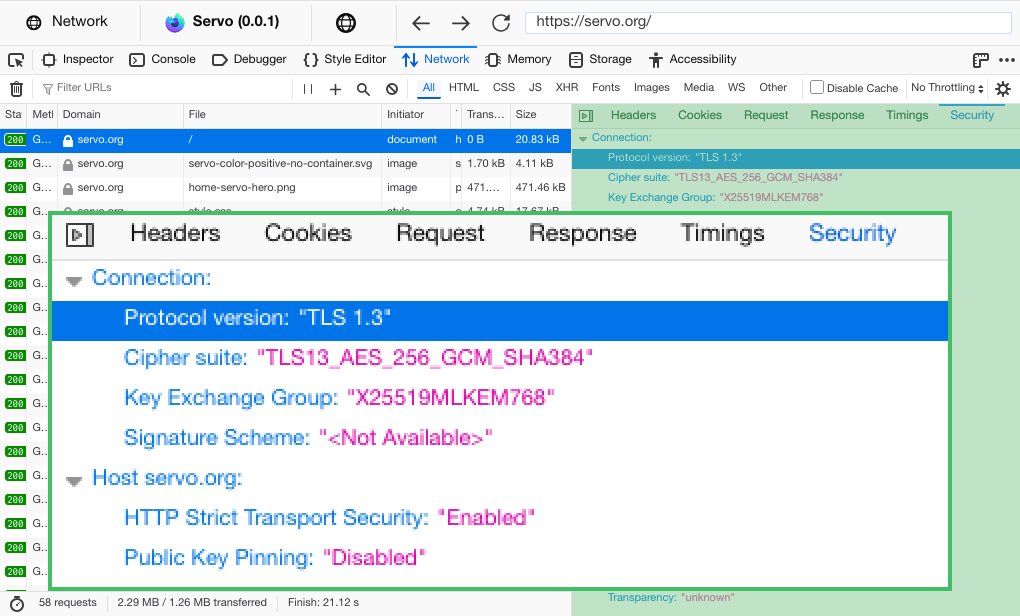 The partially implemented Network Security tab in devtools further evidences this security-first mindset, allowing developers to inspect TLS handshake details—a necessity in today's encrypted web.
Performance: Beyond Benchmarks Servo's performance work transcends conventional speed metrics. The new HTTP cache eviction mechanism solves a persistent resource leakage problem, while memory tracking for SVG elements and fixed media element leaks demonstrate systematic resource management. Optimizations in selector matching and layout reflow target real-world bottlenecks, particularly important in constrained embedded environments. Perhaps most significantly, the ongoing garbage collection safety work—migrating to safer SpiderMonkey GC interfaces—addresses long-standing stability concerns at the engine's foundation.
Sustainability Through Transparency Servo's funding model deserves examination as much as its technical achievements. The transparent allocation of $7,110/month in recurring donations—covering infrastructure costs and internship programs—exemplifies sustainable open-source governance. The emergence of corporate sponsors alongside individual contributors suggests growing ecosystem recognition. This financial stability enables ambitious projects like the Streams API implementation discussed in upcoming FOSDEM talks, where Servo's independence from SpiderMonkey's implementation offers unique insights.
Counterpoint: The Partial Implementation Dilemma Despite impressive progress, the phrase "partial support" recurs throughout the changelog—encoding sniffing, security tab features, and spec compliance gaps remain. This isn't a flaw but an inherent challenge in engine development. Servo's prioritization—focusing on embedding essentials while selectively implementing web features—creates a tension between compatibility and specialization. Projects requiring full DOM/API parity may still find limitations, though Servo's trajectory suggests these gaps will narrow through continued community effort.
Conclusion: An Engine Finding Its Niche Servo's December updates collectively push it closer to its original promise: a modular, embeddable web engine that doesn't sacrifice performance for flexibility. By strengthening embedding APIs, deliberately expanding web compatibility, and hardening foundational systems, Servo is transitioning from research project to practical tool. The true test lies in adoption—whether developers will leverage these capabilities to build new categories of applications that demand both web interoperability and native performance. With its CI system processing millions of tests rapidly and financial backing growing steadily, Servo appears positioned to meet that challenge.
Resources:
Comments
Please log in or register to join the discussion