
A technical retrospective on bridging systems programming with game development through innovative tooling and prototypes.

Simon Hartcher's 2025 project portfolio reveals a fascinating convergence of systems programming rigor and game development pragmatism, centered around Zig's performance characteristics and Godot Engine's accessibility. This intersection represents more than personal exploration—it signals emerging patterns in how developers are rebuilding foundational tooling for modern game creation.
The Zig-Godot Nexus
At the core lies gdzig (GitHub), a hard fork of the abandoned godot-zig project. Unlike traditional bindings, gdzig employs Zig's comptime capabilities to generate optimized structs mirroring Godot's class hierarchy. The innovation extends to its @mixin system—using Zig's AST to surgically replace auto-generated code with hand-tuned implementations. This approach minimizes runtime overhead while maintaining API fidelity, addressing a critical pain point in game engine extensibility.
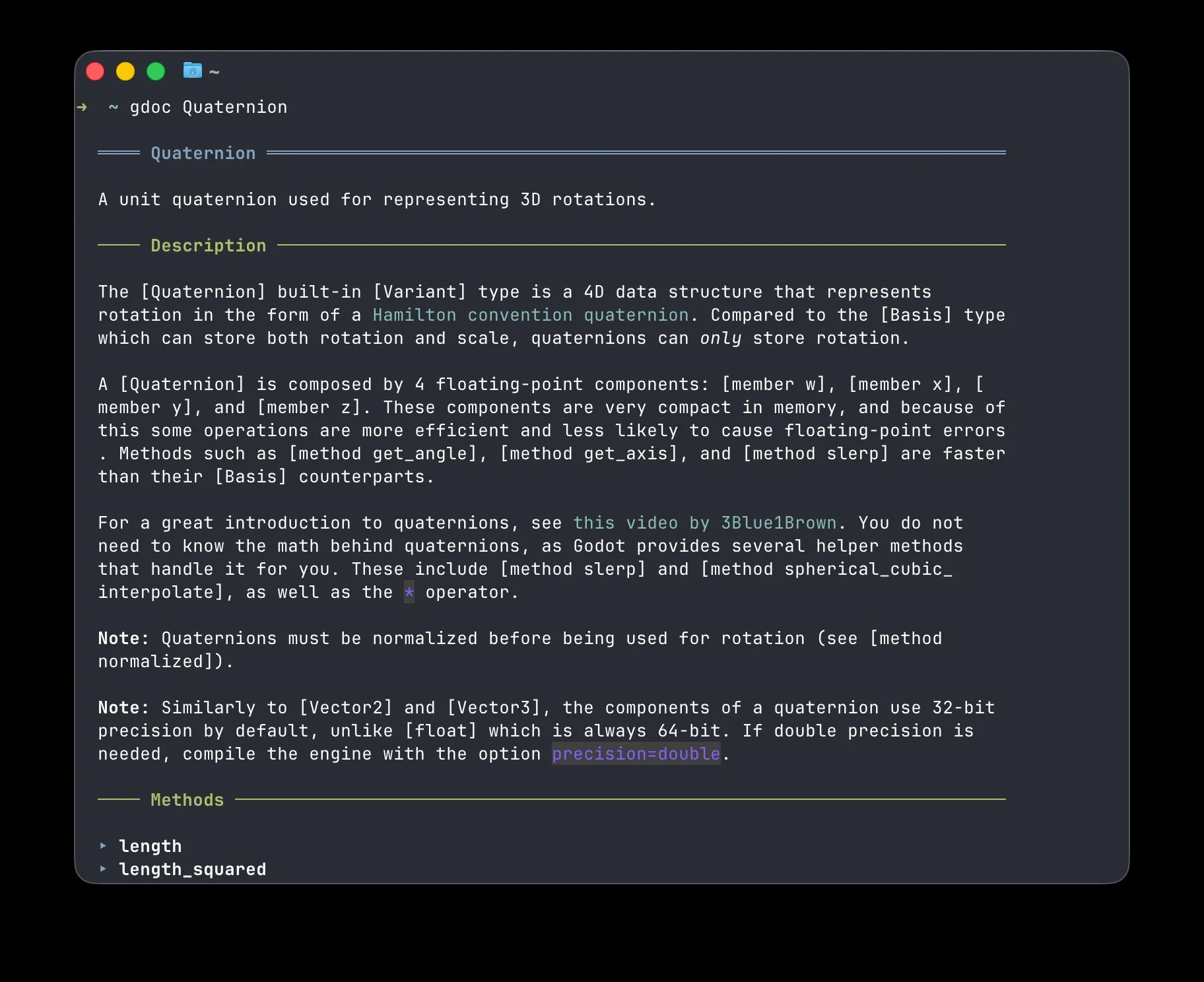
Complementing this is gdoc (GitHub), a CLI documentation tool solving a universal developer frustration: context switching. By parsing Godot's XML source (not just the limited JSON API), it delivers comprehensive class/method references directly in terminals. Hartcher's discovery of documentation gaps in official exports underscores how tooling often evolves from wrestling with real workflow friction.
Game Development Reimagined
Hartcher's Parasite Attack 1984  exemplifies solo developer challenges. Despite its Space Invaders-meets-Missile Command premise, the project confronts hard truths about market viability—a recurring indie developer dilemma. More technically intriguing is ROLLER
  , resurrecting the 1995 game Whiplash/Fatal Racing through reverse engineering. By decompiling debug builds using tools like
 wcdatool and replacing DOS-era functions with SDL equivalents, this project demonstrates how historical preservation drives technical innovation.
Tooling Philosophy
A clear ethos emerges: tools should embody opinionated simplicity. gd-pretty (GitHub) applies Zig's zero-config formatting philosophy to GDScript, rejecting customizable rulesets in favor of convention-driven output. Similarly, bbcodez (GitHub) solves the pragmatic need to convert Godot's BBCode documentation to Markdown—an unglamorous but vital utility.
Prototyping Developer Ecosystems
Beyond core tooling, Hartcher's prototypes reveal systemic gaps:
- feature fund: Crowd-funded feature bounties via GitHub comments (
@featurefund pledge $50) - GamePost: Offline-first social media syndication for indie devs
- votigo: LAN-party voting with dual HTTP/HTTPS support for legacy browsers
- socratodo: ADHD task management using Socratic questioning
These experiments highlight how niche developer needs often escape commercial solutions.
The Human Factor
Technical achievements unfold against personal transformation: CPAP therapy resolving sleep apnea brought unexpected cognitive clarity, enabling deeper focus on health and workflow. Professionally, transitioning from startup CTO to contractor allowed specializing in low-level systems work—notably discovering libsodium's superiority over OpenSSL for cryptographic implementations.

Implications
Hartcher's year demonstrates how Zig's memory safety and metaprogramming can revitalize game tooling. The gdzig project suggests a path toward type-safe, high-performance game scripting that avoids C++'s pitfalls. Yet challenges persist: the market reality confronting PA84 reminds us that technical elegance doesn't guarantee commercial success. As Hartcher optimistically looks toward 2026, his work stands as a testament to rebuilding infrastructure—one Zig struct and Godot binding at a time.
Comments
Please log in or register to join the discussion