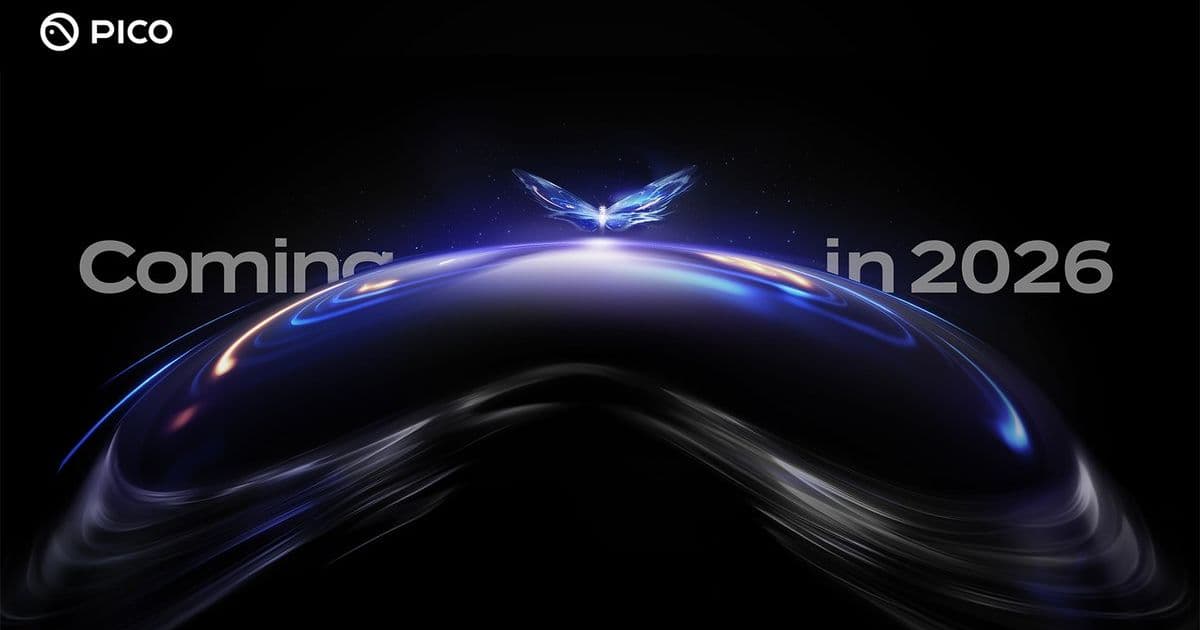
ByteDance's Pico division revealed Project Swan, a high-end XR headset featuring a 4,000-PPI micro-OLED display and powered by Qualcomm's Snapdragon XR2+ Gen 2, alongside the launch of its new Pico OS 6 operating system.
ByteDance's Pico division has unveiled details about its upcoming Project Swan XR headset, set to launch later this year with specifications that position it as a premium competitor in the virtual and mixed reality market. The headset features a groundbreaking 4,000-PPI micro-OLED display, representing one of the highest pixel densities available in consumer XR devices.
The display technology represents a significant leap forward in visual fidelity for immersive experiences. At 4,000 pixels per inch, the micro-OLED panels promise exceptionally sharp text rendering and detailed visuals that could help reduce eye strain during extended use. This density approaches the limits of human visual acuity, potentially making virtual content appear as clear as physical objects when viewed through the headset.
Powering Project Swan is Qualcomm's Snapdragon XR2+ Gen 2 processor, the latest iteration of Qualcomm's XR platform. This chipset builds upon the foundation established by its predecessors with enhanced performance capabilities, improved thermal management, and better power efficiency. The XR2+ Gen 2 is specifically designed for extended reality applications, offering the computational horsepower needed for complex 3D rendering, spatial computing, and AI-powered features.
Alongside the hardware announcement, Pico introduced Pico OS 6, its next-generation operating system for XR devices. While specific features weren't detailed in the initial announcement, new OS versions typically bring improved user interfaces, enhanced application support, and expanded developer tools. The timing suggests Pico OS 6 will serve as the software foundation for Project Swan and potentially future Pico devices.
ByteDance's entry into the premium XR space with Project Swan represents a strategic move to compete with established players like Meta, Sony, and Apple. The company has been steadily building its XR portfolio through its Pico brand, which it acquired in 2021. This latest offering appears to target the high-end segment of the market, where visual quality and processing power are paramount.
The combination of cutting-edge display technology and current-generation processing power positions Project Swan as a technically impressive device. However, success in the XR market depends on more than just specifications. Factors such as content ecosystem, pricing, comfort, and unique features will ultimately determine the headset's market reception.
Industry analysts note that the 4,000-PPI specification puts Project Swan in direct competition with other high-end displays in the XR space, though actual visual quality will depend on factors beyond pixel density, including color accuracy, refresh rate, and optics. The use of micro-OLED technology also suggests a focus on delivering vibrant colors and deep blacks, which are hallmarks of OLED displays.
As the launch date approaches, more details about Project Swan's features, pricing, and availability are expected to emerge. The XR industry continues to evolve rapidly, with manufacturers pushing the boundaries of what's possible in terms of visual fidelity and processing power. Project Swan represents ByteDance's most ambitious XR hardware effort to date, potentially signaling the company's long-term commitment to the extended reality space.
The announcement comes amid growing interest in XR technologies across multiple sectors, from gaming and entertainment to enterprise applications and education. As hardware capabilities continue to advance, the line between virtual and physical experiences becomes increasingly blurred, opening new possibilities for how people interact with digital content.
For developers and content creators, Project Swan's specifications suggest a platform capable of supporting sophisticated applications that demand high visual fidelity and processing power. The combination of advanced hardware and a new operating system could provide opportunities for innovative experiences that leverage the latest XR capabilities.
ByteDance's approach with Project Swan appears to follow a pattern seen across the tech industry, where companies are investing heavily in next-generation computing platforms. The success of this strategy will depend on execution across multiple dimensions, from hardware quality to software ecosystem development and market positioning.
As the XR market continues to mature, devices like Project Swan help push the industry forward by establishing new technical benchmarks. Whether this particular headset achieves commercial success remains to be seen, but its specifications indicate that ByteDance is serious about competing in the premium XR segment.
The launch of Pico OS 6 alongside Project Swan suggests a coordinated strategy to create a cohesive software and hardware experience. This integrated approach has proven successful for other tech companies and could help differentiate Pico's offerings in an increasingly crowded market.
With Project Swan's release expected later this year, the XR industry will be watching closely to see how ByteDance's latest effort performs in terms of both technical achievement and market impact. The combination of high-end specifications and new software platform represents a significant investment in the future of extended reality computing.
Comments
Please log in or register to join the discussion