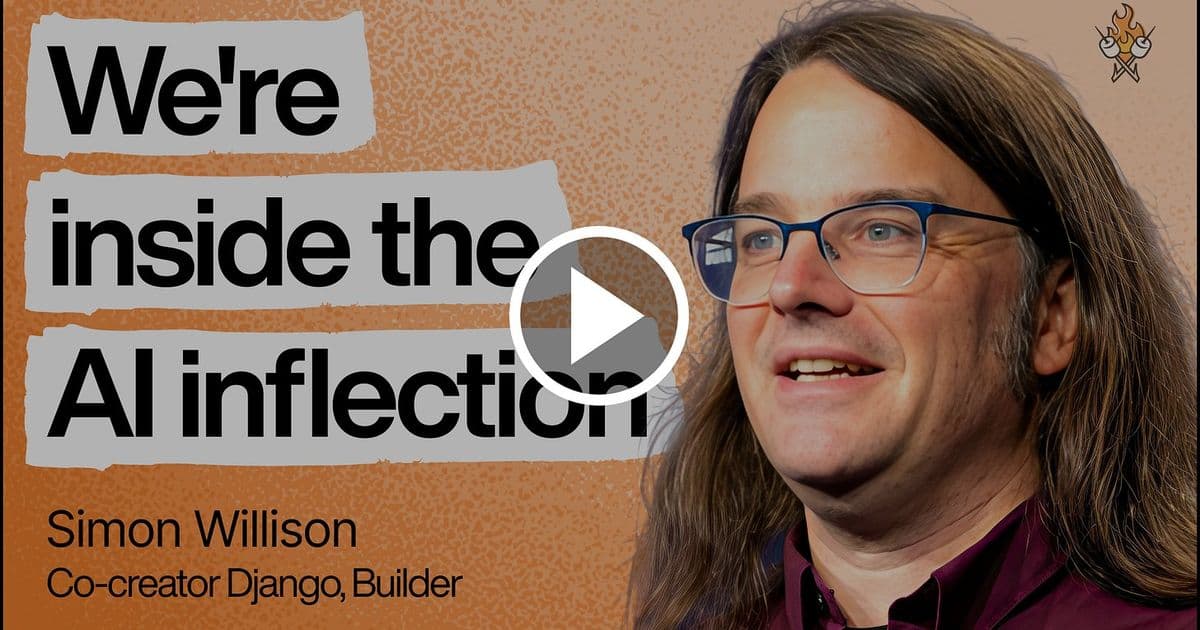
In a wide-ranging Q&A, Simon Willison discusses how the November releases of GPT-5.1 and Opus 4.5 marked an inflection point for coding, the challenges of managing multiple AI coding agents, and the broader implications of AI on software development.
Simon Willison, a prominent independent software developer and blogger, recently sat down with Lenny Rachitsky to discuss the transformative impact of recent AI releases on software development. The conversation, featured in Lenny's Newsletter, centered on how the November releases of GPT-5.1 and Opus 4.5 have fundamentally changed the coding landscape.
Willison describes these releases as an "inflection point" for coding, marking a shift where AI assistance has moved from being a helpful tool to becoming an integral part of the development process. "We've passed the inflection point," Willison states, suggesting that the capabilities demonstrated by these models have fundamentally altered how developers approach their work.
One of the most striking observations from Willison is the exhaustion that comes with managing multiple AI coding agents. As developers increasingly rely on various AI tools for different aspects of their workflow, the cognitive load of orchestrating these agents has become a significant challenge. "It's not just about having the tools anymore," Willison explains, "it's about managing the complexity of having multiple agents working on different parts of a project simultaneously."
The conversation touches on several key themes that are reshaping software development:
The Dark Factory Future Willison predicts the emergence of "dark factories" in software development - fully automated development environments where human oversight becomes minimal. This vision aligns with broader industry trends toward increased automation and reduced human intervention in routine coding tasks.
Automation Timelines When asked about when we might see widespread automation in software development, Willison suggests that the timeline is accelerating faster than many expect. The capabilities demonstrated by GPT-5.1 and Opus 4.5 have compressed what was previously thought to be a multi-year transition into a matter of months.
Trust and Reliability A significant portion of the discussion focuses on the trust issues surrounding AI-generated code. Willison emphasizes that while these models can produce impressive results, developers must remain vigilant about code quality, security implications, and the potential for subtle bugs that AI might introduce.
The Human Element Despite the advances in AI coding capabilities, Willison maintains that human developers remain essential for creative problem-solving, architectural decisions, and understanding the broader context of software projects. The role is evolving rather than disappearing.
Tooling and Integration The interview explores how development environments are adapting to incorporate AI assistance more seamlessly. Willison discusses the challenges of integrating multiple AI tools into existing workflows without creating additional complexity.
Economic Implications Willison touches on how these technological shifts are affecting the economics of software development, from changing skill requirements to altering the cost structure of development projects.
Learning and Adaptation A key theme is how developers need to adapt their learning strategies in this new landscape. Willison suggests that understanding how to effectively collaborate with AI tools is becoming as important as traditional programming skills.
The conversation also delves into more technical aspects, including:
- The specific capabilities that made GPT-5.1 and Opus 4.5 stand out from previous releases
- How different AI models excel at different types of coding tasks
- The importance of context windows and how they affect coding performance
- The role of specialized models versus general-purpose ones in development workflows
Willison's perspective is particularly valuable because of his background as both a developer and an observer of the AI landscape. His insights bridge the gap between technical implementation and broader industry trends, making the discussion relevant for both practitioners and those trying to understand where software development is headed.
Looking Forward
The interview concludes with Willison's thoughts on what comes next. He predicts continued rapid advancement in AI coding capabilities, but also emphasizes that the most significant changes may come from how developers adapt their workflows and processes to work effectively with these new tools.
Context and Significance
This discussion comes at a crucial time in the evolution of AI-assisted development. With major players like OpenAI, Anthropic, and others continuously releasing new models, understanding the practical implications of these advances is essential for anyone involved in software development.
Willison's observations about the exhaustion of managing multiple AI agents is particularly noteworthy, as it highlights a challenge that many developers are likely experiencing but may not have articulated clearly. This insight could drive future tool development and workflow improvements.
Broader Industry Impact
The themes discussed in this interview resonate with broader industry trends. The move toward automation, the changing nature of developer roles, and the increasing importance of AI literacy are all themes that are playing out across the tech industry.
As AI continues to advance, conversations like this one provide valuable perspective on how these technologies are actually being used in practice, rather than just their theoretical capabilities. Willison's grounded, practical approach to discussing these topics makes his insights particularly valuable for understanding the real-world impact of AI on software development.
The full interview is available on Lenny's Newsletter and YouTube channel, providing a comprehensive look at how AI is reshaping the development landscape and what developers can expect in the coming months and years.
Comments
Please log in or register to join the discussion