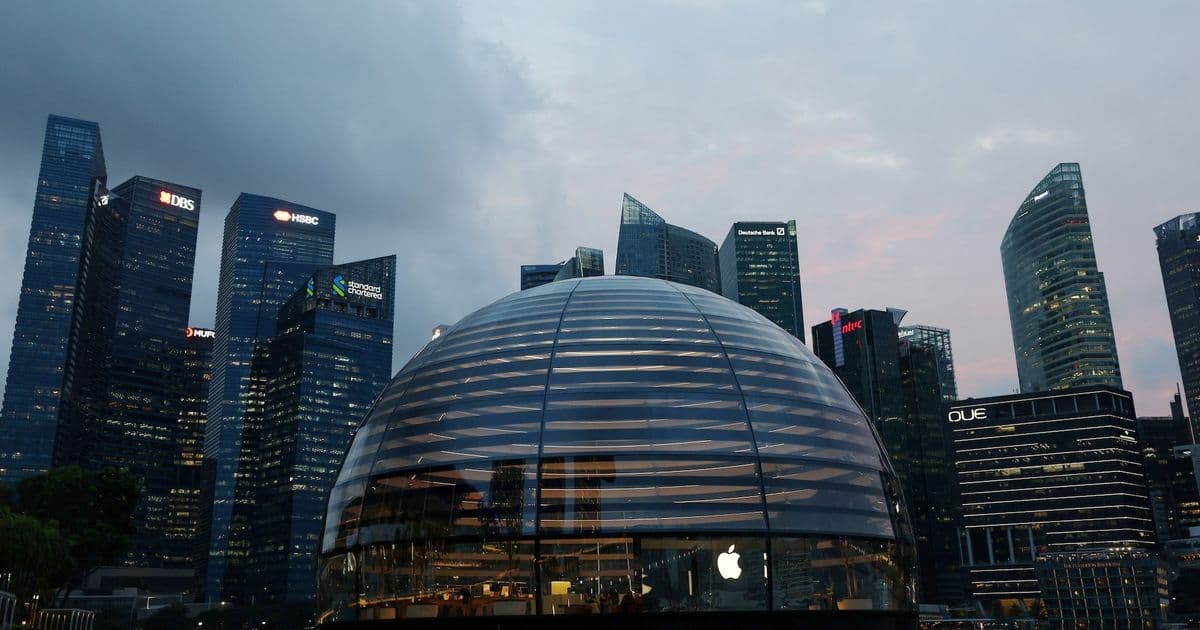
As US-China tech rivalry intensifies, Singapore is positioning itself as a neutral hub for AI development, offering companies regulatory clarity and strategic advantages in the global AI landscape.
In an increasingly divided global technology landscape, Singapore is quietly establishing itself as a preferred destination for AI companies seeking refuge from the regulatory tensions between the United States and China. This Southeast Asian nation is transforming from its traditional role as an East-West gateway to a neutral ground where AI innovation can flourish without the geopolitical constraints that increasingly define the tech sector.
The strategic positioning of Singapore comes at a critical moment. The United States has implemented increasingly stringent export controls on advanced AI technologies, while China has doubled down on its domestic AI development amid growing international scrutiny. This regulatory divergence has created a complex environment for global AI companies that must navigate competing requirements and potential restrictions.
"Singapore is offering something increasingly rare in today's tech landscape: regulatory predictability," notes Dr. Chen Wei, an AI policy researcher at the National University of Singapore. "Companies can build and deploy AI systems with clearer guidelines, reducing the uncertainty that plagues operations in larger geopolitical arenas."
Evidence of Singapore's growing appeal is visible across the AI ecosystem. Chinese AI startups, facing both domestic pressures and international limitations, are establishing Singaporean subsidiaries to access global markets and talent. Similarly, Western companies are using Singapore as a base for AI research and development that might face restrictions in their home countries.
The Singaporean government has actively cultivated this position through deliberate policy initiatives. The National AI Strategy, launched in 2019 and continuously updated, provides a comprehensive framework for AI development that balances innovation with ethical considerations. The establishment of AI Singapore, a national program dedicated to catalyzing AI capabilities, has further solidified the nation's position as an AI hub.
"What makes Singapore particularly attractive is its pragmatic approach to AI governance," explains Priya Sharma, a tech entrepreneur who recently relocated her AI startup from Beijing to Singapore. "The government provides clear guidelines without stifling innovation. There's a genuine understanding that AI development requires both responsible oversight and experimentation freedom."
Singapore's advantages extend beyond regulatory clarity. The nation offers world-class digital infrastructure, a highly educated multilingual workforce, and strategic geographic positioning between Asia and the West. Its legal system, based on English common law, provides familiar ground for international businesses while offering stability and protection for intellectual property.
The economic benefits are substantial. Singapore's AI sector has seen significant investment growth, with venture capital funding increasing by approximately 40% annually over the past three years. The government's commitment to AI development includes substantial funding initiatives, tax incentives, and partnerships with leading global tech companies.
However, Singapore's neutral position is not without challenges. The nation must carefully balance its relationships with both the US and China while maintaining its independent stance. As geopolitical tensions continue to fluctuate, Singapore's ability to maintain this delicate equilibrium will be tested.
"There's a fundamental tension in Singapore's approach," warns Michael Tan, a geopolitical analyst specializing in tech policy. "The more successful Singapore becomes as a neutral hub, the greater the pressure it will face from both major powers to align with their respective positions. This could ultimately limit its ability to maintain true neutrality."
Another concern is the potential for regulatory fragmentation. If Singapore develops its own distinct regulatory framework, it could create additional complexity for global AI companies that must still navigate multiple jurisdictions.
Despite these challenges, Singapore's emergence as a neutral ground for AI development represents a significant development in the global AI landscape. As the technology continues to advance and geopolitical tensions persist, the demand for stable, predictable environments for AI innovation will likely grow, potentially cementing Singapore's position as a critical node in the global AI ecosystem.
The question remains whether other nations might follow Singapore's approach, creating a network of neutral tech hubs that could reshape the global distribution of AI development and innovation. As the AI race intensifies, Singapore's experiment in neutral tech governance may offer valuable lessons for the future of technology in a divided world.
Comments
Please log in or register to join the discussion