
A custom microscopy platform using up‑converting nanoparticle probes enables minutes‑long tracking of individual EGFR, HER2 and HER3 receptors in living cells, revealing how mutant forms stabilize dimers and drive oncogenic signaling.
A new window on receptor signaling
Researchers at the Broad Institute of MIT and Harvard have combined a bespoke single‑molecule microscope with photostable up‑converting nanoparticles (UCNPs) to watch, in real time, how individual cancer‑related receptors move, pair, and separate on the surface of living cells. The work, published in Cell, demonstrates that the method can follow a single protein for minutes—far longer than the few seconds afforded by conventional fluorescent dyes—opening the door to detailed mechanistic studies of membrane signaling and drug action.
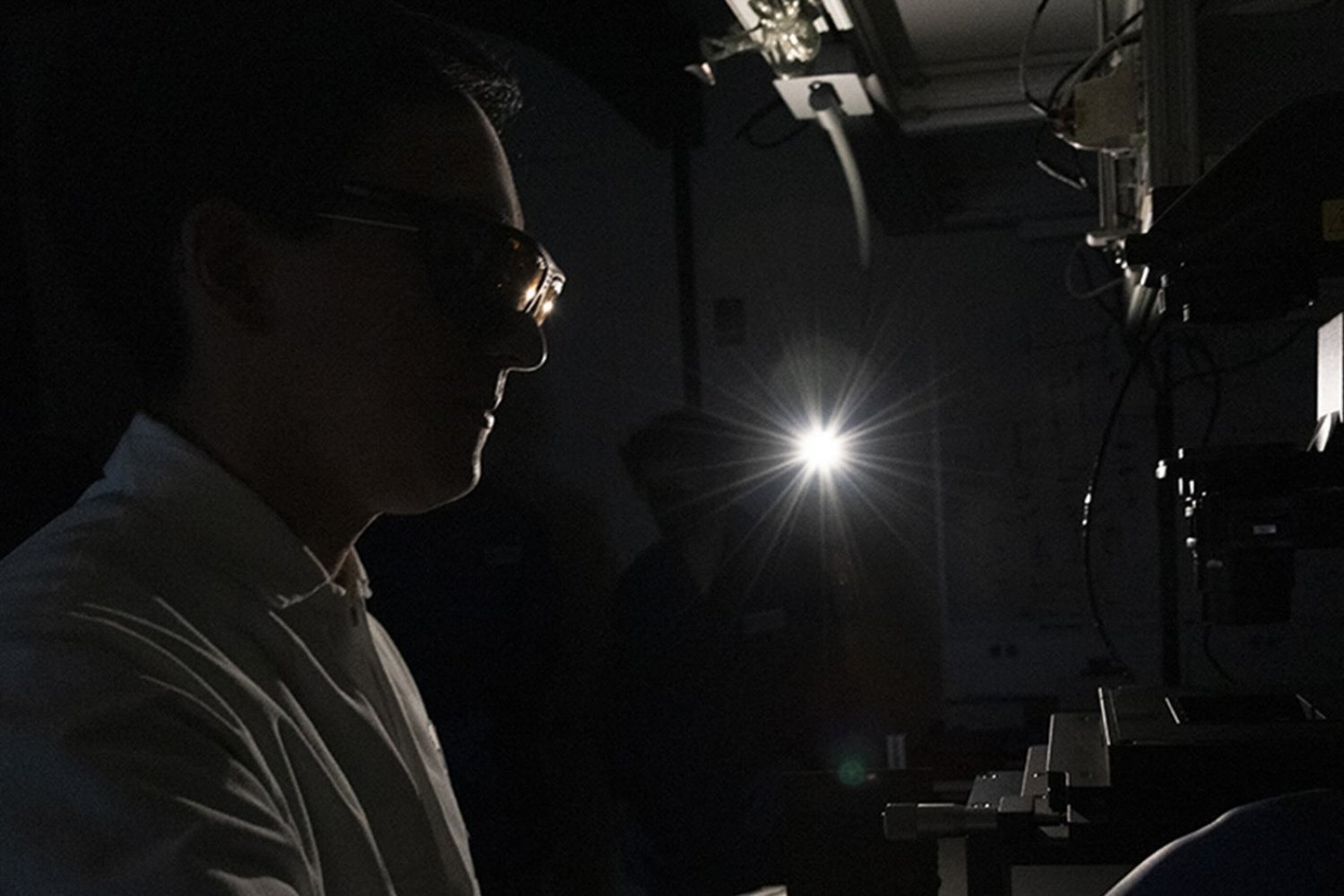
Technical approach: up‑converting nanoparticle probes
Traditional single‑molecule tracking relies on organic dyes that bleach under the high‑intensity laser illumination needed for nanometer‑scale localization. Peng’s lab sidestepped this limitation by synthesizing UCNPs that contain rare‑earth ions (e.g., Yb³⁺, Er³⁺). When excited with near‑infrared light, these particles emit visible photons through a non‑linear up‑conversion process that does not generate reactive singlet oxygen, so the probes remain bright for hours or longer.
Key engineering steps:
- Core‑shell architecture – a high‑luminescence core is coated with an inert shell to suppress surface quenching, maximizing photon output.
- Surface functionalization – carboxyl‑terminated ligands are conjugated to high‑affinity antibodies or engineered nanobodies that bind EGFR, HER2, or HER3 without perturbing receptor function.
- Multiplexed color tuning – by varying the rare‑earth ion composition (e.g., adding Tm³⁺ for blue emission), the team generated spectrally distinct probes, enabling simultaneous tracking of three receptor types in a single cell.
The custom microscope integrates a 980 nm continuous‑wave laser for excitation, a high‑NA oil‑immersion objective, and an EM‑CCD camera capable of 30 ms frame rates. Real‑time localization algorithms compute the centroid of each nanoparticle with ~20 nm precision, producing trajectories that span the entire lifetime of the labeled protein.
Real‑world applicability: insights into EGFR biology
Using the UCNP platform, the authors examined the ErbB family (EGFR/HER2/HER3) in human epithelial cells. Their observations overturned several assumptions derived from ensemble measurements:
- Dimer lifetime: Upon ligand stimulation, EGFR formed dimers that persisted for several minutes—an order of magnitude longer than the seconds‑scale interactions inferred from dye‑based studies.
- Mutation‑driven stability: Cancer‑associated EGFR mutations (e.g., L858R, exon 19 deletions) produced dimers that remained bound even without external ligand, providing a mechanistic explanation for constitutive signaling in tumors.
- Cross‑family interactions: Simultaneous labeling of HER2 and HER3 revealed a dynamic “mix‑and‑match” network where receptors repeatedly formed heterodimers, suggesting that therapeutic antibodies targeting a single member may be insufficient to disrupt signaling.
These single‑molecule movies also captured rare events such as transient trimer formation and receptor internalization, phenomena that are invisible to bulk assays.
Limitations and next steps
While the UCNP approach dramatically extends observation windows, it still faces challenges:
- Probe size: Current particles are ~30 nm in diameter, which can sterically hinder tightly packed membrane proteins. Ongoing work aims to shrink the core while preserving brightness.
- Photon budget: Up‑conversion is less efficient than fluorescence, requiring higher excitation powers that may heat the sample if not carefully managed.
- Data analysis: Minute‑long trajectories for thousands of molecules generate terabytes of raw data; scalable analytics pipelines are needed for routine use.
The team plans to address these issues by developing smaller, brighter lanthanide‑doped nanocrystals and by integrating machine‑learning‑based trajectory segmentation to extract kinetic parameters automatically.
Broader impact: from basic science to drug screening
Because the method can monitor how individual receptors respond to small‑molecule inhibitors or therapeutic antibodies in real time, it offers a powerful assay for early‑stage drug discovery. For example, tracking the dissolution of mutant EGFR dimers after treatment with a tyrosine‑kinase inhibitor could reveal on‑target efficacy at the single‑protein level, complementing traditional bulk phosphorylation readouts.
Beyond the ErbB family, the platform is adaptable to any membrane protein that can be labeled with a high‑affinity binder, including G‑protein‑coupled receptors, ion channels, and immune checkpoints. Researchers in neurobiology, immunology, and synthetic biology have already expressed interest in applying the technique to study synaptic receptor turnover and T‑cell activation dynamics.
Related resources
- Peng lab page: https://broadinstitute.org/labs/peng
- Open‑access preprint of the Cell paper: https://doi.org/10.1101/2026.05.19.XXXX
- Review of up‑converting nanoparticles for bioimaging: https://doi.org/10.1016/j.biomaterials.2025.121234
This article was prepared by a robotics researcher with a focus on autonomous instrumentation and its translation to biomedical discovery.
Comments
Please log in or register to join the discussion