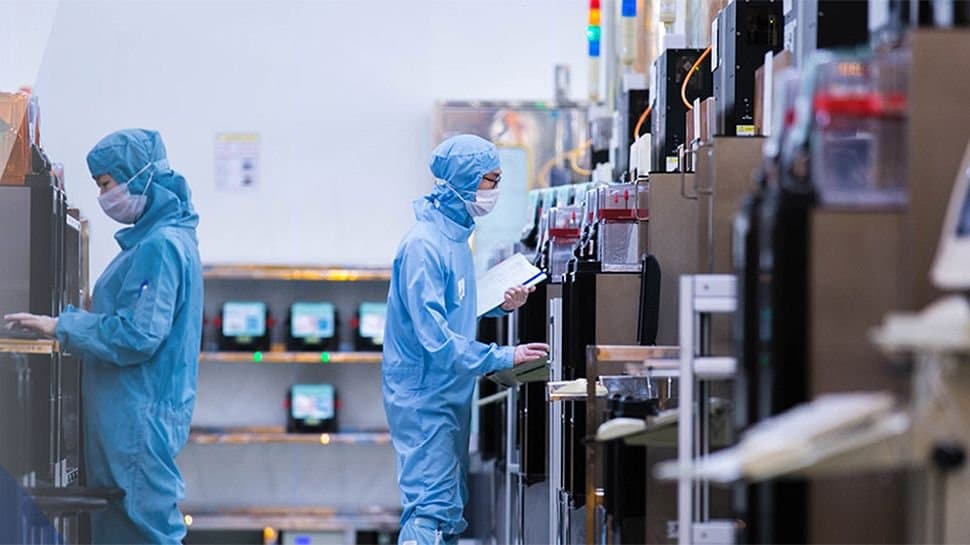
SMIC’s Richard Chang and AMEC’s Gerald Yin urged Chinese fabs to place home‑grown equipment on active production lines. The appeal comes as China’s semiconductor‑equipment sector posted a revenue surge in 2025, yet gross margins fell sharply amid fierce domestic price competition and persistent lithography gaps.
Coordinated TV Appeal
On May 17, SMIC founder Richard Chang and AMEC chairman‑CEO Dr. Gerald Yin appeared together on CCTV’s Dialogue program. Their message was simple: Chinese fabs should allocate real‑production wafer batches – up to 100 wafers per run – to domestically built etch, deposition and stripping tools before scaling up. The broadcast followed a series of industry comments in the Securities Times warning that the next three to five years will decide whether Chinese prototypes can meet the yield, throughput and uptime standards required for volume manufacturing.
Revenue Spike, Margin Compression
China’s equipment vendors posted unprecedented sales in 2025. Highlights include:
- AMEC: $1.74 bn revenue (+36.6% YoY), net profit $310 m (+30.6%).
- Naura Technology: $3.91 bn revenue in the first three quarters.
- Piotech: $617 m revenue for nine months, roughly double the prior period.
- ACM Research (U.S.‑listed, Shanghai‑based): $901.3 m full‑year revenue (+15.2%).
Despite the top‑line growth, gross margins slipped across the board. AMEC’s margin fell 1.9 percentage points to 39.2%, with a 5.8‑point dip in Q3 alone. ACM Research’s margin dropped from 50.1% in 2024 to 44.4% in 2025. Analysts at Needham & Co. attribute the erosion to an internal price war rather than external export restrictions. With U.S., Japanese and Dutch controls limiting advanced‑tool shipments, Chinese buyers are turning to home‑grown alternatives, driving vendors to cut prices to win orders that formerly went to Applied Materials, Lam Research and Tokyo Electron.
Domestic Content Gains, but Gaps Remain
Current estimates show Chinese fabs source about 35 % of their equipment domestically, up from roughly 25 % a year earlier. The government’s informal target for new fab construction is 50 % domestic content. Progress is uneven:
- Etch tools at mature nodes: 50‑60 % domestic.
- Resist stripping: >80 % domestic.
- Thin‑film deposition: 20‑30 % domestic.
- Lithography: <5 % domestic, with the only volume scanner – SMEE’s 90 nm ArF system – far behind the sub‑28 nm class needed for leading‑edge logic.
Qualification Timelines and Real‑World Risks
Yin emphasized that even the world’s largest equipment makers require 18‑24 months to qualify a new etch or deposition tool on a leading‑edge line. The process validates reliability, particle contamination, drift and sustained throughput, not just a single “good wafer” under lab conditions. Chang echoed this, suggesting a staged rollout starting with small wafer batches to limit risk.
A case in point is AMEC’s entry into large‑flat‑panel display equipment in December 2023. The company claims it built a 150‑tonne, 15 × 15 m prototype in 12 months, met next‑generation specifications four months later, and shipped the unit to a production line within 18 months. Independent verification is lacking, and the claim that SMIC has purchased 800 AMEC tools remains unconfirmed.
Lithography – The Remaining Bottleneck
All of the above progress sidesteps the sector’s most critical constraint: lithography. SMEE’s 90 nm ArF scanner represents the only Chinese volume lithography product. Rumors of a 28 nm class tool are unsubstantiated, and the Shanghai Yuliangsheng immersion DUV scanner – nicknamed “Mount Everest” and linked to Huawei‑backed SiCarrier – resembles ASML’s 2008‑era Twinscan NXT:1950i. If SMIC targets this machine for 28 nm production in 2027, sub‑10 nm nodes on fully domestic equipment remain unlikely before 2030.
In Q3 2025, 42 % of ASML’s system‑sale revenue went to Chinese customers, showing that DUV scanners continue to flow into China under current export rules. However, the U.S. MATCH Act, passed by the House Foreign Affairs Committee (36‑8 vote), would designate major Chinese equipment firms – AMEC, Naura, Piotech, ACM Research, SiCarrier, SMEE – and leading fabs – SMIC, YMTC, Hua Hong, CXMT, Huawei – as “Covered Facilities.” The bill would prohibit further DUV immersion‑tool exports to China and is now moving toward a Senate vote.
Market Implications
- Short‑Term Pressure on Margins – Domestic vendors will likely continue to trim prices to retain market share, keeping gross margins under pressure until export‑control curbs tighten.
- Accelerated Qualification Efforts – The CCTV appeal may push fabs to schedule more pilot runs with Chinese tools, generating early‑stage revenue for equipment makers but also exposing fabs to yield risk.
- Strategic Shift Toward Mature Nodes – With lithography lagging, Chinese fabs are expected to focus on mature‑node products (28‑65 nm) where domestic etch, deposition and stripping tools already achieve 50‑80 % substitution.
- Potential Supply‑Chain Shock – If the MATCH Act becomes law, the remaining flow of DUV scanners could be cut off, forcing fabs to either accelerate domestic lithography development or defer advanced‑node capacity expansions.
Outlook
The next five years will test whether China can convert prototype‑level equipment into reliable, high‑throughput production assets. Success hinges on two factors: (1) the ability of domestic vendors to sustain revenue growth without further margin erosion, and (2) the emergence of a viable lithography solution that can support sub‑28 nm processes. Until those hurdles are cleared, Chinese fabs will remain dependent on foreign DUV scanners and will likely concentrate on mature‑node markets where home‑grown tools already dominate.
Comments
Please log in or register to join the discussion