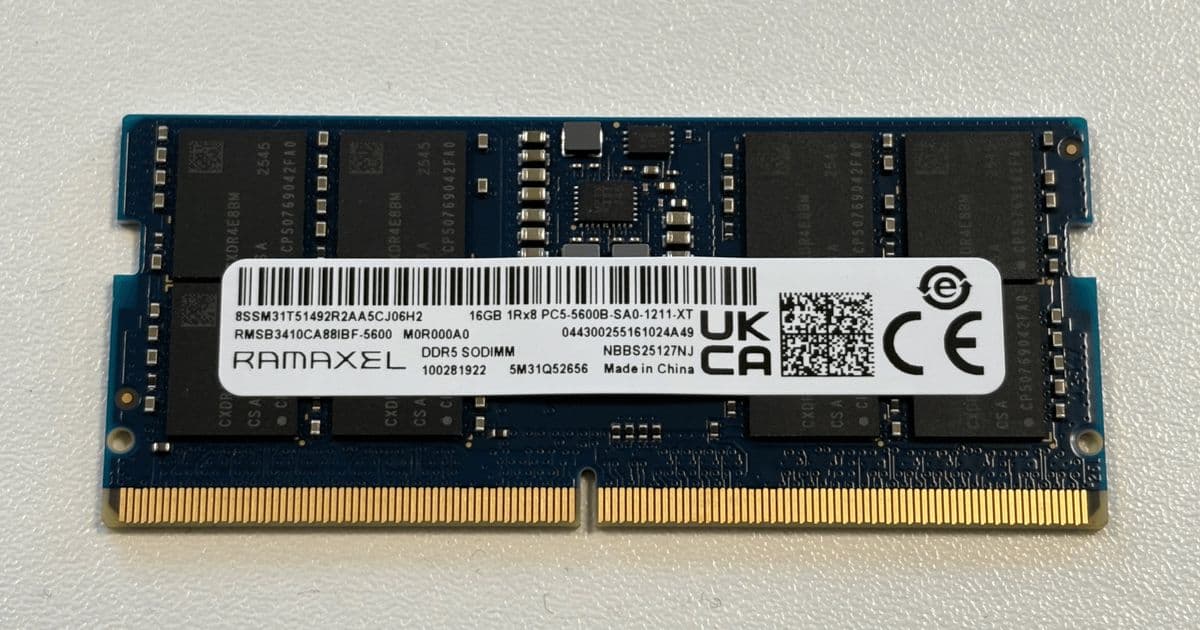
Changxin Memory Technologies (CXMT) has updated its prospectus for a STAR Market IPO, reporting a 700% YoY jump in Q1 revenue. The filing reveals a shareholder base that includes the National Integrated Circuit Industry Investment Fund II and a consortium of Guangdong‑based investors holding roughly 5% of the company. While the capital raise could boost CXMT’s valuation, the listing also highlights the limits of regional backing in a market still dominated by overseas DRAM and NAND producers.
CXMT Files for STAR Market IPO
What’s claimed
Changxin Memory Technologies (CXMT) announced on May 17 that its first‑quarter revenue surged more than 700 % year‑on‑year. The prospectus for a STAR Market listing lists the National Integrated Circuit Industry Investment Fund II and a group of Guangdong investors as holders of nearly 5 % of the company’s equity. Press releases present the filing as a sign that China’s domestic memory supply chain is finally receiving the financial muscle needed to compete with Samsung, SK Hynix and Micron.
What’s actually new
- Revenue growth: The 700 % increase reflects a jump from roughly ¥200 million in Q4 2024 to about ¥1.6 billion in Q1 2026. The growth is driven by shipments of CXMT’s 16‑Gb DDR4 and 8‑Gb NAND products, which have begun to replace imported parts in a handful of government‑procured servers.
- Shareholder composition: The prospectus identifies three categories of investors:
- National Integrated Circuit Industry Investment Fund II – the flagship “Big Fund” that has been seeding China’s fab ecosystem since 2014.
- Regional state‑owned asset managers from Anhui, Beijing and Guangdong. The Guangdong bloc, a loose coalition of municipal‑level investment arms, collectively owns just under 5 % of CXMT.
- Strategic corporate investors such as Alibaba Cloud, GigaDevice and several state‑backed banks (CMB, ABC, CCB).
- Financing pattern: Guangdong investors entered CXMT across three rounds – a seed round in 2022, a Series B in early 2024, and a bridge round in late 2025. Their participation was staggered, suggesting a long‑term belief in the company rather than a single‑shot bet.
- IPO timing: The STAR Market filing positions CXMT to raise up to ¥10 billion, which would bring its market cap into the ¥150‑200 billion range, assuming a price‑to‑sales multiple similar to other Chinese semiconductor IPOs.
Limitations and risks
- Valuation pressure: Even with a 700 % revenue jump, CXMT’s profit margins remain thin. Its DRAM process is still on 28 nm, lagging the 10‑nm nodes used by the leading global players. A higher valuation could be hard to sustain if the company cannot close the technology gap quickly.
- Regional ownership concentration: While a 5 % stake from Guangdong investors sounds sizable, it translates to a relatively small voting block in a company that will likely have a dispersed shareholder base after the IPO. Their ability to influence strategic decisions, such as joint‑venture fab construction, is limited.
- Supply‑chain dependencies: CXMT still relies on foreign‑made lithography equipment and memory cell materials. Sanctions or export controls could choke production, undermining the narrative of “self‑sufficiency.”
- Market timing: The global memory market is in a cyclical downturn, with DRAM inventories high and pricing under pressure. CXMT’s revenue surge is partly a result of domestic procurement mandates, which may not persist if policy shifts.
Why it matters
The filing provides the first public snapshot of how state‑level capital is being layered with regional investors to back a strategic semiconductor player. It also shows that the Chinese government is still preferring indirect support—through funds and policy‑driven demand—over outright equity stakes. For analysts, the key takeaway is that the IPO will likely unlock a higher market valuation, but that upside is contingent on CXMT’s ability to improve process technology, diversify its customer base beyond state contracts, and navigate a volatile memory market.
Comments
Please log in or register to join the discussion