Sony's latest patent proposes using generative AI to monitor player emotions and gameplay patterns, dynamically adjusting game difficulty in real-time to maintain optimal challenge levels and prevent player abandonment.
Sony's Generative AI Patent Dynamically Adjusts Game Difficulty Based on Player Emotions
Game developers have long faced the challenge of creating difficulty curves that satisfy players with varying skill levels. Some gamers breeze through campaigns while others struggle to progress, leading to frustration or boredom. Sony's latest patent, "User Defined Level Generation," aims to solve this persistent problem by implementing generative AI that not only monitors gameplay patterns but also detects player emotions to dynamically adjust difficulty.
What's New in Sony's Patent
The patent, recently filed by Sony, represents a significant evolution in adaptive gaming technology. While previous patents focused on evaluating player performance and adjusting difficulty accordingly, this new implementation introduces emotion monitoring as a critical component. The system uses generative AI to reprogram entire game levels based on both player skill and emotional state, creating a truly personalized gaming experience.
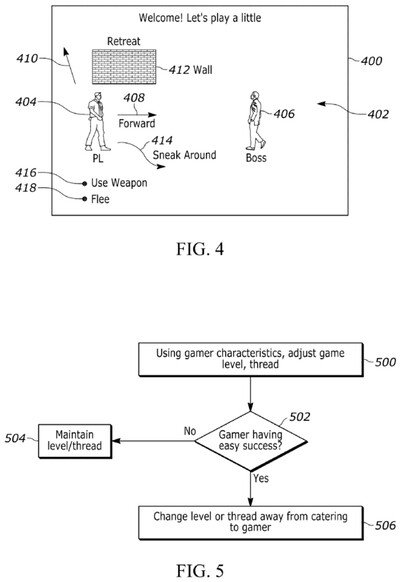
The patent explains that when a gamer is experiencing difficulty, the game remains tailored to their habits and characteristics. However, once the player achieves success, the AI can generate new challenges that move away from their strengths. This approach ensures players remain engaged without becoming overwhelmed or bored.
How the AI System Works
The patent details a sophisticated system that combines performance analysis with emotional feedback. When a player consistently uses a stealth approach to avoid danger, the generative AI can add or reposition enemies to force more interactions. Conversely, overly aggressive players might find limited resources hampering their shooting sprees, encouraging different play styles.
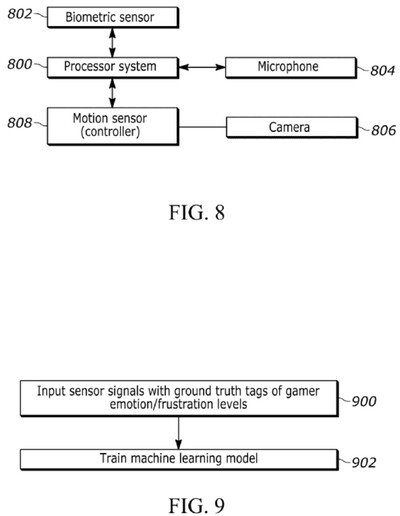
The emotion detection component represents the most innovative aspect of this technology. The patent suggests numerous potential sensors for recognizing mood shifts, including:
- Microphones (already present in PS5 DualSense controllers)
- Motion sensors
- Cameras
- Biometric sensors
These sensors would collect data on player emotions, ranging from happiness and excitement to anger and frustration, which the AI would then use to adjust difficulty in real-time.
Comparison to Current Difficulty Systems
Traditional gaming difficulty systems typically offer static options like "Easy," "Normal," and "Hard." More advanced systems might provide subtle adjustments to enemy health or damage, but they rarely account for player emotions or dynamically generate new content.
Sony's patent represents a significant departure from these approaches. Instead of simply adjusting parameters within existing constraints, the generative AI can create entirely new level configurations, enemy placements, and resource distributions. This creates a more organic and unpredictable challenge that adapts to individual player behavior rather than relying on predetermined difficulty curves.
Technical Implementation Challenges
Implementing such a system presents several technical hurdles. The processing power required for real-time generative AI and emotion detection would be substantial, though the PS5's hardware capabilities make this more feasible than previous generations.
Privacy concerns also loom large. The extensive monitoring proposed in the patent raises questions about data collection and storage. Players may be uncomfortable with their emotional states being continuously analyzed and stored, even if used solely for gameplay purposes.
The effectiveness of emotion detection remains another challenge. While the patent suggests numerous sensors, accurately detecting complex emotional states from limited behavioral cues is notoriously difficult. Stoic players or those in suboptimal environments might provide inconsistent data, leading to inappropriate difficulty adjustments.
Potential Applications and Benefits
For players, this technology could transform the gaming experience by ensuring consistent engagement. No more breezing through games that are too easy or being frustrated by insurmountable challenges. The system would maintain an optimal balance between enjoyment and challenge.
Developers might benefit from reduced player abandonment rates. In a crowded digital marketplace like the PlayStation Store, players quick to uninstall games that don't provide the right level of challenge. Adaptive difficulty could help games retain players longer, potentially increasing sales and player satisfaction.
Multiplayer games could particularly benefit from this technology. By analyzing individual player performance and emotions, matchmaking systems could create more balanced competitive experiences or cooperative scenarios that challenge each player appropriately.
Sony's Broader AI Strategy
This patent fits within Sony's larger initiative to leverage artificial intelligence across its gaming ecosystem. The company has filed multiple patents related to AI in gaming, from procedural content generation to NPC behavior enhancement. However, the emotion monitoring component represents a particularly ambitious application of AI technology.
The patent builds on previous work by Sony in adaptive difficulty systems. Earlier patents focused on performance metrics without considering emotional factors, making this a more holistic approach to player experience.
Future Outlook
While patents don't always translate to commercial products, the concepts outlined in Sony's filing point toward the future of personalized gaming. If implemented effectively, this technology could redefine how developers approach difficulty design, moving away from static presets toward truly dynamic experiences.
The success of such a system would depend on overcoming the technical and privacy challenges outlined. However, the potential benefits for both players and developers make this a compelling direction for gaming technology.
As AI continues to evolve, we can expect to see more sophisticated applications in game design. Sony's patent represents an early exploration of what might become standard technology in future gaming platforms, potentially setting new standards for player engagement and satisfaction.
Comments
Please log in or register to join the discussion