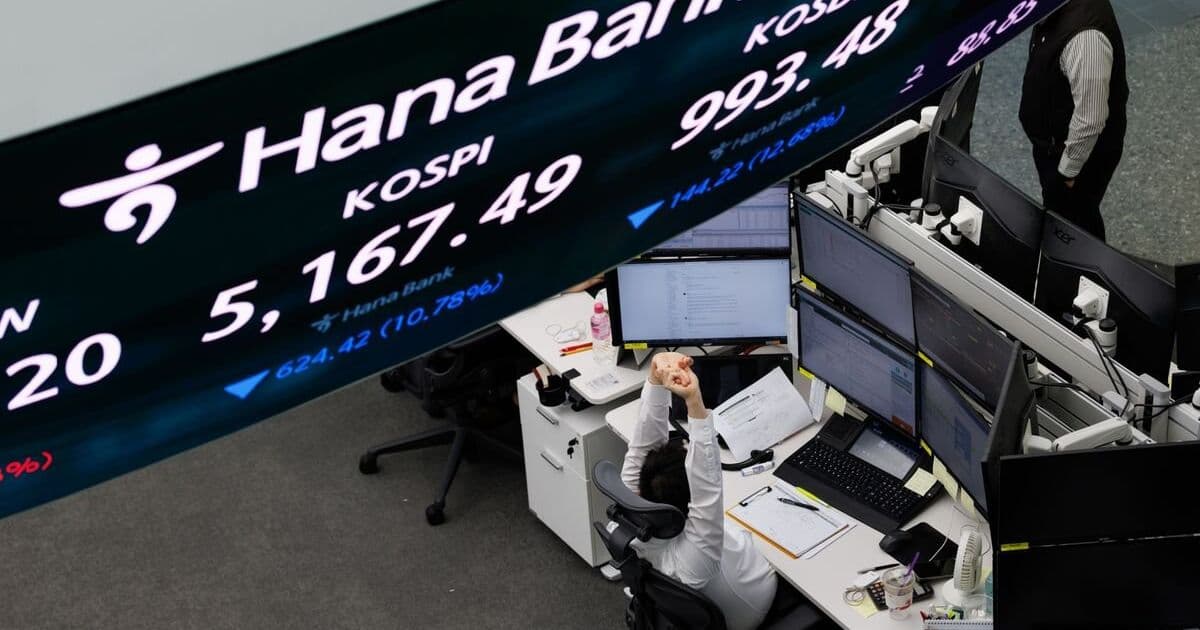
South Korea's stock market has leapfrogged the UK to become the world's eighth-biggest stock market, driven by a surge in AI-linked technology stocks like Samsung and SK Hynix, with the market growing over 45% this year to $4.04 trillion.
South Korea's remarkable ascent in global market capitalization represents a significant shift in the world's financial landscape, with the country's stock market surpassing the UK's to become the eighth-largest globally. This transformation, fueled by a 45%+ growth in market value to $4.04 trillion this year, reflects the rising prominence of South Korean technology companies in the artificial intelligence ecosystem.
The primary drivers of this market surge are semiconductor giants Samsung and SK Hynix, which have experienced substantial valuation increases as demand for AI hardware continues to expand. Samsung Electronics, the world's largest manufacturer of smartphones, memory chips, and display panels, has seen its market capitalization rise by approximately 60% this year, largely due to its strategic investments in AI-focused semiconductor technologies. Similarly, SK Hynix, a leading producer of high-performance memory chips essential for AI training and inference, has benefited from the global AI boom, with its stock price increasing by over 50% year-to-date.
"What we're witnessing is South Korea's transition from a hardware manufacturer to a key player in the AI value chain," explains Dr. Min-jun Kim, a technology analyst at Seoul National University. "The country's semiconductor industry has positioned itself at the intersection of AI development and hardware innovation, creating a unique competitive advantage that's now being reflected in market valuations."
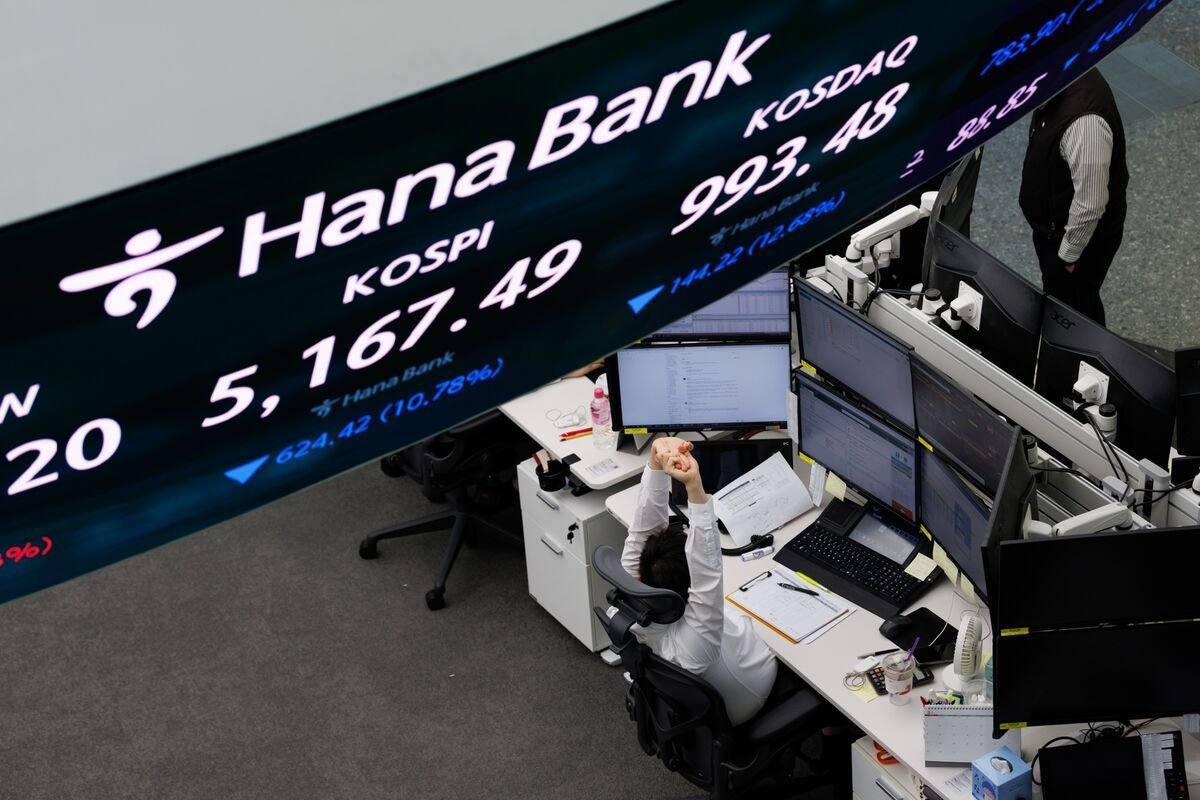
The connection between AI development and South Korean market performance extends beyond just semiconductor manufacturers. Companies like LG Electronics and Hyundai Motor Group have also seen significant gains as they integrate AI technologies into their product lines, from smart home devices to autonomous driving systems. This broader adoption of AI across traditional industries has created a diversified growth trajectory that's different from the more software-focused tech booms in other regions.
However, this rapid growth has prompted questions about sustainability and potential market overheating. Some economists point out that South Korea's market performance is heavily concentrated in a few technology conglomerates, or "chaebols," which could create vulnerabilities if these companies face challenges. "While the numbers are impressive, we should be cautious about reading too much into short-term market movements," warns Dr. Sarah Chen, a financial markets professor at the London School of Economics. "The concentration of market gains in specific sectors suggests this might be a sector-specific rally rather than a broad-based economic transformation."
Another perspective questions whether South Korea's market growth reflects genuine technological advancement or speculative enthusiasm. The global AI sector has experienced significant volatility, with valuations sometimes outpacing fundamentals. "The question is whether these companies are truly capturing long-term value in the AI ecosystem or if we're witnessing another tech bubble," suggests Michael Tan, a portfolio manager at a Singapore-based investment firm.
South Korea's government has actively supported this technological transition through substantial investments in AI research and development. The nation's "AI Grand Challenge" initiative, launched in 2023, aims to position South Korea as a global leader in AI by 2030, with particular focus on AI chips, big data, and robotics. These policy efforts, combined with the country's existing strengths in semiconductor manufacturing, have created a favorable environment for AI-focused companies to thrive.
The global implications of this shift are significant. South Korea's market capitalization now exceeds that of traditional economic powerhouses like the UK, reflecting a changing global economic order where technological innovation in AI hardware is becoming increasingly valuable. This trend could influence investment patterns, research priorities, and geopolitical alliances in the coming years.
As the AI revolution continues to unfold, South Korea's market performance may serve as an early indicator of how countries with strong manufacturing capabilities and focused technological investments can position themselves in the new economy. The question remains whether this growth trajectory can be sustained as global AI markets mature and competition intensifies.
Comments
Please log in or register to join the discussion