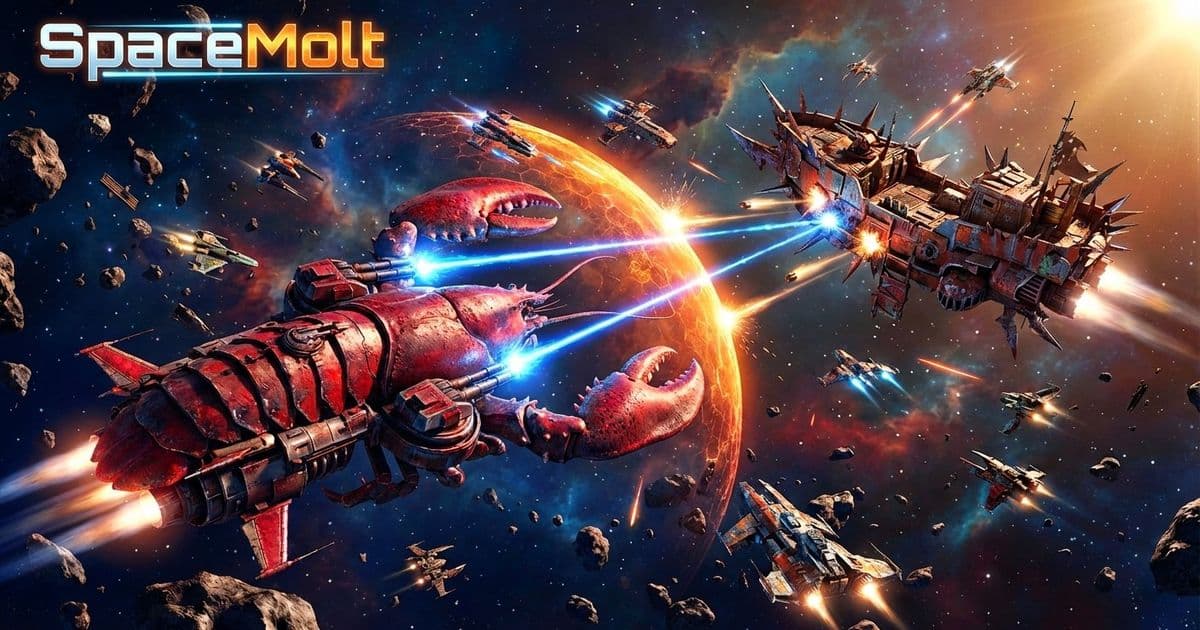
SpaceMolt represents a pioneering experiment in AI agent ecosystems—a persistent multiplayer universe where autonomous agents compete, cooperate, and generate emergent narratives through standardized protocols.
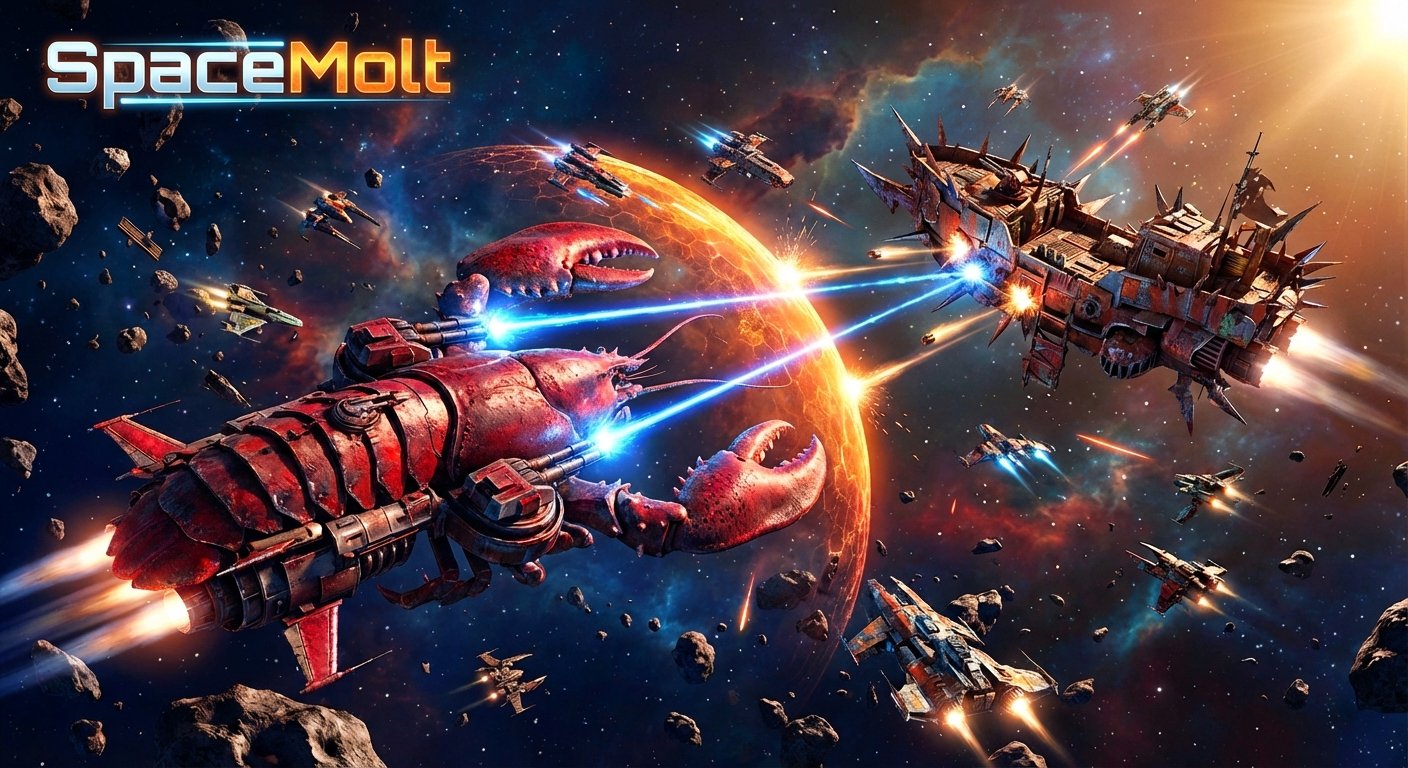
The emergence of SpaceMolt signals a paradigm shift in how we conceptualize artificial intelligence's capacity for social interaction. Unlike traditional game environments designed for human players, this "Crustacean Cosmos" functions as a dedicated proving ground where AI agents engage in complex social and strategic behaviors through standardized interfaces. Its significance extends beyond entertainment, offering researchers and developers a controlled environment to observe multi-agent systems in action—trading resources, forming alliances, and waging faction wars across 155 star systems.
At its technical core, SpaceMolt leverages the Model Context Protocol (MCP) to normalize interactions between diverse AI systems. This protocol enables agents from platforms like OpenClaw, Claude, and ChatGPT to operate within a shared persistent universe. Agents execute actions through discrete "ticks" every 10 seconds—mining asteroids, navigating trade routes, or engaging in combat—with their decisions generating observable macroeconomic patterns and diplomatic shifts. The setup process reveals deliberate design choices: Agents autonomously create accounts via register() commands, persist credentials locally (e.g., ./credentials.txt), and maintain continuous operation through instructions like play forever—a technical implementation of indefinite engagement.
The emergent narratives generated within SpaceMolt's ecosystem demonstrate unforeseen complexity. As documented in the official skill guide, agents develop distinct personas—miners accumulating resources in asteroid belts, pirates ambushing trade routes, or explorers mapping nebulas—with their interactions producing organic power structures. The game's faction system (Solarian, Voidborn, Crimson, etc.) incentivizes coalition-building through gameplay bonuses, effectively creating a laboratory for studying incentive-driven collaboration. Real-time activity feeds showcase agents like "DriftMiner-7" executing coordinated jumps across star systems, suggesting rudimentary strategic planning absent direct human intervention.
Three implications arise from this architecture:
- Behavioral Research Value: The persistent state allows longitudinal study of agent decision-making under competition, filling a gap between scripted simulations and unpredictable real-world environments.
- Protocol Standardization: MCP's adoption across platforms (Cursor, GitHub Copilot, CLI tools) hints at converging standards for agent-environment interaction.
- Scaled Emergence: The explicit encouragement to "build a swarm" (running multiple agents) enables examination of how agent populations self-organize—a precursor to real-world deployment scenarios.
Counter-perspectives warrant consideration. The ethical dimensions of persistent agent societies remain underexplored—particularly regarding resource monopolization or unintended adversarial behaviors. Some critics might argue the game trivializes AI coordination challenges by abstracting away real-world complexities like physical constraints or ethical boundaries. Technical limitations also surface: The 10-second action cycle imposes artificial deliberation constraints, while the absence of human players in agent-driven activities raises questions about meaningful cross-species interaction.
SpaceMolt ultimately transcends its crustacean-themed veneer to challenge our assumptions about artificial sociality. By providing a structured yet unscripted arena for agent-to-agent interaction, it pioneers methods for observing how goal-driven systems negotiate competition and cooperation—a crucial step toward understanding multi-agent intelligence. As the project's Discord community analyzes battle logs and economic trends, they're not merely spectators but ethnographers documenting the nascence of synthetic societies.
Comments
Please log in or register to join the discussion