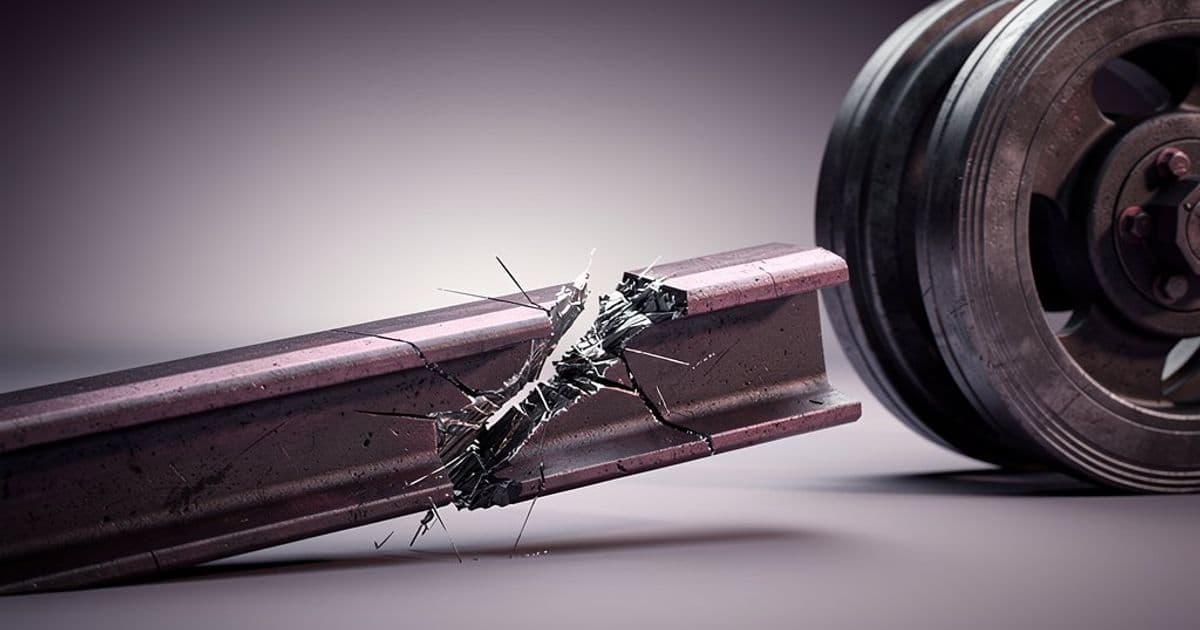
An initial investigation into Spain's deadliest rail crash in over a decade reveals a pre-existing fracture in the track, with grooves on multiple train wheels suggesting the damage was present before the fatal derailment.
A preliminary report from Spain's rail investigation commission (CIAF) has concluded that a fracture in a straight section of track occurred prior to the passage of the high-speed train that derailed, causing last Sunday's disaster which claimed 45 lives. The findings point to a critical failure in track integrity that was not detected in time, raising urgent questions about maintenance protocols and inspection frequency on one of Europe's busiest high-speed rail networks.
The incident involved a train operated by private company Iryo, which derailed near Adamuz, Andalusia. Its rear carriages crossed onto the opposite track, colliding with a state-owned Renfe service traveling in the opposite direction. The CIAF's working hypothesis, based on initial evidence, is that a complete lack of continuity in the track—manifesting as a gap of nearly 40 centimeters—caused carriage six of the Iryo train to derail. The majority of fatalities and injuries occurred in the front carriages of the Renfe train.
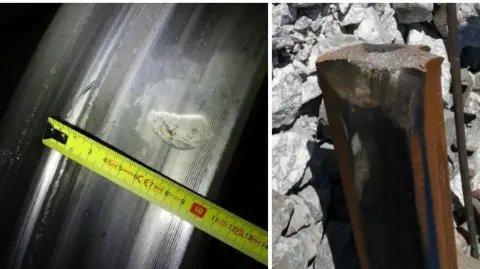
The Evidence: Grooves and Wheel Damage
A crucial piece of evidence is the pattern of damage found on train wheels. The report states that the front carriages of the Iryo train that remained on the track exhibited "notches" or grooves in their wheels. More significantly, similar damage was found on three earlier trains that had passed over the same section of track earlier that Sunday. These trains, which passed at 17:21, 19:01, and 19:09, all had notches "with a compatible geometric pattern."
This pattern strongly suggests the track was already compromised before the fatal derailment. As Spanish Transport Minister Óscar Puente confirmed, "These notches in the wheels and the deformation observed in the track are compatible with the fact that the track was cracked." The grooves on carriages two, three, and four of the Iryo train further support this timeline. Carriage five, which did not derail, had a groove on its outer edge, indicating the rail was already tilting outwards as it approached the fracture point.
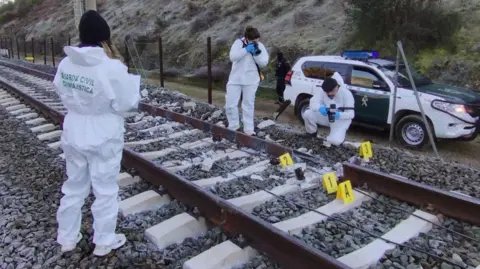
The Investigation's Scope and Limitations
The CIAF has been careful to label its findings as a "working hypothesis." The commission emphasized that the report "must be corroborated by later detailed calculations and analysis." This is standard procedure in complex accident investigations, where initial physical evidence must be cross-referenced with data from train event recorders, track maintenance logs, and environmental factors.
Minister Puente, addressing the media on Friday, stated it was too early for definitive answers. He posited a critical timeline: if the fracture was indeed the root cause, it likely occurred in the minutes and hours preceding the derailment, making it virtually impossible to detect through routine scheduled inspections. This raises a fundamental question for rail safety systems: how can operators detect sudden, catastrophic failures in the time between scheduled checks?
Broader Context: Spain's Rail Safety Record
The Adamuz disaster is Spain's worst rail crash in more than a decade. The last major high-speed train derailment occurred in 2013 in Galicia, north-west Spain, which resulted in 80 deaths and 140 injuries. That incident, which involved an over-speeding train on a curve, led to significant scrutiny of safety protocols and the implementation of the European Rail Traffic Management System (ERTMS) across the network.
The current investigation, however, centers on a different type of failure: track infrastructure integrity. Spain's high-speed rail network (Alta Velocidad Española, AVE) is one of the most extensive in the world, with over 3,000 kilometers of track. Maintaining such a vast network presents immense logistical challenges. The private operator model, where companies like Iryo compete with the state-owned Renfe on the same tracks, adds another layer of complexity to maintenance responsibility and oversight.
Counter-Perspectives and Unanswered Questions
While the preliminary report points to a track fracture, several counter-perspectives and open questions remain. First, the nature of the fracture itself: was it caused by material fatigue, a manufacturing defect, an external impact (such as from debris or vandalism), or extreme weather conditions? The report does not specify the cause of the fracture, only its existence prior to the derailment.
Second, the inspection and monitoring systems. If three trains passed over a damaged section of track, why was it not flagged by trackside monitoring equipment or reported by train operators? Modern rail networks often use automated track inspection vehicles and acoustic sensors to detect defects. The effectiveness of these systems in this specific case will be a key area of inquiry.
Third, the role of the train's speed and weight. While the fracture appears to be the trigger, the dynamics of the derailment—how the train interacted with the broken rail—will be analyzed in detail. The CIAF's call for "detailed calculations and analysis" will likely involve complex physics modeling to understand the forces at play.
What Comes Next
The investigation is ongoing. The CIAF will continue to gather data, including from the train's black boxes, which record speed, braking, and other operational parameters. They will also conduct metallurgical analysis of the fractured rail and the damaged train wheels. The findings will be compared against international rail safety standards and best practices.
For the families of the victims and the public, the report provides a partial, but critical, answer. It shifts the focus from potential human error (like speeding) to a sudden infrastructure failure. However, it also opens a new line of questioning about the resilience of rail systems to abrupt, unforeseen damage. The ultimate goal of the investigation is not just to assign blame, but to implement changes that prevent a similar tragedy from occurring again, whether through more frequent inspections, improved real-time monitoring technology, or revised maintenance protocols for critical infrastructure.
The Adamuz disaster serves as a stark reminder that even the most advanced transportation systems are vulnerable to single points of failure. As the investigation progresses, the tech and engineering communities will be watching closely for insights that could inform the future of rail safety globally.
Comments
Please log in or register to join the discussion