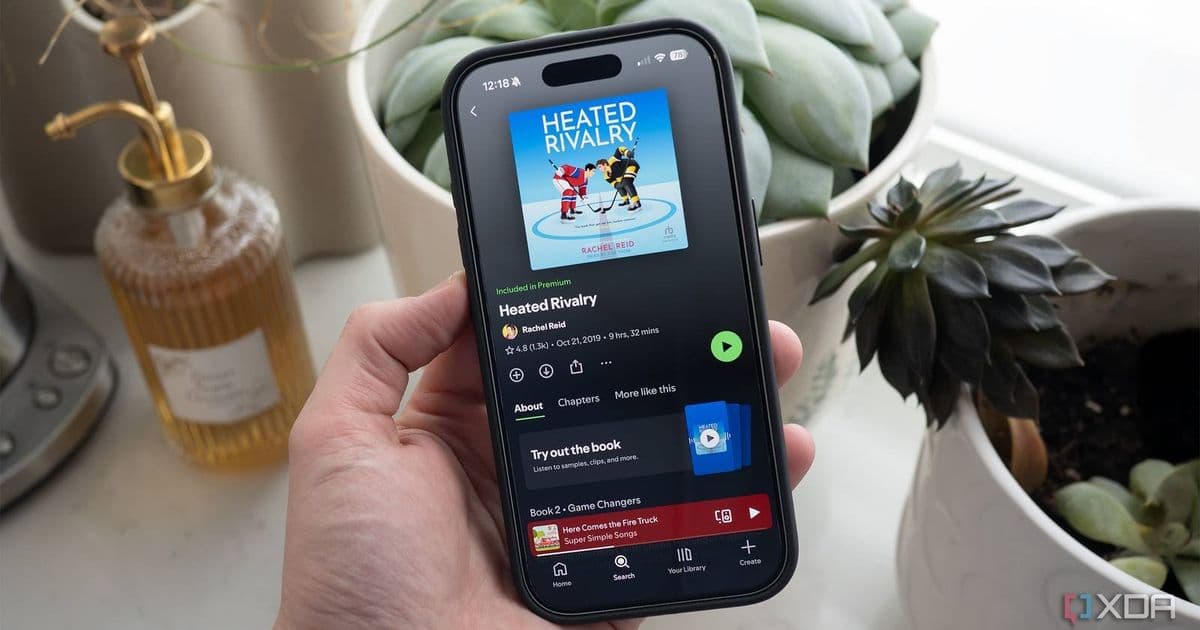
Spotify's new Page Match feature synchronizes your reading position across physical books, ebooks, and audiobooks, making it easier than ever to switch between formats.
Spotify has unveiled a groundbreaking new feature called Page Match that seamlessly synchronizes reading positions across physical books, ebooks, and audiobooks, marking the company's most significant expansion beyond music streaming since its acquisition of audiobook platform Findaway Voices in 2022.
How Page Match Works
The technology uses a combination of computer vision, audio fingerprinting, and machine learning to track your reading progress regardless of format. When you're reading a physical book, you can simply point your phone's camera at the page, and Spotify's app will recognize the text and update your position. For ebooks, the synchronization happens automatically through the Spotify reading app. Audiobooks, already a core part of Spotify's expanded content strategy, sync through standard playback tracking.
"We wanted to eliminate the friction between different reading formats," said a Spotify spokesperson during the announcement. "Whether you're reading a hardcover on your commute, switching to an ebook at work, and finishing with an audiobook during your evening walk, Page Match ensures you never lose your place."
Technical Implementation
The feature relies on Spotify's proprietary text recognition algorithm that can identify pages even with different editions, translations, or printings of the same book. The system creates a unique fingerprint for each page based on word patterns, layout, and formatting rather than relying on exact text matching, which allows it to work across various versions of the same title.
For physical books, users simply open the Spotify app, select "Scan Page," and point their camera at the open book. The app processes the image in real-time and updates the reading position across all connected devices. The feature works with most modern smartphones and doesn't require any special hardware beyond the device's built-in camera.
Integration with Spotify's Ecosystem
Page Match represents Spotify's most ambitious move into the publishing world to date. The company has been steadily expanding its audiobook offerings since the Findaway Voices acquisition, and this feature positions Spotify as a comprehensive reading platform rather than just a music streaming service.
The synchronization works across Spotify's entire ecosystem, including the main mobile apps, desktop applications, and web interfaces. Users can start reading a physical book on their phone, continue on a tablet during lunch, and finish on their computer at home without ever losing their place.
Publisher and Author Benefits
Beyond consumer convenience, Page Match offers significant benefits for publishers and authors. The feature includes built-in analytics that help publishers understand how readers interact with their content across different formats. This data can inform decisions about print runs, ebook pricing, and audiobook production.
Authors also benefit from increased discoverability, as the feature makes it easier for readers to sample different formats before committing to a purchase. A reader might start with a free sample of the physical book, then purchase the ebook or audiobook version if they enjoy the content.
Privacy Considerations
Spotify has emphasized that Page Match includes robust privacy controls. Users can choose which books to sync and can delete reading history at any time. The company states that reading data is not used for targeted advertising and is only collected to improve the synchronization experience.
"We understand that reading habits are personal," the spokesperson noted. "That's why we've built privacy into the foundation of Page Match, giving users complete control over their data."
Availability and Requirements
Page Match is rolling out gradually to Spotify Premium subscribers in select markets, with broader availability planned for the coming months. The feature requires a Spotify Premium subscription and works with books available through Spotify's reading platform.
Currently, the physical book scanning feature supports most major publishers and titles published after 2010, with support for older editions being added continuously. The ebook and audiobook synchronization works with Spotify's entire catalog of over 500,000 titles.
Impact on Reading Habits
Early beta testers report that Page Match has fundamentally changed how they consume books. "I used to stick to one format because switching was too cumbersome," said one tester. "Now I read physical books during my morning coffee, ebooks on my lunch break, and audiobooks during my evening run. It's transformed my reading habits."
The feature also addresses a common pain point for students and researchers who often need to reference physical textbooks while also using digital annotations and highlights. Page Match ensures that notes and highlights sync across all formats, making study sessions more efficient.
Future Developments
Spotify has hinted at additional features in development that build on Page Match technology. These include social reading features that allow users to share their reading progress with friends, collaborative annotation tools for book clubs, and AI-powered recommendations based on reading patterns across formats.
The company is also exploring partnerships with libraries and educational institutions to expand access to Page Match technology, potentially making it available to users who access books through public library systems.
Industry Reaction
The publishing industry has largely welcomed the innovation, seeing it as a way to breathe new life into physical book sales while also boosting digital and audio formats. "Page Match removes the format wars and lets readers choose the best format for each moment," said a representative from a major publishing house.
However, some independent booksellers have expressed concern about Spotify's growing influence in the reading space, though many acknowledge that the feature could drive new readers to discover books they might not have otherwise encountered.
Technical Requirements and Compatibility
Page Match requires iOS 16 or later, or Android 10 or later. The feature works best with devices that have at least a 12-megapixel camera for optimal physical book scanning. Spotify recommends using devices with OLED screens for the best ebook reading experience, though the feature works with any compatible device.
The company has also released a software development kit (SDK) for publishers and developers who want to integrate Page Match technology into their own reading applications, suggesting that Spotify sees this as a platform play rather than just a feature for its own apps.
Conclusion
Page Match represents a significant evolution in how we think about reading across different formats. By removing the friction between physical, digital, and audio reading, Spotify is positioning itself at the center of a unified reading experience that could reshape consumer behavior in the publishing industry.
As the feature rolls out to more users and additional capabilities are added, Page Match has the potential to become as transformative for reading as Spotify's original music streaming service was for audio entertainment. The question now is whether other tech giants will follow suit with their own cross-format reading solutions, or if Spotify will maintain its first-mover advantage in this space.
For readers who have long juggled multiple formats and devices, Page Match offers a glimpse of a future where the format is irrelevant, and the story is all that matters.
Comments
Please log in or register to join the discussion