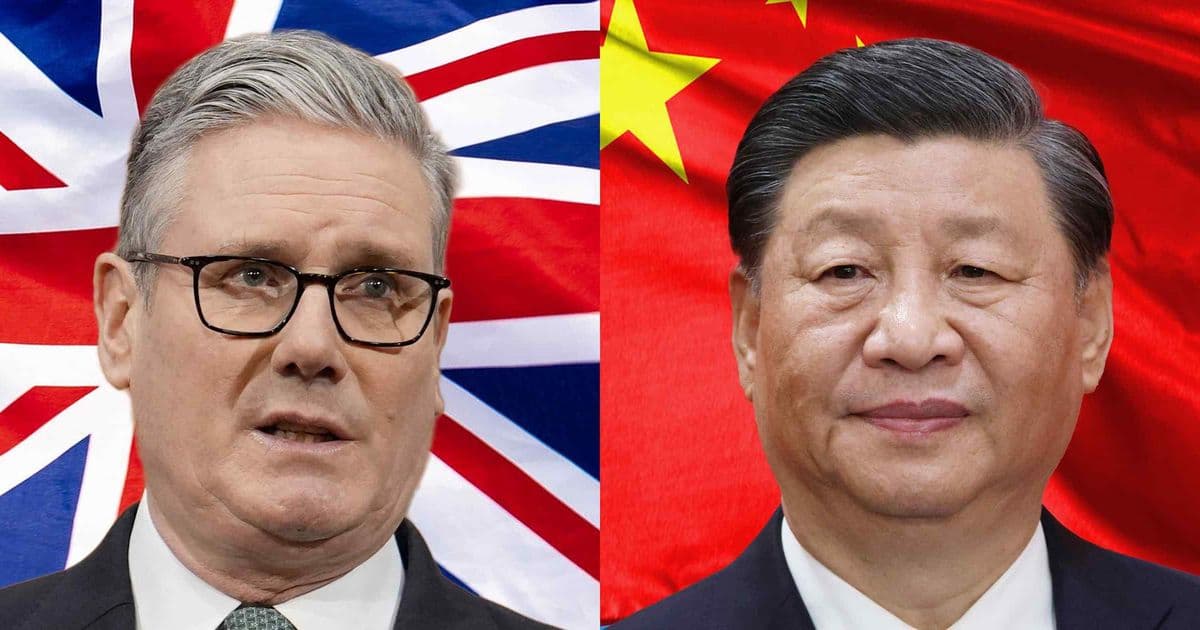
British Prime Minister Keir Starmer's upcoming trip to Beijing marks the first official visit by a UK leader since 2018, as London seeks to revitalize its sluggish economy through deeper trade ties with the world's second-largest economy.
British Prime Minister Keir Starmer will travel to Beijing this week for the first official visit by a UK leader since Theresa May's 2018 trip, a move that underscores London's urgent need to diversify its economic partnerships amid stagnant domestic growth. The visit follows a November 2024 meeting between Starmer and Chinese President Xi Jinping at the G20 summit, where preliminary discussions on expanding bilateral trade began.
The timing reflects stark economic pressures. The UK economy grew by just 0.1% in the third quarter of 2025, with manufacturing output contracting for the seventh consecutive month. Inflation remains stubbornly high at 3.2%, well above the Bank of England's 2% target, while consumer confidence sits at a 12-month low. Against this backdrop, the government has identified export growth as a critical lever for recovery, with China representing both opportunity and complexity.
China accounts for approximately 5% of UK exports, totaling £22.4 billion in 2024, but imports from China reached £58.2 billion, creating a significant trade deficit. The UK's service sector—particularly financial services, education, and professional services—holds substantial potential for expansion in the Chinese market, though market access restrictions and regulatory hurdles have historically limited growth. Starmer's delegation is expected to focus on removing these barriers, particularly in digital trade, green technology, and financial services.
The visit carries geopolitical weight beyond economics. It comes as the UK navigates complex relationships with both China and the United States, with Washington increasingly wary of European allies deepening ties with Beijing. The Biden administration's technology export controls and investment screening measures have created a challenging environment for UK companies operating in China, particularly in semiconductor and advanced technology sectors. Starmer's team must balance economic imperatives with security considerations, especially following recent controversies around Chinese investment in UK infrastructure and the ongoing scrutiny of Chinese-owned platforms like TikTok.
Market analysts note that the UK's post-Brexit trade strategy has yet to deliver promised benefits, with EU trade volumes still below pre-Brexit levels despite the Trade and Cooperation Agreement. Diversifying into Asian markets has become increasingly urgent, but China presents unique challenges. The country's economic slowdown—growth projections have been revised down to 4.5% for 2026—and its "dual circulation" strategy, which prioritizes domestic consumption over imports, complicate the UK's export ambitions.
For British businesses, the visit offers potential access to China's consumer market of 1.4 billion people, but they must navigate an evolving regulatory landscape. Recent Chinese data security laws and export controls on critical minerals create uncertainty for UK manufacturers. The automotive sector, which exported £1.8 billion worth of vehicles to China in 2024, faces particular pressure as Chinese EV brands gain market share globally.
The trip also occurs against a backdrop of broader UK-China relations, which have been strained by issues including Hong Kong, human rights concerns, and the treatment of British nationals in China. Starmer's government has attempted to adopt a more pragmatic approach than its predecessor, focusing on areas of mutual economic benefit while maintaining clear red lines on security and values. This delicate balancing act will be tested during the visit, particularly in discussions around technology transfer, intellectual property protection, and market reciprocity.
Economic implications extend beyond immediate trade figures. A successful visit could boost investor confidence in the UK's global trade strategy, potentially strengthening the pound and supporting equity markets. Conversely, perceived concessions to China could trigger domestic political backlash, particularly from opposition parties and civil society groups concerned about human rights and national security.
The delegation includes senior business representatives from key sectors including financial services, pharmaceuticals, and renewable energy. Companies like HSBC, AstraZeneca, and SSE are expected to participate, highlighting the commercial stakes involved. The visit will likely produce several memoranda of understanding, though the substantive impact will depend on follow-through implementation and the broader geopolitical climate.
Starmer's China trip represents a calculated economic gamble at a time when the UK's traditional trade partners—both the EU and the US—are experiencing their own economic headwinds. The success of this pivot will be measured not just in immediate trade gains, but in whether it can provide the sustained export growth needed to lift the UK economy out of its current stagnation. The visit's outcomes will be closely watched by markets, policymakers, and businesses across multiple sectors, as they could signal the direction of UK trade policy for years to come.
Comments
Please log in or register to join the discussion