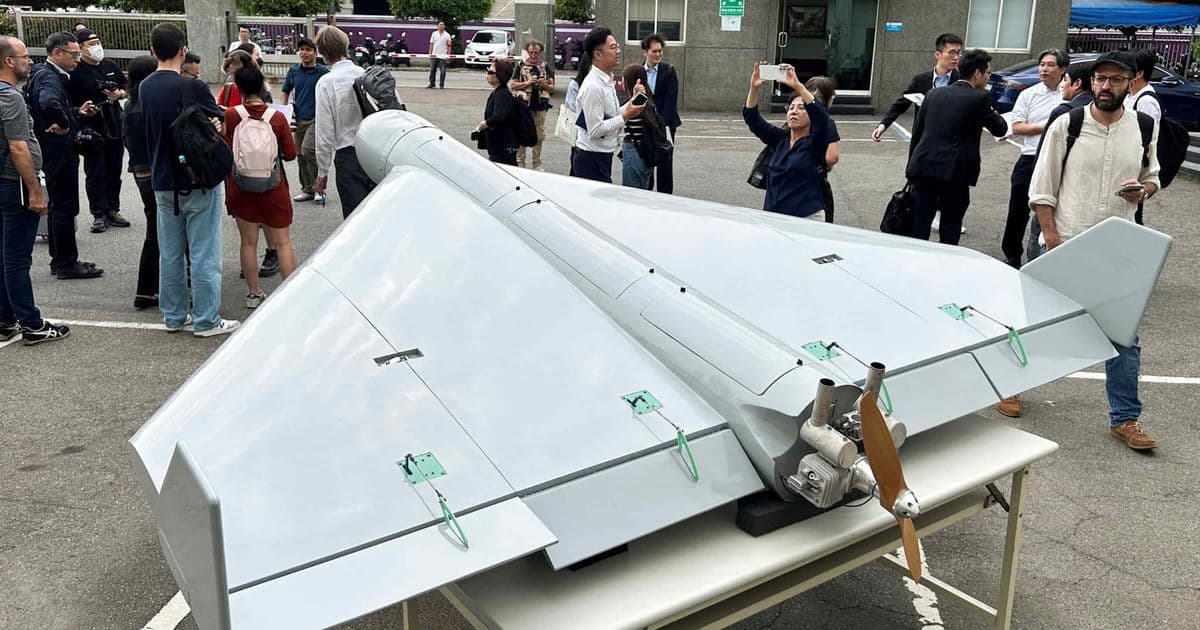
Budget disputes in Taiwan risk undermining drone defense capabilities at a time when conflicts in Iran and Ukraine have proven their strategic value, potentially sending conflicting signals to both China and the United States about Taiwan's commitment to self-defense.
Taipei's ongoing budget negotiations risk crippling the island nation's drone defense capabilities just as global conflicts have unequivocally demonstrated their battlefield importance, according to a senior Taiwanese legislator. The warning comes from the Democratic Progressive Party's top legislator on the defense committee, who argues that proposed spending cuts by the Kuomintang party could undermine Taiwan's asymmetric defense strategy at a critical moment.
The budget delay occurs as Taiwan seeks to expand its drone capabilities, a sector that has seen remarkable growth. Taiwan's drone exports to Europe have surged 40-fold since the onset of the Ukraine conflict, reflecting both global demand and Taiwan's emerging strength in this defense technology. Companies like Thunder Tiger Group, which displayed advanced drone systems during a recent media tour in Taichung, stand to benefit from increased investment rather than face potential cuts.
The strategic importance of drones has been vividly illustrated in recent conflicts. In Ukraine, both sides have deployed unmanned aerial vehicles for reconnaissance, targeting, and even kamikaze attacks against high-value assets. Similarly, Iran's military has incorporated drone technology into its defense and offense strategies, demonstrating their effectiveness in modern warfare. These conflicts have provided real-world validation of Taiwan's pivot toward asymmetric defense, which emphasizes unmanned systems, mobile missile platforms, and other technologies that can counter China's numerical advantage.
Taiwan's defense strategy explicitly positions unmanned vehicles as a cornerstone of its deterrence posture. The island nation faces a significant military imbalance compared to China, possessing approximately 400,000 active troops to China's 2 million. In this context, drones offer a cost-effective means to enhance surveillance, extend defensive capabilities, and potentially inflict disproportionate damage on any potential aggressor.
The budget dispute carries significant geopolitical implications. For Beijing, reduced drone investment could be interpreted as a sign of weakening resolve, potentially emboldening more assertive postures. For Washington, which has committed to assisting Taiwan's self-defense, budget cuts to critical capabilities could raise questions about the island's commitment to its own security and the effectiveness of U.S. military assistance.
The economic dimension of Taiwan's drone industry further complicates the budget debate. The sector has become an unexpected bright spot in Taiwan's defense manufacturing, with companies developing specialized systems tailored to the island's defensive needs. These capabilities have attracted international interest, with European defense firms seeking partnerships following the Ukraine war's demonstration of drone effectiveness.
From a market perspective, Taiwan's drone industry represents a strategic asset with both defensive and commercial potential. The global market for military drones is projected to reach $30 billion by 2030, with Taiwan positioned to capture a growing share of this expanding sector. Budget cuts could stifle innovation and production capabilities just as international demand surges.
The timing of the budget debate is particularly sensitive. Regional tensions have been elevated following incidents such as the blocking of Taiwan's president's flight and the cancellation of diplomatic visits due to Chinese pressure. These developments have underscored the need for robust defensive capabilities, making the preservation of drone funding all the more critical.
Taiwan's approach to drone development reflects a broader strategic shift toward asymmetric capabilities that maximize technological advantages to compensate for numerical disadvantages. This strategy has gained renewed attention following conflicts that demonstrated how smaller nations can leverage technology to deter or counter larger military forces.
The budget delay also highlights the delicate balancing act Taiwan must perform between maintaining adequate defense spending and managing economic constraints. With defense already consuming a significant portion of the national budget, additional cuts to critical capabilities could have cascading effects on Taiwan's overall security posture.
As global powers continue to assess Taiwan's defensive capabilities, the resolution of this budget dispute will send a clear signal about the island's determination to protect itself. In an era where drones have proven their worth on battlefields from Eastern Europe to the Middle East, Taiwan's commitment to this technology may become an increasingly important factor in regional security calculations.
Comments
Please log in or register to join the discussion