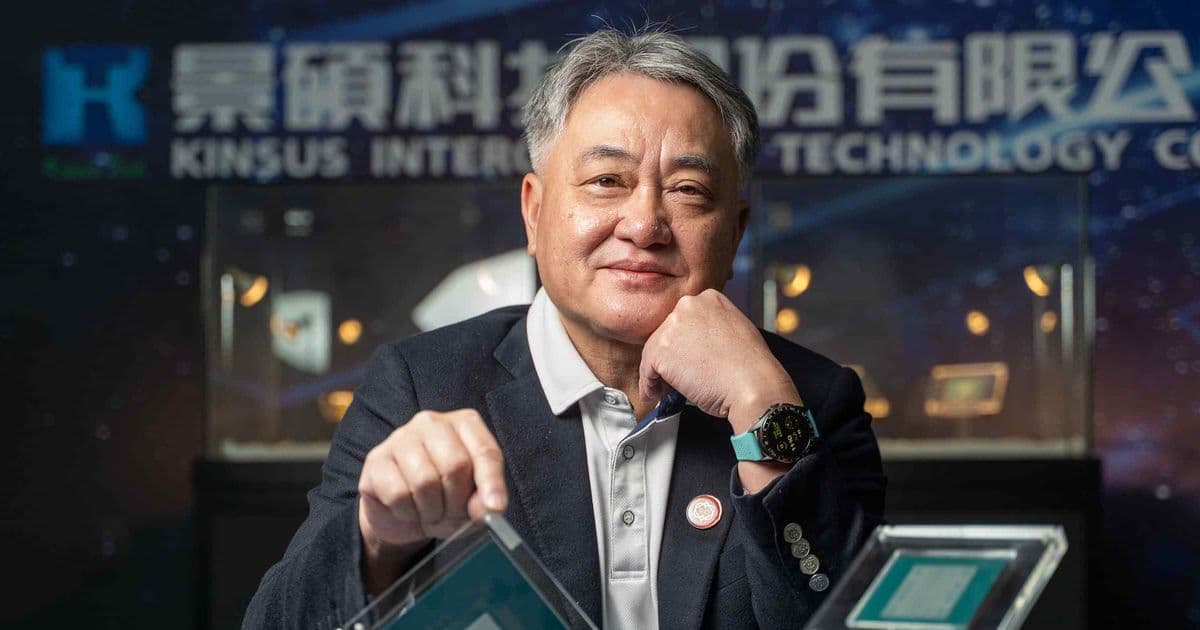
Kinsus, a leading chip substrate supplier, is investing billions to expand capacity and upgrade technology to meet surging AI demand from Nvidia and TSMC.
Taiwan's leading chip substrate supplier Kinsus is spending billions of dollars to expand capacity and upgrade technology to keep up with the needs of Nvidia and Taiwan Semiconductor Manufacturing Co. in the race to capture more of booming AI demand.
Scott Chen, CEO and president of Kinsus Interconnect Technology, a subsidiary of iPhone maker Pegatron, told Nikkei Asia that his company is planning to build a new plant every 2-3 years to meet the growing needs of the AI supply chain.
Kinsus is a key supplier of chip substrates, the thin layers that connect semiconductor chips to printed circuit boards. As AI chips become more powerful and complex, the demand for advanced substrates has surged. Nvidia, which designs the AI accelerators used in data centers and supercomputers, relies on Kinsus for its substrate needs.
TSMC, the world's largest contract chipmaker, also depends on Kinsus for substrates as it manufactures AI chips for companies like Nvidia, AMD, and Google. The AI boom has led to a surge in demand for TSMC's advanced chipmaking services, and Kinsus is working to keep pace.
"We are investing heavily to expand our capacity and upgrade our technology," Chen said. "The AI market is growing rapidly, and we need to ensure we can meet the needs of our key customers like Nvidia and TSMC."
Kinsus's investment comes amid a broader boom in the AI semiconductor supply chain. SK Hynix, a major supplier of memory chips used in AI systems, recently filed for a US listing to fund its AI chip-driven expansion. TSMC supplier Air Liquide has opened its first chip materials plant in Taiwan to support the growing demand.
However, the AI boom has also led to supply chain challenges. A supply crunch in Intel and AMD CPUs has dealt a fresh blow to PC and server makers. Chip testing has emerged as the latest chokepoint as Nvidia and Google designs grow more complex.
Arm, a leading designer of chip architectures, recently unveiled a new AI chip and expects billions in added revenue from the AI boom. Chinese tech giant Alibaba has also unveiled a 5-nm AI chipset design amid the OpenClaw frenzy, a reference to the US government's efforts to restrict China's access to advanced chipmaking technology.
Sakana AI, a Japanese startup, has entered the chatbot race with a Japan-tailored model, highlighting the global nature of the AI boom.
Kinsus's investment underscores the critical role that chip substrate suppliers play in the AI supply chain. As AI chips become more powerful and complex, the demand for advanced substrates is likely to continue growing, driving further investment in the sector.
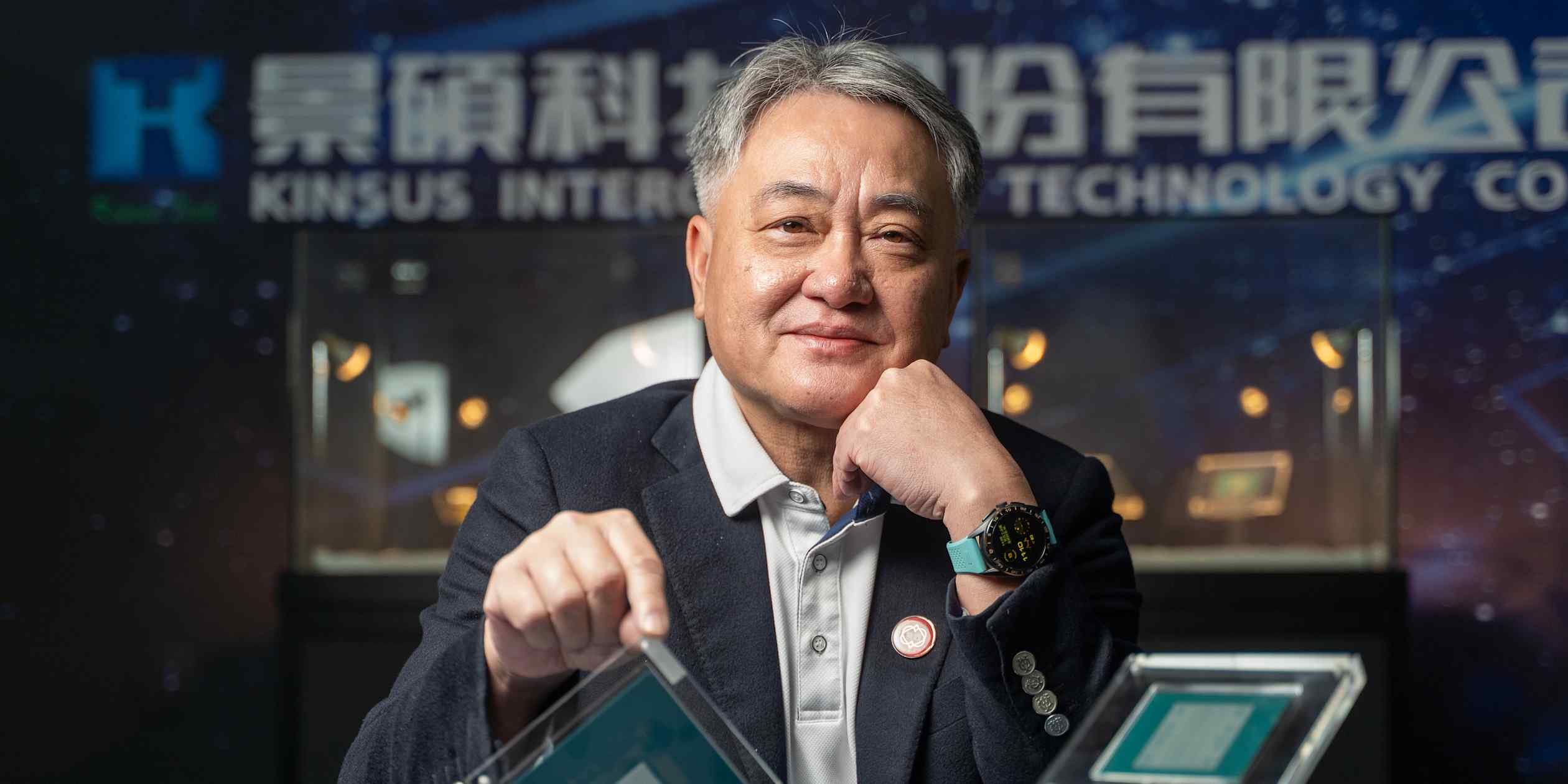
The AI boom is reshaping the semiconductor industry, with companies like Kinsus betting billions to keep pace with the needs of AI leaders like Nvidia and TSMC. As the demand for AI chips continues to surge, the race to capture more of the AI market is likely to intensify, driving further investment and innovation in the sector.
Comments
Please log in or register to join the discussion