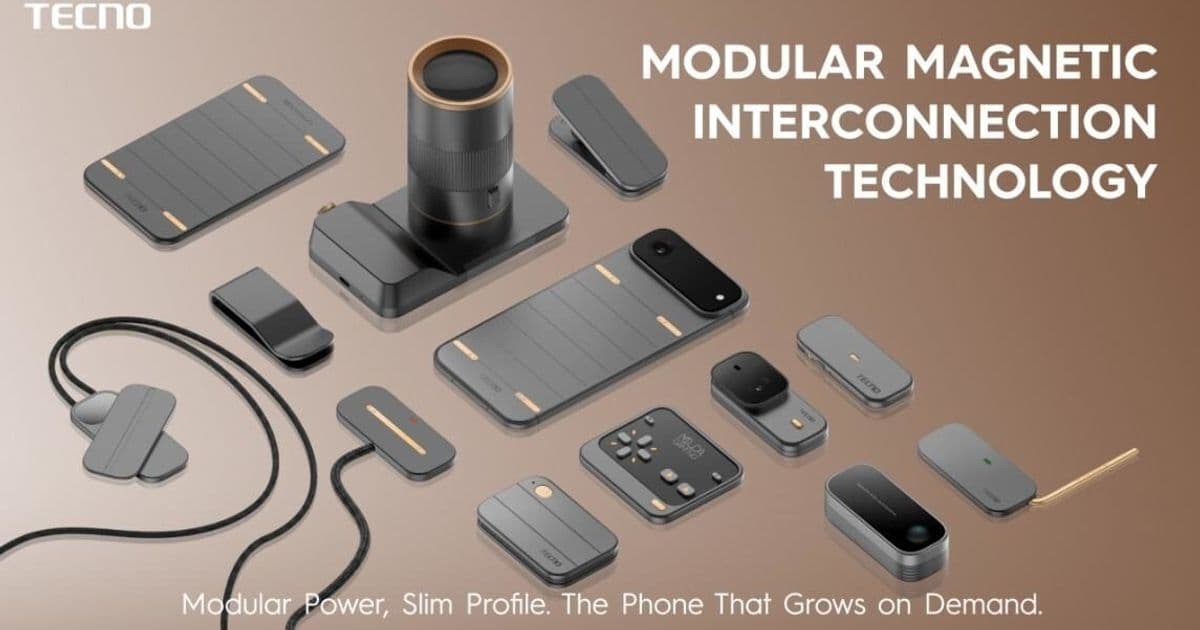
TECNO unveils a modular smartphone concept with magnetic camera, battery, and gamepad attachments, but faces the same challenges that doomed previous modular phone attempts.
Modern smartphones are pocket computers that often feel like jacks of all trades, but masters of none. While you can use them for communications, photography, gaming, and much more, there are ways a phone could be better at each of those things if you added better camera lenses, bigger batteries, physical game controllers, or other hardware. But you probably don't need or want that hardware all the time. So every now and again a company proposes a modular smartphone system that lets you add or remove features on the fly.
Google tried it. Motorola too. And so did LG. None of those models took off (LG doesn't even make any phones anymore). But that hasn't stopped Chinese smartphone maker TECNO from unveiling yet another concept for a modular smartphone.
Ahead of the annual Mobile World Congress show, TECNO is introducing what it calls a Modular Magnetic Interconnection Technology concept. Here's the basic idea: the base smartphone is a slim device that measures just 4.9mm thick, allowing you to attach magnetic modules to the back without making the device unwieldy… well, that's true for some modules anyway.
A power bank module, for example, measures just 4.5mm thick, which means that the phone + power bank is about as thick as a typical smartphone. But there's also a telephoto camera module with a huge lens that's clearly not going to fit in your pocket. But it's actually a fully functional standalone camera system that uses your phone's display as a viewfinder.
TECNO says modules attach to the phone using "a precision-engineered rectangular magnetic array" and a set of pogo pins. There's also support for WiFi, Bluetooth, and mmWave communication between modules and the smartphone for "higher bandwidth and lower-latency interaction."
The company says there are 10 modules, but a press release only describes three: the aforementioned Telephoto Lens and Power Bank, as well as an Action Camera module. There's also mention of "off-grid communication" and "gaming," though. Based on the images TECNO is showing off, it seems like we can also expect a gamepad module and some sort of wireless communication module or modules (maybe LoRA or satellite?).
TECNO says the phone itself features a glass back with a soft matte, anti-glare finish and a polished metal frame, and the company designed two versions. An Atom model has a "clean silver-aluminum body and red accents," while a Moda version "offers a bold, geek-inspired aesthetic."
Since this is just a concept rather than a real device that you can buy, it's unsurprising that the company hasn't said anything about details like the phone's processor, memory, screen resolution, or other specs. But if and when the phone goes from concept to reality, those things will be important… as will any assurances the company can give that this thing will outlast other modular smartphone systems.
There's not much reason to invest in a modular mobile device if the company that makes the hardware isn't committed to supporting it long-term. Why spend a bunch of money on modules that will only ever work with a single phone when you could just buy a standalone camera that will last for many years after your smartphone is dead and gone?
The modular phone concept faces significant challenges that have doomed similar attempts in the past. First, there's the fundamental question of whether consumers actually want modularity. Most smartphone users prefer the simplicity of an all-in-one device, even if it means compromising on certain features. The convenience of not having to carry around multiple modules or worry about compatibility often outweighs the benefits of swappable components.
Second, there's the engineering challenge. Making a phone thin and light while also incorporating magnetic attachment points and communication interfaces for modules requires careful design trade-offs. The base phone needs to be sturdy enough to support various modules without flexing or breaking, but also thin enough that adding modules doesn't create an unwieldy device.
Third, there's the ecosystem challenge. For a modular system to succeed, it needs third-party developers creating modules, which requires a large enough user base to make module development economically viable. This creates a chicken-and-egg problem: developers won't create modules without users, but users won't buy the phone without modules.
TECNO's approach of using magnetic attachment with pogo pins for power and data transfer is similar to what Motorola attempted with its Moto Mods system. That system ultimately failed due to lack of developer support and consumer interest, despite having some innovative modules like a Hasselblad camera attachment and a projector.
The inclusion of mmWave communication for "higher bandwidth and lower-latency interaction" is an interesting addition that could potentially address some of the limitations of physical connections. This could allow for more sophisticated modules that don't need to be physically attached to the phone, though it also adds complexity and potential battery drain.
The gaming module mentioned in the concept could be particularly interesting for mobile gamers who want physical controls without carrying a separate controller. However, this market is already served by clip-on controllers that work with any phone, making a proprietary solution less appealing.
Off-grid communication capabilities suggest TECNO may be targeting markets where reliable cellular coverage is limited, or users who want backup communication methods. This could include satellite messaging capabilities or LoRa-based communication for emergency situations.
The two aesthetic versions - Atom and Moda - show TECNO is thinking about different user preferences. The Atom's clean, minimalist design might appeal to business users or those who want a more professional look, while the Moda's "geek-inspired" aesthetic could attract tech enthusiasts who are more likely to be interested in modular technology.
One of the biggest questions about any modular phone concept is longevity. Previous attempts like Google's Project Ara, LG's G5 with its "Friends" modules, and Motorola's Moto Mods all failed partly because the companies didn't commit to supporting the modular systems long-term. When a new phone model came out, the modular accessories often became obsolete.
For TECNO's concept to succeed where others have failed, the company would need to commit to supporting the modular system across multiple phone generations, potentially even making the modular attachment system a standard feature across its product line. This would give module developers confidence to invest in creating accessories and give consumers confidence that their module investments won't become obsolete with the next phone upgrade.
Another consideration is the cost structure. Modular systems typically cost more than equivalent standalone devices because of the additional engineering required for the modular interface and the smaller production volumes. TECNO would need to price the system competitively while also making the modules affordable enough that users see value in purchasing them.
The timing of this concept announcement, just before Mobile World Congress, suggests TECNO is looking to generate buzz and gauge interest in the modular concept. Whether this remains a concept or becomes an actual product will likely depend on the feedback TECNO receives and its assessment of the market potential.
For now, TECNO's Modular Magnetic Interconnection Technology remains an interesting concept that builds on ideas that have been tried before. Whether it can succeed where similar attempts have failed will depend on addressing the fundamental challenges that have plagued modular smartphones: consumer demand, ecosystem development, engineering trade-offs, and long-term commitment from the manufacturer.
Comments
Please log in or register to join the discussion