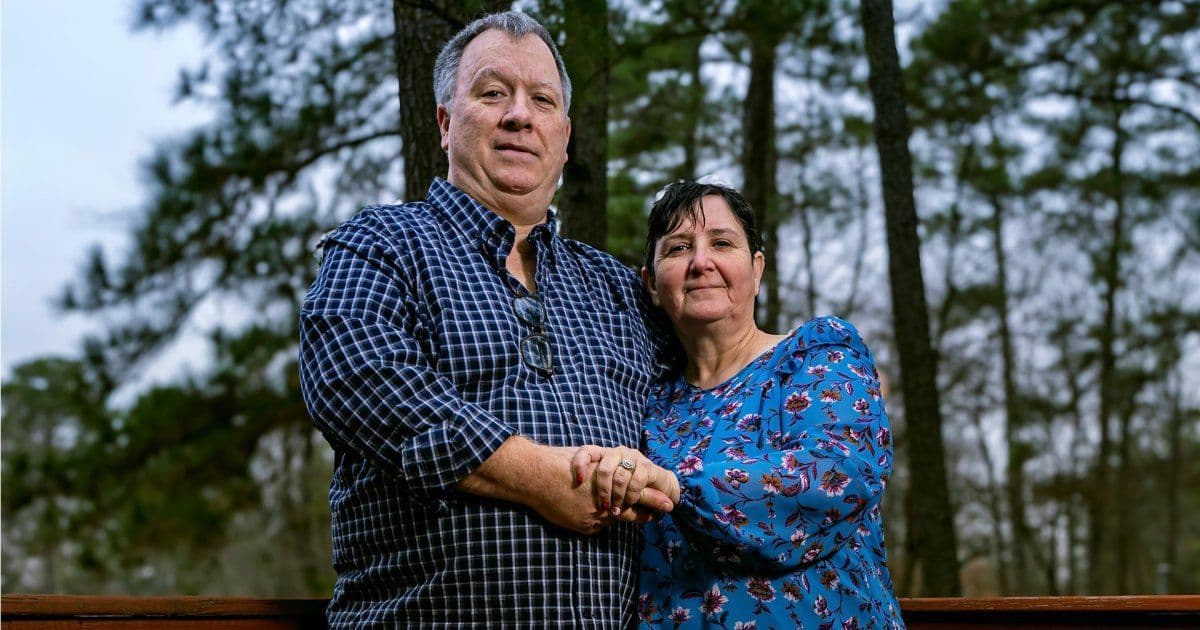
Retired officer Larry Bushart received an $835,000 settlement from Perry County and its sheriff after a 37‑day incarceration for reposting a political meme, a case that underscores ongoing First Amendment battles over online speech.
Larry Bushart – a meme, a warrant, and a $835,000 settlement
Larry Bushart, a retired law‑enforcement officer from Perry County, Tennessee, spent 37 days behind bars after posting a meme that quoted former President Donald Trump’s comment on a 2024 school shooting. The meme referenced a tragedy that occurred in Iowa, not in Tennessee, and Bushart did not create or alter the image. Still, Sheriff Nick Weems obtained a warrant on the premise that the post could be construed as a threat against Perry County High School.
The arrest sparked immediate backlash when video of the night‑time raid circulated online. In the footage Bushart tells the arresting officer he never made a threat. The sheriff later admitted he knew the meme was about an out‑of‑state incident, but omitted that context from the warrant application. Bushart was released only after the story went viral and drew national criticism.
The lawsuit and settlement
Represented by the Foundation for Individual Rights and Expression (FIRE) and the law firm Phillips & Phillips, PLLC, Bushart filed a federal civil‑rights suit in December 2025 against Sheriff Weems, Investigator Jason Morrow, and Perry County. The complaint alleged violations of the First Amendment and due‑process rights, arguing that the arrest was a retaliatory response to protected political speech.
In a joint statement dated May 20, 2026, the county agreed to pay Bushclass $835,000 in exchange for dismissing the case. The settlement does not include an admission of wrongdoing, but it does provide a tangible signal that the authorities’ actions were deemed legally untenable.
“I am pleased my First Amendment rights have been vindicated,” Bushart said after the announcement. “The people’s freedom to participate in civil discourse is crucial to a healthy democracy.”
Why the case matters
The incident sits at the intersection of three broader trends:
- Heightened scrutiny of online speech – Following the September 2025 assassination of conservative activist Charlie Kirk, dozens of social‑media posts were flagged, investigated, or used as grounds for disciplinary action. Bushart’s case is one of the most visible examples of law‑enforcement overreach in that wave.
- Local‑government liability – The $835,000 figure is significant for a rural county with a limited budget. It demonstrates that municipalities can face substantial financial exposure when officials ignore established First‑Amendment precedent.
- FIRE’s expanding litigation strategy – The organization has recently taken on several related cases, including a suit on behalf of Monica Meeks, a public‑servant fired for a Facebook post about Kirk, and a settlement with Austin Peay State University over a professor’s speech. Collectively, these actions aim to create a deterrent effect for officials who consider silencing dissent.
The personal cost
While the settlement covers monetary damages, Bushart’s experience extended beyond the courtroom. He posted a $2 million bond, lost his post‑retirement job, missed his wedding anniversary, and was absent for the birth of his grandchild. The emotional toll underscores why civil‑rights suits often seek both compensatory and punitive relief.
A note on the meme
The meme in question simply quoted Trump’s remark, “We have to get over it,” made after a school shooting. It was shared in response to a Facebook post promoting a vigil for Kirk. Because the image referenced a separate shooting in Perry, Iowa, there was no direct link to any local school or individual. Legal scholars point out that, under the Brandenburg v. Ohio standard, the post lacked the intent or likelihood of inciting imminent lawless action, reinforcing its protection under the First Amendment.
Looking ahead
FIRE’s senior attorney Adam Steinbaugh called the outcome a reminder that “government officials fail the test of free speech, the Constitution exists to hold them accountable.” The settlement may encourage other plaintiffs to pursue similar claims, especially in jurisdictions where law‑enforcement agencies have a history of conflating political speech with criminal conduct.
For anyone tracking the evolving legal landscape around digital expression, Bushart’s case offers a concrete example of how constitutional protections are being tested in the age of social media—and how they can still be enforced when officials overstep.
The Foundation for Individual Rights and Expression (FIRE) is a nonpartisan nonprofit that defends free speech and academic freedom across the United States.
Comments
Please log in or register to join the discussion