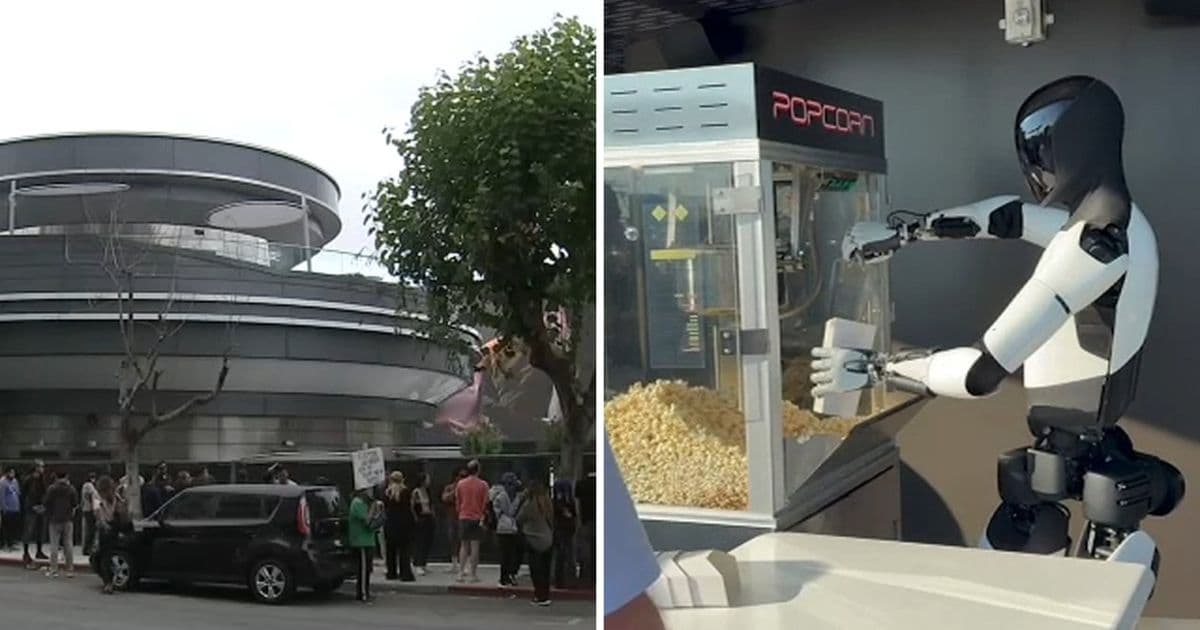
Tesla has launched its first diner, drive-in theater, and Supercharger station in Hollywood, featuring the Optimus robot serving popcorn and charging ports for electric vehicles. The 24/7 venue, born from a 2018 Elon Musk tweet, merges entertainment, automation, and EV infrastructure in a single space. If successful, this model could redefine urban tech hubs and accelerate robotics in consumer-facing roles.
On a bustling Hollywood street, Tesla owners and enthusiasts queued for hours, not just for a charge, but for a glimpse of the future. The electric vehicle giant's debut diner, drive-in theater, and Supercharger station officially opened this week, delivering on CEO Elon Musk's six-year-old vision of a retro-futuristic pit stop. This isn't just a novelty—it's a testing ground for how automation, energy infrastructure, and entertainment can converge in the real world.
At ground level, dozens of Tesla Superchargers hum quietly, allowing drivers to power up their Cybertrucks and Model Ys while catching a film on one of two massive screens. The setup cleverly leverages Tesla's existing ecosystem: audio streams wirelessly to car speakers, minimizing noise pollution—a nod to neighborhood concerns like those voiced by local resident Josh Becerra. "The sound will only connect to Tesla speakers, so I'm not worried about disruptions," he noted, though traffic impacts remain a local watchpoint.
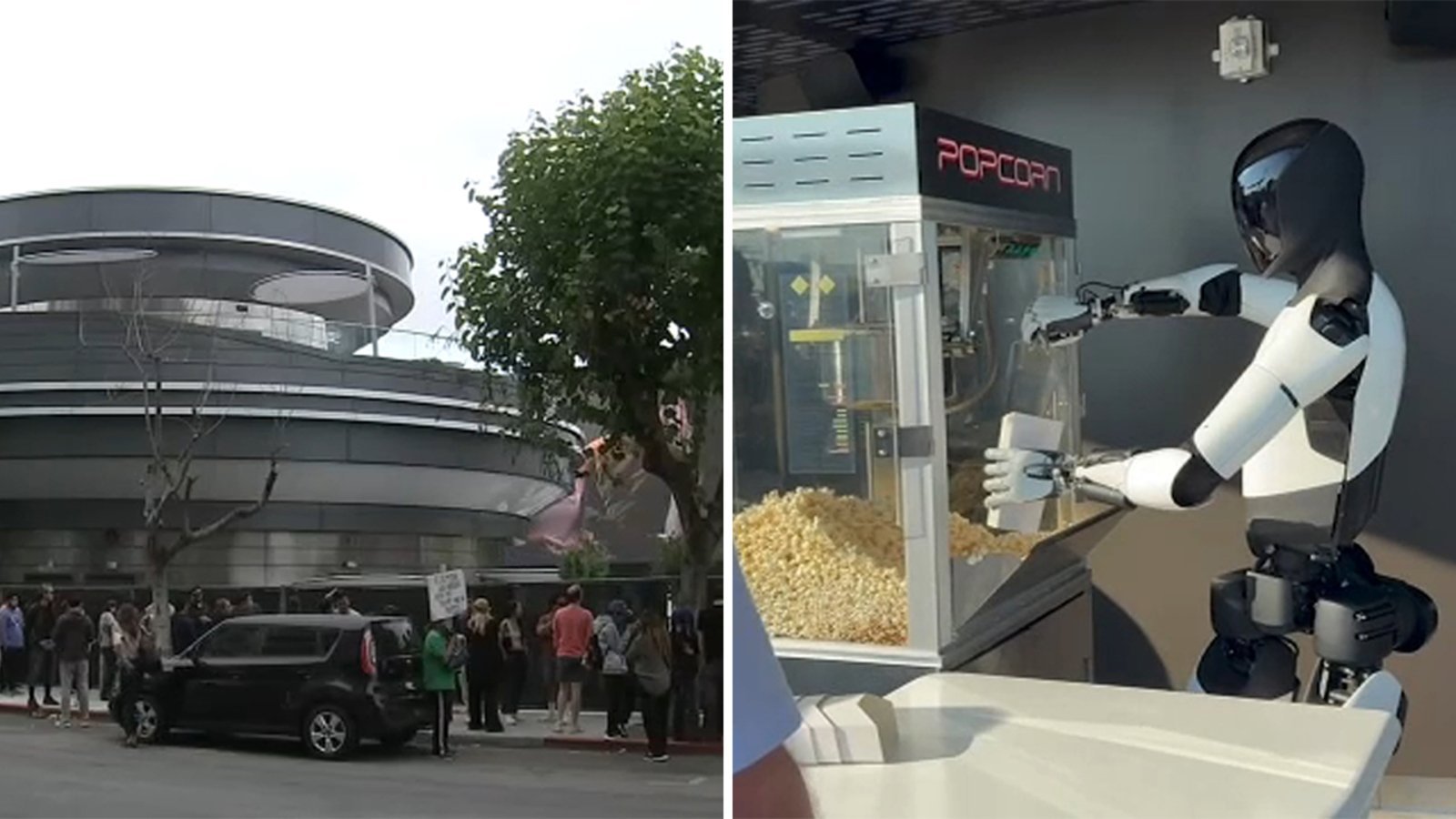
Up on the roof, the diner offers more than just burgers and shakes. Here, Tesla's Optimus robot takes center stage, serving popcorn with eerie precision. As captured by reporters, the humanoid bot scoops kernels into bags, hands them to guests, and even poses for photos—a tangible step toward Musk's goal of deploying robots in everyday service roles. "I'm super excited to see Optimus in action," said James T. from Cerritos, echoing the crowd's fascination. This hands-on demo hints at broader applications, from retail to hospitality, where AI-driven automation could soon handle repetitive tasks.
The project's roots trace back to a 2018 Musk post on X (then Twitter): "Gonna put an old school drive-in, roller skates and rock restaurant at one of the new Tesla Supercharger locations in LA." Now realized, the 24/7 operation isn't just a nostalgic throwback; it's a strategic play to enhance EV adoption by making charging stops experiential destinations. With plans to expand nationwide if successful, Tesla is effectively transforming Supercharger stations into multifunctional tech hubs—addressing range anxiety while pioneering new revenue streams.
For developers and urban planners, this experiment raises compelling questions. How will such integrations influence smart city designs? Could robotics ease labor shortages in service industries? And what data might Tesla gather from user interactions to refine its AI? As one attendee put it, "This feels like stepping into a prototype of tomorrow." If scaled, Tesla's diner could accelerate trends in sustainable infrastructure and human-robot collaboration, proving that the future of tech isn't just in labs—it's in our drive-ins and diners.
Source: ABC7
Comments
Please log in or register to join the discussion