
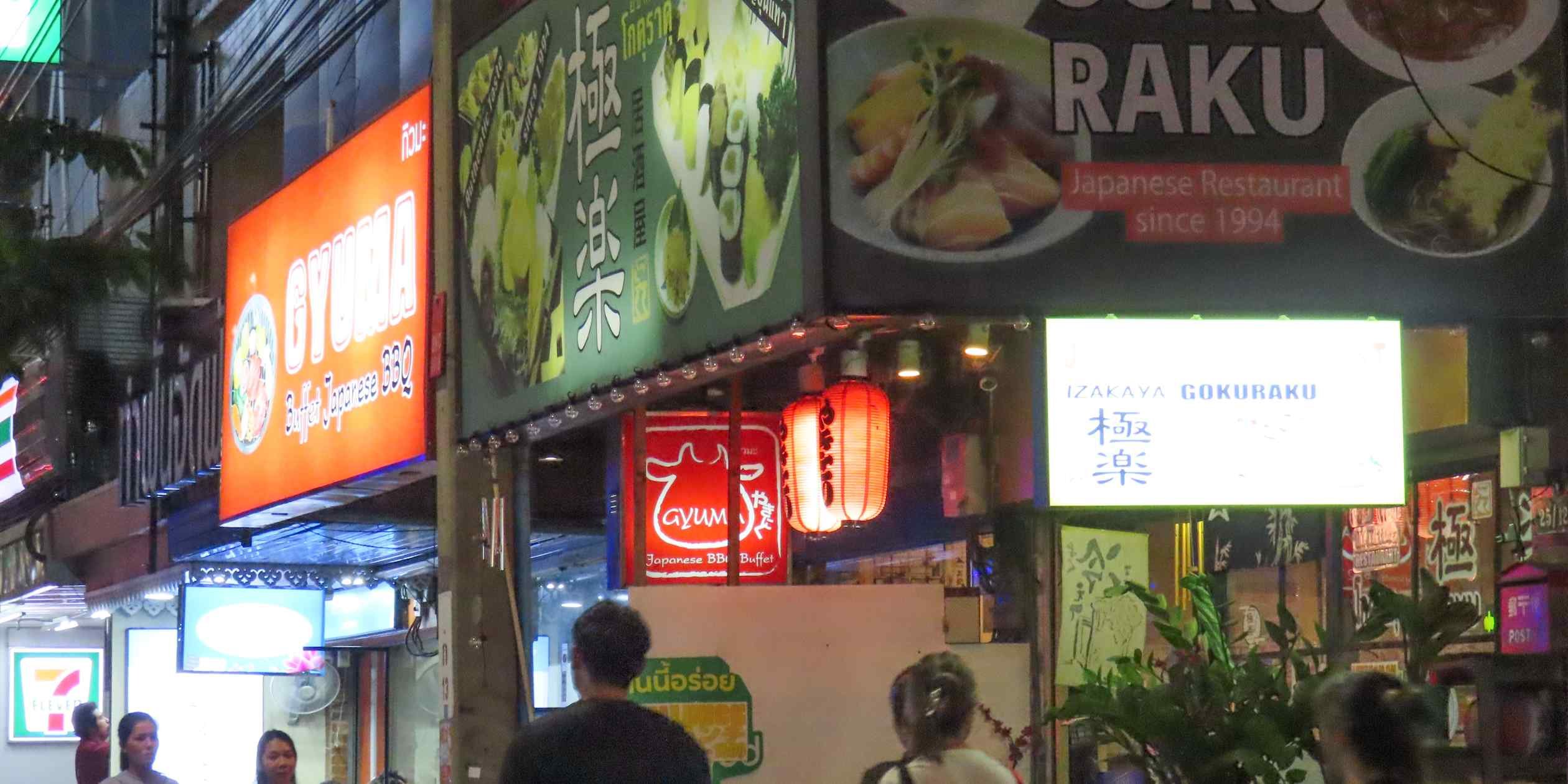
A new survey reveals the number of Japanese restaurants in Thailand declined in 2025, marking the first contraction in the sector's history. The downturn is attributed to a weak local economy and a shrinking Japanese expatriate community, signaling a shift in the country's dining landscape and consumer spending patterns.
The Thai restaurant market, particularly the segment catering to Japanese cuisine, has experienced a notable shift. According to a recent survey, the total count of Japanese restaurants in Thailand fell in 2025. This marks the first recorded decline for the sector, ending a period of sustained growth that mirrored Thailand's economic expansion and its status as a key manufacturing and business hub for Japanese corporations.
The contraction is not isolated to a single factor but rather a confluence of economic pressures. Thailand's domestic economy has shown signs of slowing, impacting discretionary spending among local consumers who have historically been a significant patron base for Japanese restaurants, especially in urban centers like Bangkok. Concurrently, the Japanese expatriate community, a core demographic for these establishments, has been shrinking. This demographic shift is linked to broader changes in global supply chains and corporate strategies, where some Japanese manufacturers have reevaluated their footprint in Southeast Asia.
Market Context and Economic Indicators
The Thai dining sector, valued at approximately 400 billion baht (roughly $11 billion USD) pre-pandemic, has been navigating a complex recovery. While tourism has rebounded in some segments, the underlying local economy faces challenges. Inflationary pressures and stagnant wage growth have curtailed household spending on premium dining experiences. Japanese restaurants, often positioned in the mid-to-high price segment, are particularly sensitive to these shifts.
The Japanese expatriate population in Thailand, which once numbered over 70,000, has seen gradual attrition. This is partly due to the relocation of manufacturing operations to other regions like Vietnam and India, driven by cost considerations and diversification strategies. The loss of this steady, high-spending customer base directly impacts restaurant viability, especially those located in business districts and expatriate-heavy residential areas.
Strategic Implications for the F&B Industry
This decline presents a critical inflection point for restaurant operators and investors. The era of automatic growth for Japanese cuisine in Thailand appears to be over, necessitating a strategic pivot. Operators must now focus on differentiation, cost management, and market diversification.
Menu Localization and Price Adaptation: To attract a broader Thai clientele, restaurants may need to adapt menus, incorporating local flavors or offering more affordable set meals. The traditional model of catering primarily to Japanese tastes is becoming less sustainable.
Operational Efficiency: With revenue under pressure, operators will need to scrutinize supply chains. Sourcing high-quality ingredients like fresh seafood from Japan incurs significant logistics costs. Some may explore local sourcing or alternative suppliers to maintain margins without compromising quality.
Geographic and Concept Diversification: While Bangkok remains the primary market, opportunities may exist in secondary cities with growing middle-class populations. Furthermore, the decline in traditional Japanese restaurants could coincide with a rise in other Asian cuisines or fusion concepts that offer novelty and perceived value.
Investment Scrutiny: For investors, the Japanese restaurant segment in Thailand now carries higher risk. Due diligence must extend beyond location and concept to include analysis of local economic trends, demographic shifts, and competitive intensity. The previous model of replicating successful formats from Japan may require significant localization to succeed.
Broader Industry Patterns
This trend in Thailand reflects a wider pattern in Southeast Asia's F&B sector. Markets that experienced rapid growth in ethnic cuisine segments are now maturing. Consumer preferences are evolving, driven by digital platforms, social media influence, and a greater emphasis on value and experience. The decline in Japanese restaurants in Thailand serves as a case study in how macroeconomic factors and demographic changes can abruptly alter the trajectory of a once-booming niche.
The survey's findings underscore that sustained growth in the restaurant industry cannot rely solely on expatriate communities or a single cuisine trend. It requires a deep understanding of local economic conditions, consumer behavior, and the agility to adapt business models in response to shifting market fundamentals. For Thailand's F&B sector, 2025 may be remembered as the year the market began to recalibrate, signaling a new phase of competition and strategic reevaluation.
Comments
Please log in or register to join the discussion