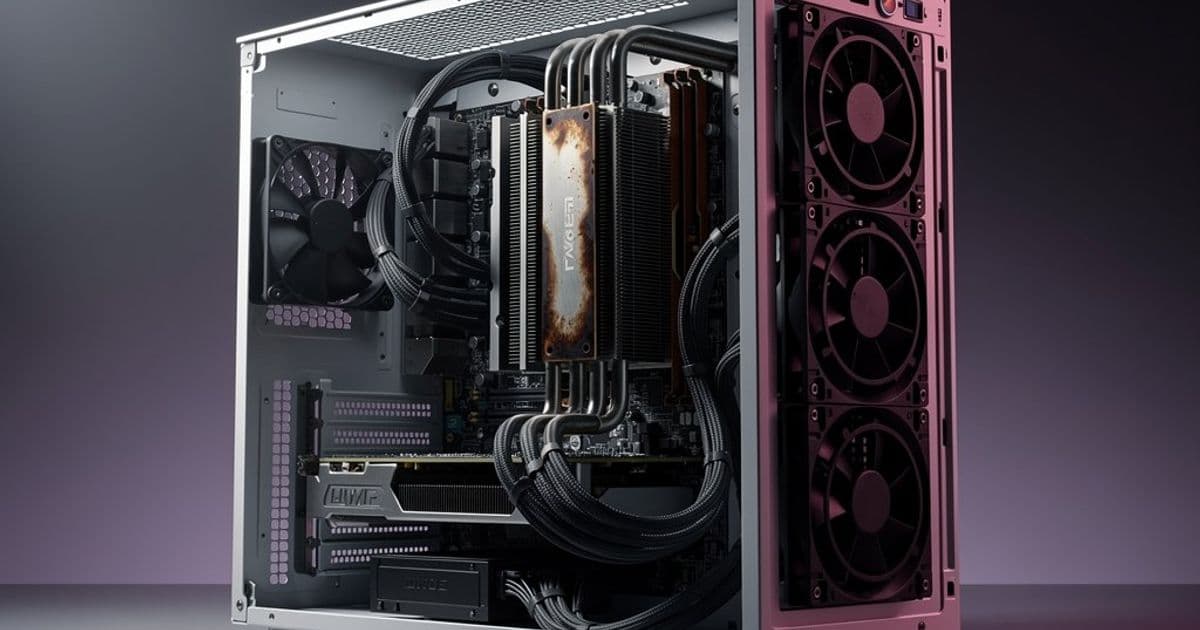
A developer's journey converting liquid-cooled Nvidia Grace-Hopper servers into an air-cooled desktop rig capable of running 235B-parameter LLMs, overcoming catastrophic hardware failures and sensor meltdowns along the way.
The pursuit of local large language model execution has long been constrained by prohibitive hardware costs and thermal limitations. When David Noel Ng encountered a liquid-cooled Nvidia Grace-Hopper Superchip system—typically reserved for data centers with six-figure price tags—listed for €10,000 on Reddit, it sparked an audacious hardware experiment. This 2x72-core ARM CPU and 2x H100 GPU configuration, featuring 1.1TB of combined LPDDR5X and HBM3 memory, represented theoretical overkill for consumer use. Its transformation into functional desktop hardware became a masterclass in overcoming enterprise-grade engineering constraints through unconventional problem-solving.
Initial skepticism gave way to opportunity when the seller revealed the system had been converted from liquid to air cooling. Physical inspection revealed significant dust contamination from industrial fans that rendered the motherboard unrecognizable. Post-purchase disassembly required literal board washing with isopropanol, followed by painstaking documentation of proprietary connectors. The noise from eight industrial-grade fans proved domestically untenable, registering 85dB at close range and prompting immediate household prohibition.
Water cooling reversion emerged as the only viable solution. Using Fusion 360 for precision modeling, Ng designed copper adapter plates to mount consumer Arctic Liquid Freezer III coolers onto H100 GPUs. CNC milling provided exacting thermal interface surfaces, while Bambu Lab X1 3D printers produced structural components from aluminum extrusion profiles. This phase underscored the fragility beneath enterprise hardware's rugged appearance—a minor mounting miscalculation could cascade into catastrophic failure.
The integration process revealed systemic vulnerabilities:
- Proprietary fan headers necessitated custom wiring adapters, leading to MOSFET failures when current requirements were underestimated
- Disabled hardware monitoring via
systemctl disable phosphor-sensor-monitorcircumvented fan checks but triggered new failures - Temperature sensors sporadically reported 16,777,214°C—the 24-bit integer maximum (0xFFFFFE)—indicating disconnection rather than stellar combustion
Microscope-assisted diagnosis revealed damaged 0402-sized surface components (100nF capacitor, 4.7k resistor) near GPU modules. Freehand soldering repaired traces under UV-cured resin reinforcement—a temporary solution validating the sensor error hypothesis. Driver configuration proved equally critical: adding options nvidia NVreg_NvLinkDisable=1 to /etc/modprobe.d/ prevented NVLINK initialization failures that blocked GPU recognition.
Performance metrics validated the effort:
- Qwen3-235B inference at 65.9 tokens/second
- 144-core compilation of Llama.cpp in 90 seconds
- Sustained 300W/GPU load during inference
The €9,000 build cost breakdown reveals resourcefulness:
| Component | Cost |
|---|---|
| GH200 Server | €7,500 |
| CNC Adapters | €700 |
| 8TB E1.S SSD | €250 |
| Water Coolers | €180 |
| Structural Frame | €200 |
This achievement demonstrates that enterprise AI hardware can be democratized through hardware hacking, albeit requiring multidisciplinary skills spanning electrical engineering, thermal dynamics, and low-level software configuration. While not recommended for faint-hearted enthusiasts, it establishes that $100,000+ data center capabilities can be condensed into desktop form factors at consumer-adjacent price points—provided one tolerates occasional reports of GPU temperatures exceeding those of supernovae.
Comments
Please log in or register to join the discussion