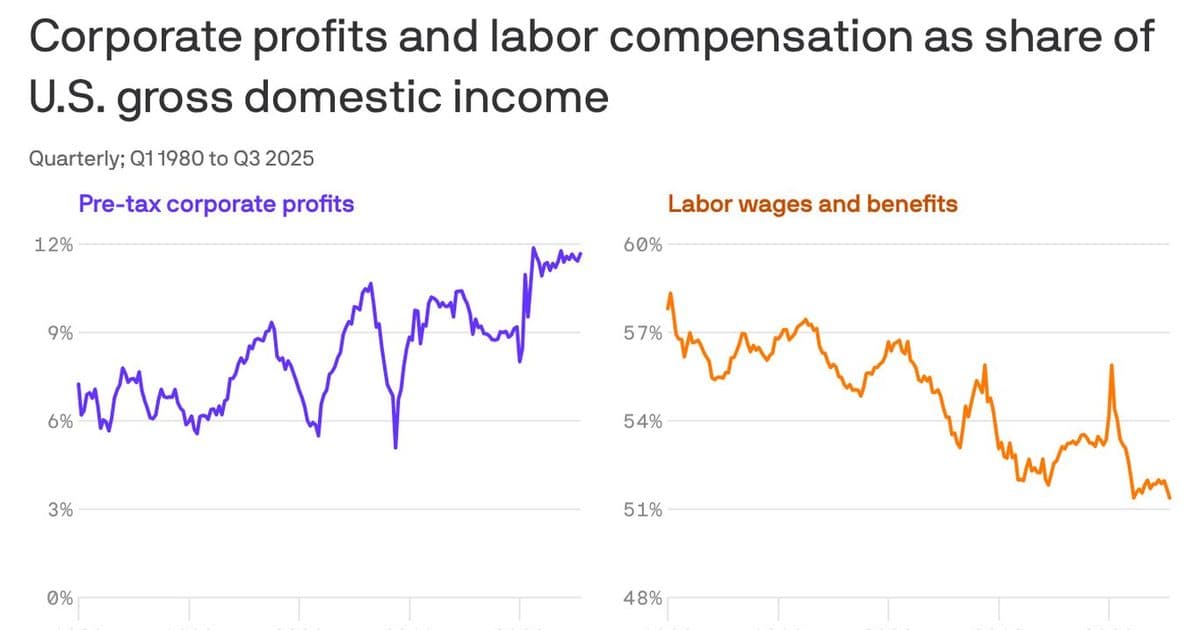
The AI revolution is creating massive wealth for investors and tech giants while offering limited benefits to the broader workforce, raising concerns about economic inequality and the future of labor in an automated world.
The artificial intelligence boom that has captivated Silicon Valley and Wall Street is producing a stark economic reality: the gains are flowing overwhelmingly to capital owners and investors, while workers across most sectors see little benefit from the technological revolution.
The Investment Surge
Venture capital firms have poured unprecedented amounts of money into AI startups over the past two years. According to PitchBook data, AI and machine learning companies raised over $50 billion in 2023 alone, with projections suggesting the 2024 figures will surpass that significantly. Major tech companies like Microsoft, Google, and Amazon have committed tens of billions more to AI infrastructure, including massive data center expansions and specialized chip development.
This investment frenzy has created enormous wealth for shareholders and early investors in AI companies. Nvidia's market capitalization has grown by over $1 trillion in the past year as demand for its AI chips has skyrocketed. OpenAI's valuation has reportedly reached $80 billion in private markets, while Anthropic and other competitors have seen similar valuation explosions.
The Worker Reality
Despite the massive capital inflows and technological advancements, the benefits for workers remain elusive. While AI has created some high-paying jobs for specialized engineers and researchers, the broader workforce has yet to see significant wage increases or improved working conditions attributable to AI adoption.
A recent study by the Economic Policy Institute found that productivity growth in AI-intensive industries has not translated into higher wages for workers. In fact, real wages in many tech-adjacent sectors have remained stagnant even as companies report record profits and stock price gains.
The Productivity Paradox
The classic economic argument for technological advancement suggests that productivity gains eventually benefit workers through higher wages and better working conditions. However, the AI boom appears to be following a different pattern. Companies are using AI primarily to automate tasks, reduce headcount, and increase profit margins rather than to enhance worker productivity and share the gains.
For example, customer service departments are replacing human agents with chatbots, content moderation teams are being supplemented by AI systems, and even software engineering roles are seeing portions of their work automated. While these changes may improve efficiency, they often result in job losses or wage stagnation rather than the win-win scenario of technological progress.
The Skills Gap Challenge
The AI revolution is creating a two-tiered labor market. Workers with advanced technical skills in AI development, machine learning engineering, and data science are seeing their market value increase dramatically. However, workers in routine cognitive and manual jobs face displacement risks without clear pathways to transition into the new economy.
This skills gap is widening income inequality. According to a 2024 report from the Brookings Institution, workers with AI-related skills command salary premiums of 25-40% compared to similar roles without those skills, while workers in automatable jobs face wage pressure and job insecurity.
The Policy Implications
The concentration of AI benefits among capital owners raises important policy questions. Should governments implement policies to ensure more equitable distribution of AI gains? Some economists argue for stronger antitrust enforcement to prevent tech giants from monopolizing AI benefits, while others advocate for policies like universal basic income or worker ownership stakes in AI companies.
Several European countries are already experimenting with AI taxation policies, where companies deploying automation pay additional taxes to fund worker retraining programs. The European Union's AI Act also includes provisions requiring companies to assess and mitigate the impact of AI systems on workers.
The Long-Term Outlook
The current trajectory of the AI boom suggests a continuation of trends that have defined the digital economy: massive wealth creation for investors and company founders, significant value capture by large tech platforms, and limited spillover benefits for the broader workforce.
Unless deliberate policy interventions are implemented, the AI revolution risks exacerbating economic inequality and creating a future where technological progress primarily serves capital owners rather than workers. The challenge for policymakers, business leaders, and society will be ensuring that the transformative potential of AI benefits more than just those who own the technology.
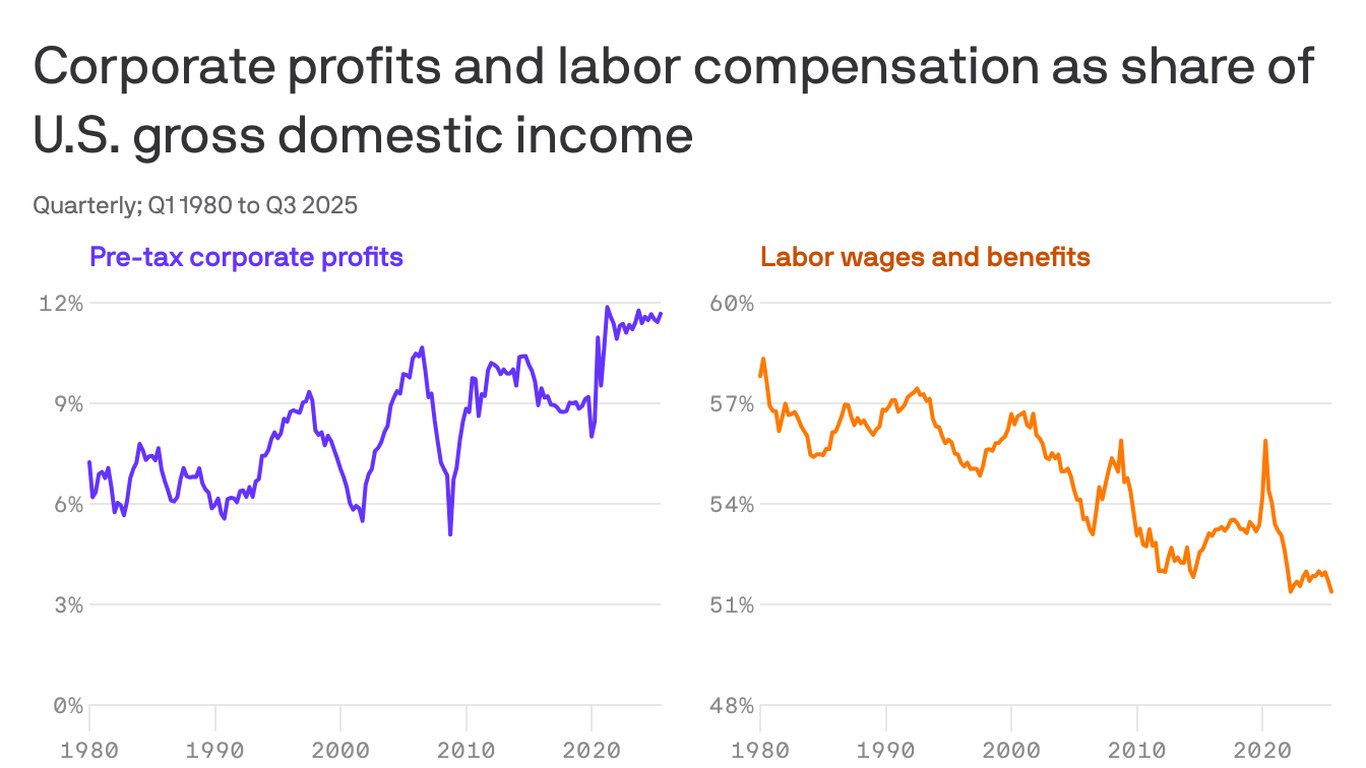
The question facing the global economy is whether the AI boom will follow the historical pattern of technological revolutions eventually benefiting workers, or whether it will represent a fundamental break where capital captures the gains while labor bears the costs of disruption.
Comments
Please log in or register to join the discussion