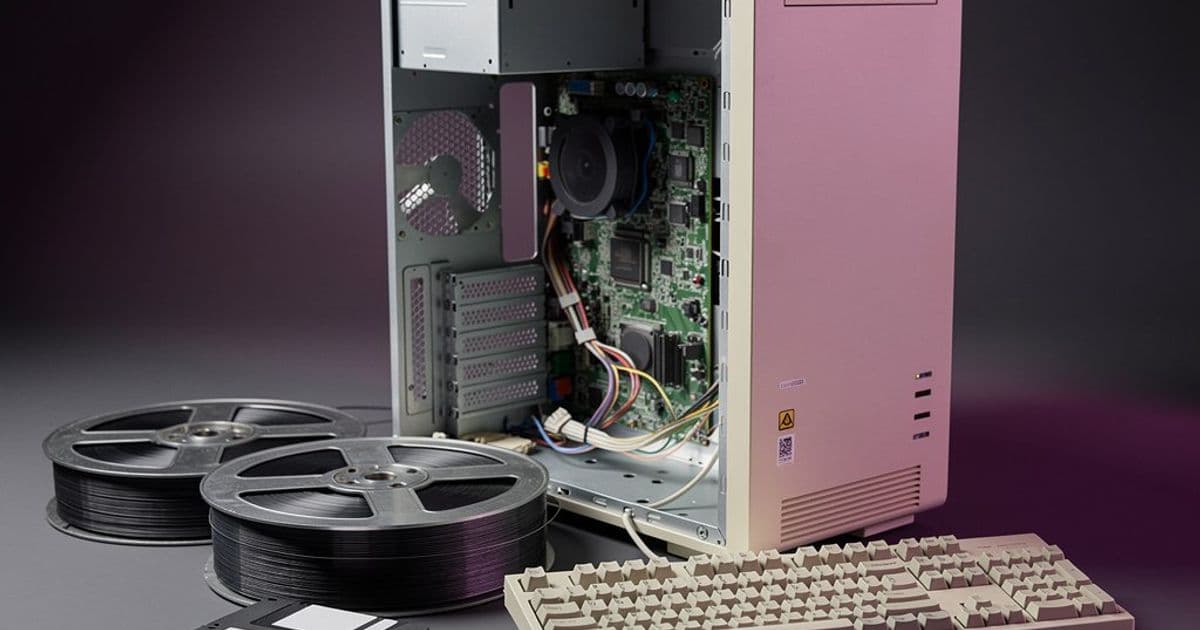
While The Digital Antiquarian explores software history, its companion site The Analog Antiquarian documents physical computing artifacts and their cultural significance.
In the landscape of computing history preservation, Jimmy Maher's dual-blog approach creates a unique dialogue between digital and physical realms. While The Digital Antiquarian chronicles software evolution and interactive narratives, its sister project The Analog Antiquarian focuses on preserving the tangible artifacts of technological history. This complementary effort recognizes that understanding computing's past requires examining both code and hardware.
Maher's work spans physical computing devices from early mechanical calculators to vintage gaming consoles, documenting their design philosophies and cultural impact. The Analog Antiquarian meticulously traces how interfaces evolved from punch cards to graphical user interfaces, emphasizing how physical constraints shaped user experiences. For example, the tactile feedback of early keyboards and the distinct sounds of disk drives created sensory relationships with technology that pure software emulation cannot replicate.
The project's significance lies in preserving contexts often lost in digital archives. Original packaging, instruction manuals, and marketing materials reveal how manufacturers positioned technology for mainstream adoption. By maintaining a chronological Table of Contents and Hall of Fame, Maher creates connective tissue between artifacts, showing design evolution across decades. His eBook Library initiative further demonstrates commitment to accessible preservation, packaging online articles into downloadable formats resistant to link rot.
This physical/digital duality reflects computing's own hybrid nature. As Maher noted in a 2025 interview: 'You can't truly understand VisiCalc without feeling the click of an Apple II keyboard, just as you can't grasp Infocom's brilliance without seeing their imaginative packaging.' The Analog Antiquarian ensures these material contexts survive for future historians, reminding us that innovation happens not just in code, but in the marriage of silicon and plastic, electrons and ink.
Explore the project at The Analog Antiquarian and access historical eBooks through the Digital Antiquarian Library.
Comments
Please log in or register to join the discussion