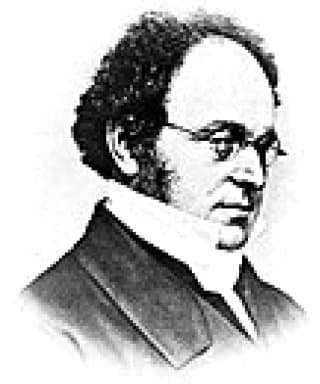
The 124-year journey to prove that four colors suffice to distinguish all regions of any map—a quest spanning flawed breakthroughs, philosophical resistance, and culminating in the first major computer-assisted proof—reveals profound insights about mathematics' evolving relationship with technology.
In 1852, Francis Guthrie posed a deceptively simple question while coloring a map of England: Could every conceivable map be colored with just four hues such that no two adjacent regions shared the same color? This became the four-color problem, a topological puzzle that would consume mathematicians for 124 years. Its eventual resolution in 1976 by Kenneth Appel and Wolfgang Haken didn't merely settle a cartographic curiosity—it reshaped our understanding of mathematical proof itself through unprecedented collaboration between human intuition and computational brute force.
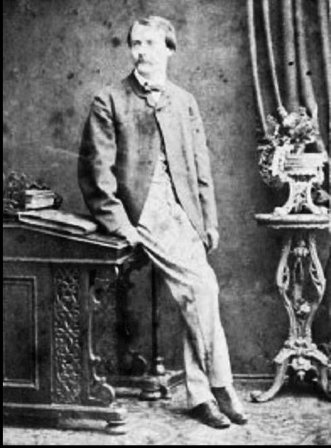
The problem's origins trace to Augustus De Morgan, who learned of Guthrie's conjecture through his student Frederick Guthrie. De Morgan recognized its profundity but failed to prove it, propagating the challenge among peers like William Rowan Hamilton. Early misconceptions abounded, notably the false belief that disproving five mutually adjacent regions (impossible on a plane) would solve the problem. Arthur Cayley later refined the approach by demonstrating that only cubic maps—where exactly three regions meet at every vertex—required consideration. His insight allowed mathematicians to simplify the problem's structure significantly.
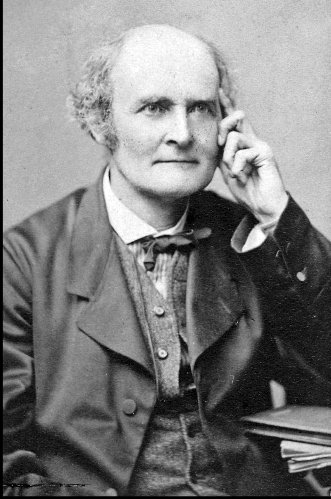
Alfred Kempe's 1879 "proof" marked the first major inflection point. By introducing Kempe chains—a method of color interchanges to free up hues—he claimed to resolve all cases, including the stubborn pentagon configuration. His work, published in Sylvester's American Journal of Mathematics, was celebrated widely; Kempe earned a Royal Society fellowship for it. Yet Percy Heawood exposed a fatal flaw in 1890: Kempe's pentagon handling permitted contradictory color interchanges. Heawood salvaged partial victory by proving five colors always sufficed, while highlighting the problem's equivalence on spherical surfaces.
The 20th century systematized the attack. George Birkhoff introduced the chromatic polynomial to quantify colorings and formalized reducibility—showing certain configurations couldn't appear in minimal counterexamples. His analysis of the Birkhoff diamond became a template for future reducibility arguments. Philip Franklin expanded unavoidable sets: collections of configurations guaranteed to appear in any map, later paired with discharging methods to redistribute combinatorial "charge." Heinrich Heesch, facing Nazi academic purges, privately amassed thousands of reducible configurations and identified critical obstacles to reducibility, envisioning an unavoidable set of 10,000 cases.
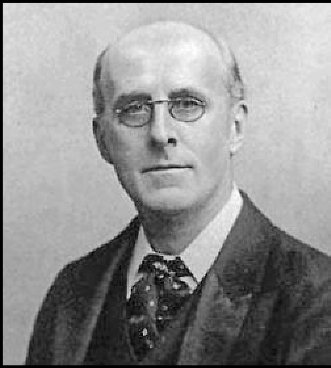
Appel and Haken's 1976 breakthrough emerged from this scaffolding. They inverted the strategy: instead of finding reducible configurations first, they constructed unavoidable sets of likely-reducible structures, using discharging algorithms refined through man-machine iteration. Their initial 1,936 configurations—later pared to 1,482—were tested for reducibility via exhaustive case-checking on Illinois' new supercomputer during spring break. The computer ran for 1,200 hours, confirming reducibility through Kempe-chain adaptations and John Koch's C-reducibility modifications. The proof's scale was historic: 400 pages of microfiche supplementing journal articles.
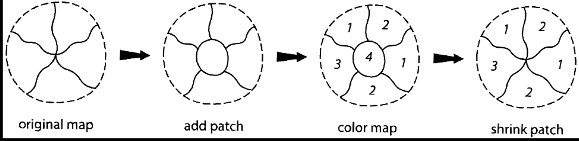
Reception split the mathematical community. Purists rejected the proof's non-verifiability by hand, while others acknowledged its inevitability. The controversy underscored a paradigm shift: mathematics could now solve problems intractable to human cognition alone. Subsequent refinements by Robertson, Seymour, Sanders, and Thomas (1997) simplified the set to 633 configurations, and Georges Gonthier's 2004 formal verification using the Coq proof assistant silenced lingering doubts.
Implications resonate beyond topology. The theorem validated computational methods as legitimate tools for deduction, paving the way for projects like the Flyspeck initiative verifying Thomas Hales' Kepler conjecture. Philosophically, it redefined proof as a collaborative, dynamic process—not merely a static sequence of logic. Heesch's obstinacy during political turmoil and Appel-Haken's tenacity epitomize science's relentless progression through error and correction. As map-coloring migrates to VLSI chip design and frequency allocation, this century-long struggle remains a testament to mathematics' capacity to synthesize intuition, innovation, and imperfection into enduring truth.
Comments
Please log in or register to join the discussion