
Despite massive AI infrastructure investments, DRAM supply constraints threaten to cap global AI capacity at just 15GW, potentially creating a compute shortage as token consumption skyrockets among software engineers and agentic workflows.

As AI adoption accelerates, particularly among software engineers leveraging increasingly sophisticated coding agents, token consumption is experiencing unprecedented growth. My own usage patterns illustrate this shift: from initial daily averages of 5-10k tokens with early ChatGPT, consumption surged 5x with GPT-4's release, and now reaches millions of daily tokens using Claude Opus and parallel agentic workflows. This trajectory – a 50x increase in personal token consumption over three years – mirrors broader industry trends.
The Infrastructure Race Hits Physical Limits
Hyperscalers have committed hundreds of billions to AI infrastructure, with capex deals often exceeding $10B. However, translating financial commitments into functional compute faces two critical constraints:
Power Limitations: While behind-the-meter gas turbines temporarily alleviate grid capacity issues, they create secondary shortages in turbine availability.
The DRAM Bottleneck: This represents the most severe constraint. Current DRAM production, particularly high-bandwidth memory (HBM3/HBM4) essential for AI accelerators, can only support about 15GW of AI infrastructure deployment.
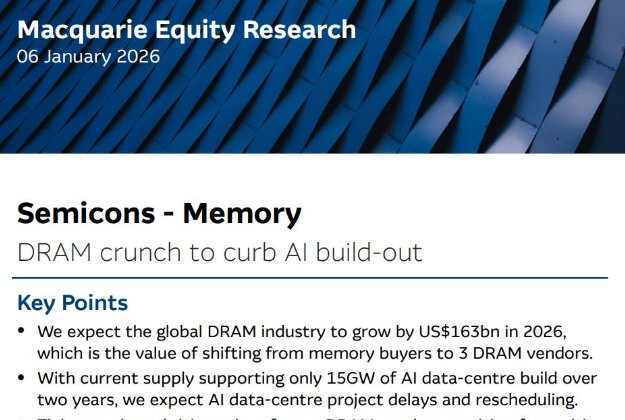
Why DRAM Changes Everything
- Concentrated Supply Chain: EUV lithography machines essential for advanced DRAM production come from a single Dutch manufacturer (ASML), creating production bottlenecks.
- Slow Ramp Times: Building new DRAM fabs requires 3-5 years, far outpaced by demand growth.
- Agentic Workload Impact: Prompt caching – crucial for cost-effective agentic systems – disproportionately consumes RAM, exacerbating the constraint.
Quantifying the Crunch
Based on Macquarie's 15GW ceiling:
- Deployment could support ~2 million Nvidia GB200 chips
- At estimated throughput, this sustains just 30 million intensive users (1M tokens/day)
- This capacity must also serve video/audio models, training runs, and non-agentic workloads
Market Adaptations
Economic pressure will drive significant changes:
- Dynamic Pricing: Expect tiered pricing models with substantial discounts during off-peak hours
- Restricted Access: Free tiers may disappear while providers reserve top models for proprietary products
- Efficiency Race: Hardware and model optimization (tok/s improvements) will become critical competitive advantages
- Architectural Shifts: Alternatives like Groq's SRAM-based approach (recently licensed by Nvidia) could gain traction
The DRAM shortage creates a tangible ceiling on global AI capacity regardless of financial commitments. While hyperscalers navigate this constraint through efficiency gains and pricing strategies, the next 2-3 years will likely see compute become a scarce – and increasingly expensive – resource for AI developers.
Comments
Please log in or register to join the discussion