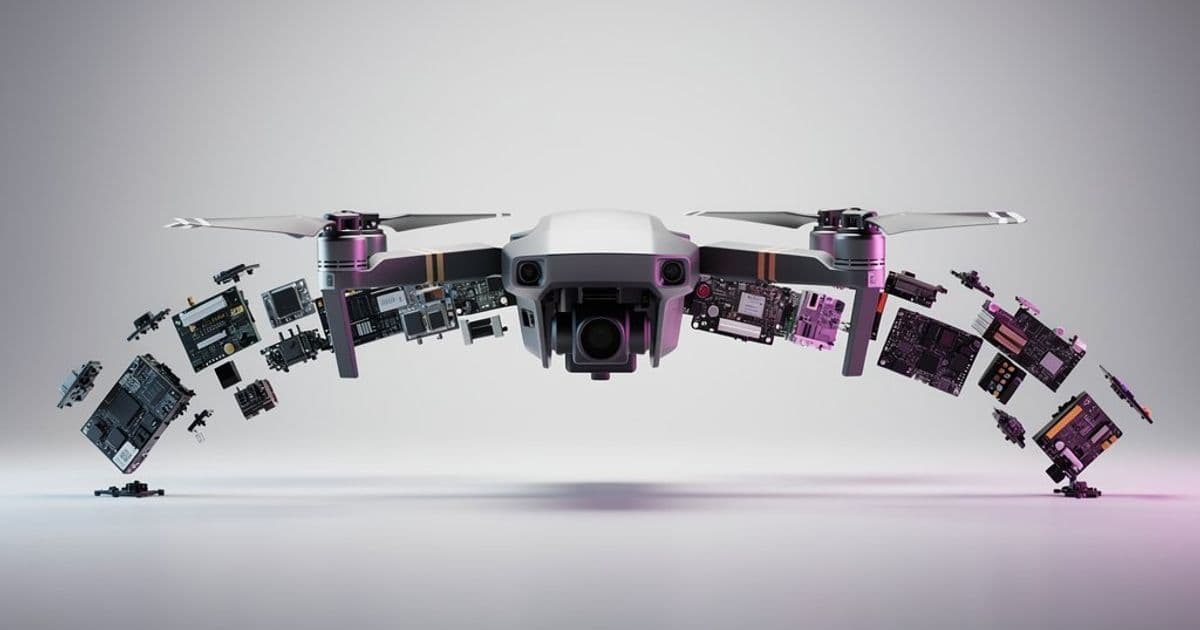
China's official ban on sensitive drone technology exports to both Ukraine and Russia reveals a deeper, more complex reality: both nations remain heavily dependent on the same Chinese supply chains for critical components. This creates a geopolitical paradox where Beijing's policy aims to maintain neutrality, yet the underlying commercial and technical infrastructure continues to fuel the conflict from both sides.
The drone war in Ukraine has become a defining feature of modern conflict, but its technological backbone tells a more complicated story than simple battlefield narratives suggest. While headlines focus on frontline deployments and tactical innovations, a quieter but more fundamental dynamic is playing out in global supply chains: both Ukraine and Russia are scrambling for the same Chinese drone components, despite China's official ban on sensitive exports to both nations.
This situation reveals a critical disconnect between geopolitical posturing and technological reality. China's Cyberspace Administration has implemented strict controls, requiring firms to file AI tools in a public algorithm registry and banning sensitive drone technology exports. Yet the commercial ecosystem surrounding drone manufacturing is so deeply integrated with Chinese suppliers that complete separation is nearly impossible. The ban creates a formal policy barrier, but the underlying market incentives and technical dependencies continue to drive procurement through indirect channels.
The Shared Technological Foundation
Modern military drones, whether deployed by Ukrainian forces or Russian troops, rely on a remarkably similar set of core technologies. Flight controllers, GPS modules, camera systems, and communication equipment often originate from the same Chinese manufacturers. Companies like DJI, while officially restricting sales in conflict zones, have seen their technology become the de facto standard for both commercial and military applications worldwide.
The technical reasons for this convergence are straightforward. Chinese manufacturers have achieved economies of scale that make their components significantly cheaper and more readily available than alternatives. A typical commercial drone might use a flight controller from a Shenzhen-based company, GPS modules from another Chinese supplier, and cameras from yet another. This ecosystem has developed over decades, creating dependencies that are difficult to break quickly.
For military applications, this creates a challenging situation. Both sides need reliable, proven components that can be sourced at scale. While there are efforts to develop domestic alternatives, the timeline for such development is measured in years, not months. In the immediate term, the path of least resistance often leads back to Chinese suppliers, even if through intermediaries or gray-market channels.
The Ban's Practical Limitations
China's export ban on sensitive drone technology represents a clear geopolitical statement, but its implementation faces significant practical challenges. The definition of "sensitive" technology is inherently ambiguous. Is a standard GPS module sensitive? What about a camera with specific resolution capabilities? The line between civilian and military applications has blurred dramatically in the drone era.
Moreover, the global supply chain for drone components is extraordinarily complex. A single drone might contain parts sourced from dozens of suppliers across multiple countries. Chinese components might be assembled in Vietnam, shipped through Malaysia, and ultimately reach Ukraine or Russia through third-party distributors. This creates what supply chain experts call "obfuscation through complexity" - making it difficult to trace the ultimate destination of components.
The ban also creates economic incentives for circumvention. When legal channels are closed, gray markets emerge. Intermediaries in neutral countries can purchase components legally and then resell them to parties in conflict zones. The profit margins in such arrangements often justify the risks, creating a resilient underground supply network.
Evidence from the Battlefield
Analysis of captured and destroyed drones on both sides of the conflict reveals striking similarities in component sourcing. Ukrainian forces have documented Russian drones containing Chinese-made flight controllers and communication systems. Conversely, Russian sources have identified Chinese components in Ukrainian drones. This mutual dependence is not coincidental - it reflects the reality of globalized technology manufacturing.
The situation is further complicated by the dual-use nature of drone technology. Many components used in military drones are identical to those used in agricultural drones, delivery drones, and recreational quadcopters. A manufacturer selling to a legitimate agricultural company cannot easily control where those components eventually end up. This creates what economists call "leakage" in the supply chain - perfectly legal transactions that ultimately serve military purposes.
Counter-Perspectives and Nuances
It would be inaccurate to suggest that China's ban has had no effect. The policy has certainly made direct, large-scale procurement more difficult. Official channels for purchasing military-grade drone components are now closed, forcing both sides to develop more sophisticated procurement networks. This adds cost, complexity, and risk to the supply chain.
Some experts argue that the ban is more effective than critics suggest. While components still flow, the quantities and quality may be reduced. Chinese suppliers, aware of international scrutiny, may be more cautious about large orders that could attract attention. This creates friction in the supply chain that benefits neither side significantly.
However, other analysts point out that the ban may actually create perverse incentives. By making Chinese components more valuable and scarce, it increases their black-market price, potentially attracting more actors to the gray market. The policy might inadvertently professionalize and expand the illicit supply network rather than eliminating it.
The Broader Pattern of Technological Interdependence
This drone supply situation reflects a broader pattern in modern conflict: technological interdependence that transcends geopolitical boundaries. The same smartphone components that power communication devices in Ukraine are manufactured in the same facilities that supply Russian consumers. The semiconductor chips that control military systems are produced in global foundries that serve multiple markets.
This interdependence creates what security scholars call "weaponized interdependence" - the use of economic and technological connections as leverage in geopolitical conflicts. China's drone export ban is a clear example of this strategy. However, the effectiveness of such leverage depends on the availability of alternatives and the resilience of supply chains.
In the case of drone technology, the alternatives are limited. While Western companies like Skydio and Parrot produce drones, their components are often more expensive and less readily available than Chinese equivalents. For nations in active conflict, cost and availability often outweigh concerns about supply chain origins.
Looking Forward: The Future of Drone Supply Chains
The current situation points toward a gradual but inevitable shift in drone technology sourcing. Both Ukraine and Russia are investing in domestic production capabilities, though these efforts face significant technical and economic hurdles. The development of alternative supply chains will take years and require substantial investment.
In the meantime, the gray market for Chinese drone components will likely continue to thrive. The profit incentives are too strong, and the technical barriers to alternative sourcing are too high. This creates an ongoing challenge for policymakers seeking to control the flow of military technology.
The drone supply chain dilemma also highlights a fundamental tension in modern geopolitics: nations want to maintain technological sovereignty while participating in a globalized economy. China's ban represents an attempt to navigate this tension, but the reality of global supply chains makes complete separation nearly impossible.
For observers of the conflict, this means that battlefield dynamics will continue to be influenced by factors beyond the front lines. The availability of Chinese components, the effectiveness of export controls, and the resilience of gray markets will all play roles in shaping the capabilities of both sides. Understanding these supply chain dynamics is essential for comprehending the broader trajectory of the conflict and the challenges of regulating dual-use technology in an interconnected world.
The drone war in Ukraine is, in many ways, a war of supply chains as much as it is a war of tactics and strategy. The shared dependence on Chinese technology creates a paradoxical situation where both sides fight with tools from the same source, even as their governments pursue divergent geopolitical goals. This reality underscores the complexity of modern conflict and the limitations of traditional tools of geopolitical control in an era of globalized technology production.
Comments
Please log in or register to join the discussion