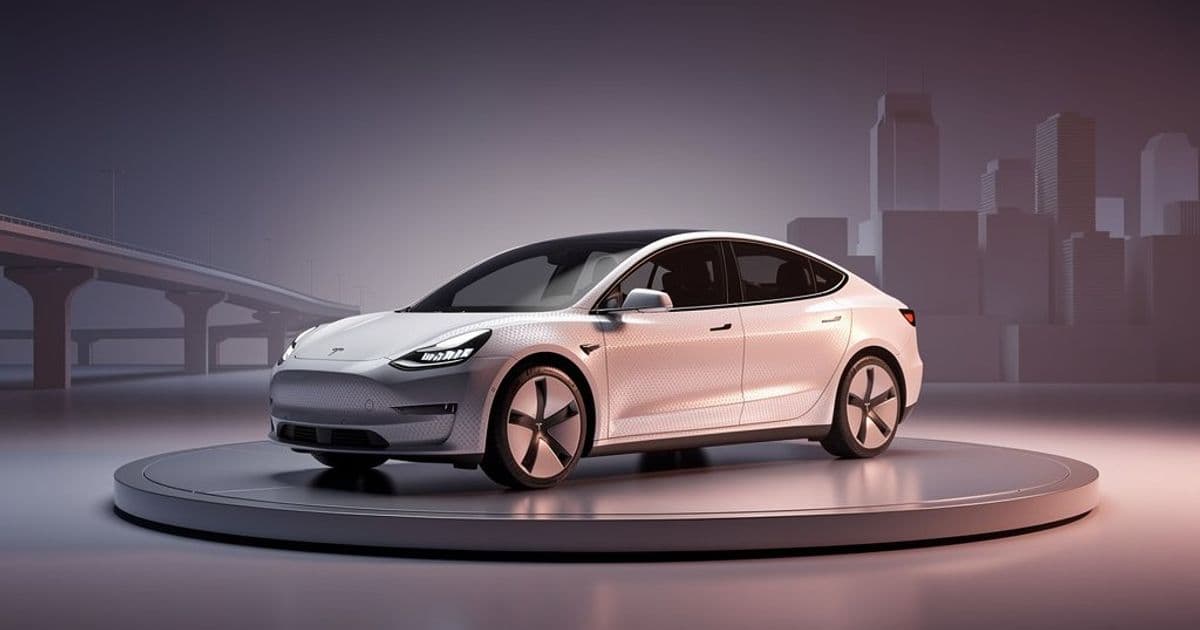
This article explores a speculative future where robotaxis, driven by AI and venture capital, consolidate into a few dominant networks, raising prices and leveraging insurance to make personal car ownership prohibitively expensive. It examines the economic and social implications, contrasting the U.S. trajectory with potential state-managed outcomes in China.
The prospect of autonomous vehicles has long been framed as a technological inevitability, but the real transformation may not be about self-driving cars themselves. Instead, it could be about the economic and social structures that emerge around them. The core argument is that robotaxis—autonomous ride-hailing services—will not merely supplement personal transportation but actively undermine car ownership through a predictable cycle of venture capital frenzy, market consolidation, and eventual price gouging. This isn't a distant sci-fi scenario; it's a plausible trajectory based on current patterns in tech markets, with significant implications for personal freedom and economic equity.
The Initial Phase: Capital Frenzy and Market Saturation
Robotaxis will become economically viable in limited operational domains within 3-5 years. Unlike human-driven ride-hailing services like Uber or Lyft, which are constrained by driver availability and labor costs, robotaxis are primarily limited by capital investment. Once the core autonomy technology reaches a threshold of reliability (even if not perfect), the business model shifts to scaling fleet size and coverage. Venture capital firms, with their appetite for high-risk, high-reward bets, will flood the market. We can expect dozens of startups—likely 20-30 initially—all pitching similar visions of dominating the future of transportation.
These companies will operate in a manner reminiscent of the electric scooter boom of the late 2010s. Just as scooter companies blanketed cities with fleets of Bird, Lime, and Spin scooters, robotaxi networks will saturate urban and suburban areas. The proliferation will be driven by a combination of investor hype and the relatively low marginal cost of adding another vehicle to an existing software platform. Each startup will claim a unique advantage—perhaps a proprietary sensor array, a novel machine learning model, or a strategic partnership—though in reality, the core technology will be commoditized quickly. Secrecy and marketing will mask the underlying similarity, with each company projecting market dominance to attract funding.
Regulatory environments will play a critical role in this phase. Municipalities and states will scramble to create licensing frameworks, often influenced by political agendas rather than safety or efficiency. We might see requirements that tie licenses to social initiatives, such as prioritizing vehicles cleaned by specific demographic groups or supporting certain community programs. While these measures may have well-intentioned origins, they could also serve as barriers to entry, favoring larger, well-connected corporations over smaller innovators. The result is a fragmented regulatory landscape that adds complexity but doesn't fundamentally alter the trajectory toward consolidation.
The Consolidation Phase: From 26 to 3
The initial wave of competition will be unsustainable. Most of the 20-30 startups will be massively unprofitable, burning through capital to subsidize rides and expand fleets. Some will hide their losses through creative accounting or by focusing on niche markets, but the majority will eventually face financial reality. The market will follow a classic pattern of consolidation: larger players with deeper pockets will acquire smaller competitors, either to eliminate competition or to absorb their technology and fleet assets. This process will reduce the number of viable networks from dozens to a handful—likely 2 to 3 dominant players in any given region.
This consolidation is not merely a business outcome; it's a prerequisite for coordinated pricing. In a fragmented market with many competitors, price collusion is difficult and illegal. However, with only a few major players, tacit coordination becomes possible. Each company can independently adjust its pricing algorithms to maximize revenue without explicit communication. The focus shifts from cost-plus pricing (covering operational expenses plus a margin) to demand-based pricing, where fares are calculated to extract the maximum amount a rider is willing to pay at any given moment. This is enabled by the vast datasets these companies accumulate, allowing them to predict demand with high precision and adjust prices dynamically.
The economic logic here is straightforward: once competition is reduced, the primary constraint on pricing is the residual threat of personal car ownership. If a robotaxi network raises prices too aggressively, consumers might revert to owning and driving their own vehicles. Therefore, the next phase involves systematically increasing the cost of car ownership to eliminate this competitive pressure.
The Insurance Leverage: Making Ownership Prohibitively Expensive
Car insurance is the lever through which personal vehicle ownership will be undermined. Historically, insurance has been a regulated industry with rates based on risk factors like driver age, driving history, and vehicle type. However, as robotaxis become safer and more reliable (statistically, they will be, even if not perfect), insurance companies will face a fundamental shift in their risk models. Insuring human drivers will become increasingly expensive and risky compared to insuring autonomous fleets owned by corporations.
Insurance companies, backed by capital markets that prioritize profit, will gradually shift their business models. They will offer preferential rates to large robotaxi operators—often the same corporations that own the fleets—and make it prohibitively expensive for individuals to insure their own vehicles. The rationale will be framed as safety: "Human drivers are riskier, and we can only insure them if they meet stringent standards." In practice, this will be a thinly veiled attempt to steer the market toward corporate-controlled transportation.
For those who still wish to own a car, governments may offer a "self-insurance" option, typically requiring a substantial cash bond—say, $75,000—deposited with the Department of Motor Vehicles (DMV). This bond serves as a financial guarantee against potential damages or liabilities. However, for most people, tying up such a large sum of money is impractical, especially when the funds could be invested or used for other purposes. The message is clear: driving is a privilege, not a right, and its cost will be calibrated to make it unaffordable for the average person.
This approach mirrors historical patterns where new technologies or services are introduced with low initial prices to attract users, only to raise costs once competition is reduced and switching becomes difficult. The difference here is that the switching cost is not just financial but also infrastructural—once the ecosystem of roads, parking, and maintenance is optimized for robotaxis, personal vehicles become an outlier.
The Social and Freedom Implications
The end of car ownership isn't just an economic shift; it's a transformation of social fabric. Personal vehicles have long been symbols of independence and freedom in many cultures, particularly in the United States. The ability to travel at will, without relying on external schedules or permissions, is deeply ingrained. Replacing this with a service model introduces new vulnerabilities.
Robotaxi networks, as corporate entities, will have the power to set terms of service that can change unilaterally. They could restrict service to certain areas (e.g., avoiding neighborhoods deemed high-risk or politically sensitive), impose surge pricing during emergencies, or even deny service based on user behavior or background. The lack of a human driver removes the possibility of negotiation or exception—there's no one to reason with or bribe. This creates a system where access to mobility is contingent on corporate approval, not individual rights.
The article's author speculates that this could extend to moral or political judgments: "Oh it’s 2 AM and that’s an area with prostitution we aren’t going to service rides to that area." While this is hyperbolic, it underscores a legitimate concern: when a few corporations control essential services, they gain significant power over daily life. The erosion of personal autonomy could be gradual, masked by convenience and low initial costs, but the long-term impact on freedom could be profound.
Contrasting Trajectories: The U.S. vs. China
The author suggests that China might avoid the worst outcomes due to state oversight. In China, large corporations operate with the understanding that they do not compete with the state for power. If a robotaxi company were to engage in excessive price gouging or service restrictions, the government could intervene directly—either through regulation or by encouraging the company to align with public interest. The state might even promote a more decentralized model, keeping multiple companies in a competitive phase to prevent monopolistic behavior.
This difference highlights how political and economic systems shape technological outcomes. In the U.S., the dominant model is market-driven, with limited state intervention beyond basic regulation. This allows for rapid innovation but also enables consolidation and rent-seeking. In China, the state retains more control over strategic industries, which can curb excesses but may also stifle innovation or lead to different forms of inefficiency.
The optimism about AI in China, as noted by the author, may stem from this perceived stability. While Americans might fear AI-driven disruptions to jobs and privacy, Chinese observers could see AI as a tool for state-managed progress, with the government ensuring that benefits are distributed more equitably.
Broader Implications: From Ownership to Licensing
The robotaxi narrative is a microcosm of a larger trend: the transformation of owned assets into licensed services. From software subscriptions to streaming media, the shift from ownership to access is well underway. Transportation is the next frontier, but it won't be the last. The concern is that each transition erodes personal control and concentrates power in the hands of a few corporations.
This pattern has historical precedents. The rise of factory farming displaced small-scale agriculture, centralizing food production and reducing consumer choice. Similarly, the consolidation of internet services has led to a few platforms controlling vast swathes of digital life. The robotaxi scenario extends this to physical mobility, a fundamental aspect of daily existence.
For practitioners in machine learning and AI, this underscores the importance of considering not just technical feasibility but also socio-economic impacts. Building a reliable self-driving system is one challenge; ensuring it doesn't exacerbate inequality or reduce freedom is another. Ethical AI development must include considerations of market structure, regulatory design, and long-term societal effects.
Conclusion: A Call for Critical Engagement
The future of transportation is not predetermined by technology alone. It will be shaped by choices about regulation, competition policy, and corporate accountability. While the trajectory described here is speculative, it is grounded in observable patterns in tech markets and historical economic behavior. Ignoring these patterns risks sleepwalking into a future where mobility is a privilege controlled by a few, rather than a right accessible to all.
As AI advances, it's crucial to engage critically with its implications. This means looking beyond the hype of innovation to examine who benefits, who loses, and what trade-offs are being made. The end of car ownership may be inevitable in some form, but the details—how it happens, who controls it, and what safeguards exist—are still up for debate. The goal should be to steer this transformation toward outcomes that enhance, rather than diminish, human autonomy and equity.
For further reading on the economics of autonomous vehicles and market consolidation, see resources from the Brookings Institution and the RAND Corporation. Technical details on self-driving systems can be explored in papers from conferences like NeurIPS or CVPR, and open-source projects such as Apollo or CARLA provide hands-on insights into the challenges of autonomous driving.
Comments
Please log in or register to join the discussion