
The beloved KDE Bouncy Ball widget, a nostalgic desktop toy from the KDE 4 era, has been successfully ported to Plasma 6. This revival by a community developer highlights the enduring value of playful, personality-driven software in creating warm and engaging user experiences.
The KDE desktop environment has long been celebrated for its customizability and deep integration with the Linux ecosystem. Within this landscape, certain applications transcend their utilitarian purpose to become cultural touchstones. The Bouncy Ball widget, a simple yet charming desktop toy from the KDE 4 era, is one such artifact. Its recent port to the modern Plasma 6 desktop environment serves as more than a technical exercise; it is a testament to the enduring human desire for software that possesses personality and warmth.
The original Bouncy Ball was a product of a different time in KDE's history. Shipped as a default widget in KDE 4, it was a playful distraction—a physics-based toy that allowed users to fling a ball around their screen. For many, it was an early, gentle introduction to the concept of software as a malleable, interactive space. Its creator, Thomas Gillespie, introduced it in 2008, and it quickly became a beloved part of the desktop experience for a generation of users. The transition to Plasma 5, however, brought significant architectural changes that left many legacy applets, including Bouncy Ball, behind. The widget's absence was felt by a community that had grown fond of its simple charm.
The story of its revival is a familiar one in open-source communities: a developer, moved by nostalgia and a sense of injustice, decides to fix a small broken piece of their digital world. In 2017, KDE developer Eike Hein performed the first port, bringing the ball back to life "at ludicrous speed over a Friday night." This act of preservation demonstrated that even seemingly trivial software has value worth maintaining. The recent port to Plasma 6, undertaken by the blog's author, continues this tradition. The process was challenging, as Plasma 6 introduces another layer of technical evolution, but the result is now available via the KDE Store and integrated with the Get Hot New Stuff system, making it easily accessible to users once more.
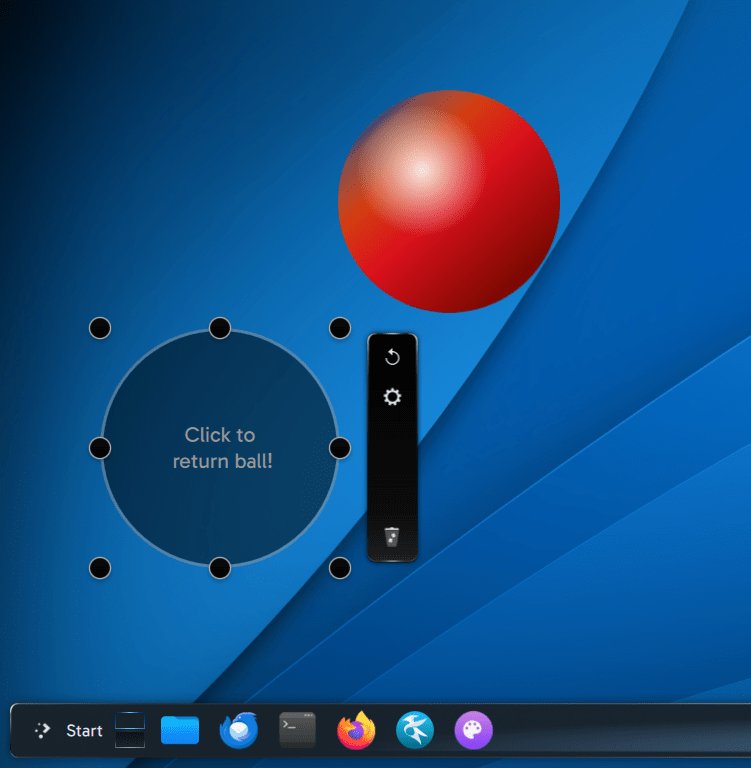
The developer's focus was on faithful replication, but with one thoughtful adjustment informed by historical context. After firing up a Kubuntu 14.04 virtual machine to experience the original behavior, a change was implemented: single-click now launches the ball away from the cursor, while the double-click restoration function was removed as redundant. A "Restore Defaults" button was also added to the configuration. This approach balances nostalgia with modern usability, ensuring the widget feels both familiar and refined.
Looking forward, the developer has outlined plans for new features, including configurable ball colors—potentially tied to the user's system accent color—and a more soothing alternative bounce sound. These ideas point toward a future where the widget is not merely preserved, but thoughtfully evolved to integrate with contemporary desktop aesthetics and user preferences.

Beyond the technical details of the port, the author identifies a deeper significance. Software like Bouncy Ball, wobbly windows, or the classic Clippy assistant, often dismissed as frivolous, serves a crucial psychological function. They communicate that the software environment is not a sterile, purely functional workspace, but a space with personality. This "unintended message," as the author puts it, fosters a connection between the user and the machine, radiating a warmth that purely utilitarian tools cannot replicate. In an era of increasingly streamlined and impersonal interfaces, these playful elements become even more valuable. They remind us that technology can be delightful, that it can spark joy and curiosity, and that the relationship we have with our tools is not solely about efficiency.
The persistence of Bouncy Ball, from its inception in 2008 through multiple desktop generations, underscores a vital principle in software design and open-source stewardship. While features that "score a contract with a benefactor" are often prioritized, the small, personality-driven artifacts are what make a platform feel like a home. They are the digital equivalents of a well-placed piece of art or a comfortable chair. They don't necessarily improve productivity metrics, but they profoundly affect our daily experience. The fact that a community developer would dedicate a Friday night to resurrecting a bouncy ball widget speaks volumes about what users truly value in their software ecosystem. It is a quiet rebellion against the notion that software must be purely serious, a testament to the idea that the most memorable and cherished technologies are often those that make us feel something. And as long as there are developers who remember the charm of the original and users who miss its presence, creations like Bouncy Ball will, as the author concludes, always bounce back.

Comments
Please log in or register to join the discussion