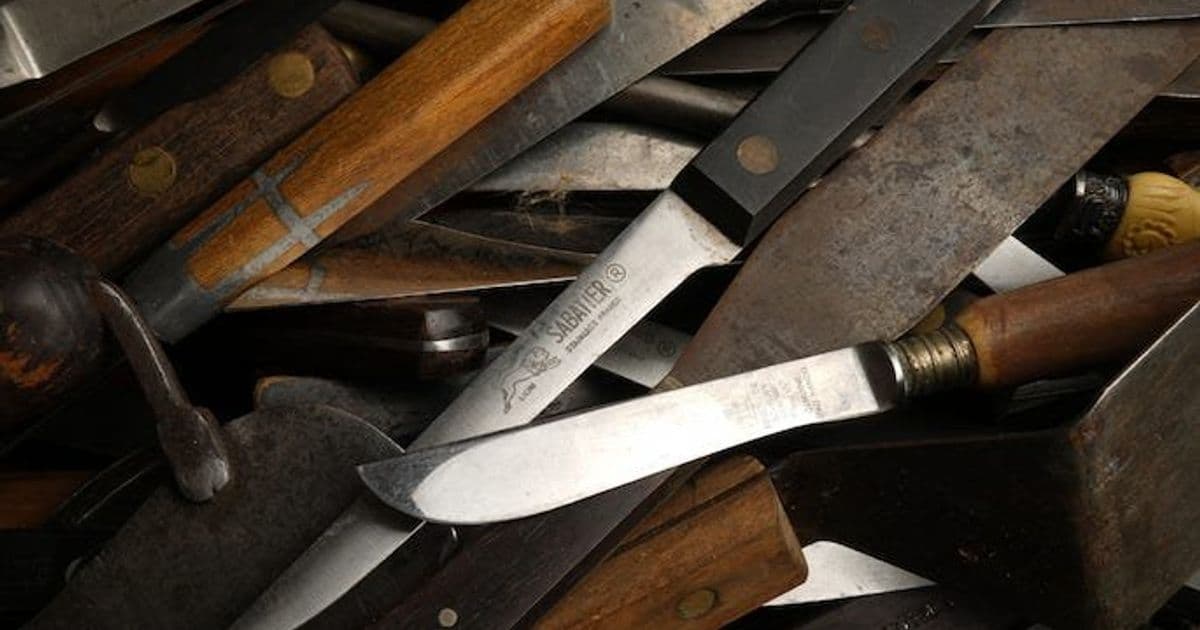
Bernal Cutlery co-founder Josh Donald recounts how vintage kitchen knives transformed from $1 flea market rejects to prized collector's items, examining shifting perceptions of value in culinary tools.
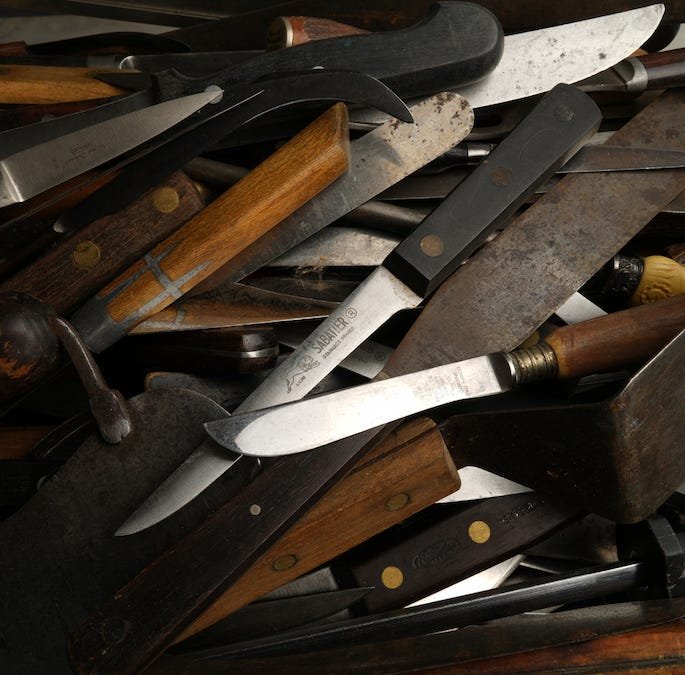
In the dim pre-dawn light of Bay Area flea markets, Josh Donald of Bernal Cutlery once navigated tables piled high with forgotten treasures. But twenty years ago, the objects of his pursuit – vintage culinary knives – were considered nearly worthless by most dealers. "Most people asking for knives at 6 am were looking for military or hunting blades," Donald recalls. "Culinary knives were considered chaff, often sold for $1 to $5."
This perception changed dramatically when rumors spread that a Sabatier chef knife sold for $100 online. Suddenly, "every Sabatier became worth $100, and in the eyes of many, every chef knife became a Sabatier." This valuation shift transformed flea market dynamics, as good culinary knives gradually disappeared from general circulation.
Donald describes the early morning ritual as a "feeding frenzy" where professional pickers descended between 5-7:30 am. "I could scan the primmest booth in 10 seconds and the biggest heap of meth rubble in 20 seconds," he says of his efficient hunting technique. His personal rule became symbolic of market evolution: if he caught himself picking up a Forgecraft or Old Hickory knife – American-made blades he considered unprofitable – it was time to go home.
But around 2018, a surprising trend emerged. Customers began bringing re-handled Forgecraft knives into Bernal Cutlery for sharpening. This forced Donald to reexamine his long-held biases. While acknowledging their flaws ("too thick to cut nicely"), he recognized their decent geometry and carbon steel construction. More importantly, he questioned whether resale value had clouded his assessment of intrinsic worth.
The Forgecraft revival represents a generational shift in collecting. Young enthusiasts approach vintage culinary tools without the old hierarchies of value. "I am happy to see younger people take a new interest in old culinary knives," Donald notes, adding that culinary knives possess "immense durability" as historical objects we actively use.
Donald's journey parallels the evolution of culinary knives themselves – once overlooked, now appreciated as artifacts of craftsmanship. As values continue shifting, the flea market remains a testament to how cultural perceptions transform ordinary objects into extraordinary finds.
Comments
Please log in or register to join the discussion