An exploration of the intricate world of font rendering, from parsing TTF files to implementing both bitmap and signed distance field rendering techniques, revealing the sophisticated mathematics and engineering beneath everyday digital text.
Font rendering represents a fascinating intersection of computer graphics, file format parsing, and mathematical precision that reveals the hidden complexity beneath seemingly simple digital text. In an era where we interact with text constantly, we rarely consider the monumental effort required to translate abstract character definitions into crisp, readable pixels on screens of varying resolutions and densities. The author's journey into implementing a font renderer from first principles illuminates not only the technical challenges but also the profound beauty of computational typography.
The core argument emerges through a meticulous exploration of font rendering as a multi-layered problem space. At its foundation lies the need to interpret complex binary file formats—TTF files containing intricate mappings between Unicode codepoints and glyph definitions. These files, as the author explains, contain numerous tables that encode everything from basic shape information to advanced layout rules for different languages. The complexity is immediately apparent when considering that even seemingly simple alphabets require careful handling of metrics like ascent, descent, and kerning to ensure proper spacing and alignment.
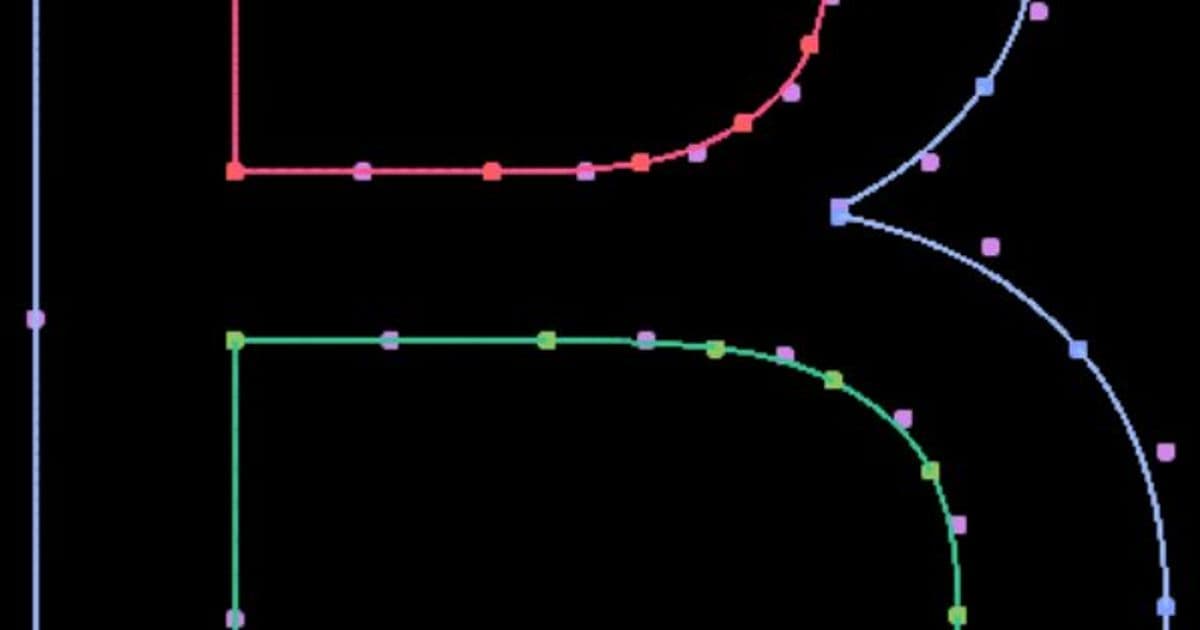
A particularly compelling aspect of the article is the detailed walkthrough of glyph parsing, where the author demystifies how quadratic Bezier curves—mathematical constructs defined by three points—combine to form the contours that make up each character. The explanation of how TTF files compress point data and handle compound glyphs (like reusing the dot above 'i' and 'j' across multiple characters) reveals the elegant engineering solutions embedded in these formats. The author's decision to model curves in a unified structure, forcing line cases into the quadratic Bezier representation, demonstrates a thoughtful approach to simplifying downstream processing.
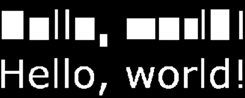
The article then confronts the practical challenges of rasterization, where mathematical precision meets the discrete nature of pixels. The initial bitmap rendering approach, while conceptually straightforward, produces unsatisfactory results due to aliasing and scaling limitations. This leads to the exploration of Signed Distance Fields (SDFs), a more sophisticated technique that represents each glyph not as a binary in/out decision but as a field of distances to the nearest edge. The transformation from raw bitmap to SDF, followed by GPU-based rendering with adjustable threshold and smoothing parameters, showcases how modern graphics hardware can be leveraged to overcome the fundamental limitations of pixel-based rendering.
The implications of this deep dive into font rendering extend far beyond typography itself. By working through these challenges, the author demonstrates how understanding foundational technologies enables more effective optimization and extension of systems. The discussion of font caching, for instance, reveals broader principles of resource management in graphics applications. Similarly, the decision to implement SDF rendering illustrates how seemingly esoteric mathematical concepts can solve practical engineering problems, providing a model for approaching other domain-specific challenges in computer graphics.
Furthermore, the article makes a compelling case for the educational value of implementing foundational systems. In an era of high-level abstractions and extensive libraries, the author's hands-on approach offers a counterpoint to the black-box nature of modern development. By working through the TTF specification and implementing rendering algorithms from scratch, the author develops an intuition that would be difficult to acquire through API documentation alone. This aligns with a broader philosophy in software engineering that deep understanding of fundamentals enables more effective problem-solving in complex systems.
Counter-perspectives, however, suggest that while educational, implementing a complete font renderer may not be practical for most development contexts. The author acknowledges this by referencing FreeType's 200k+ lines of code, hinting at the sheer scale of a production-quality implementation. For most applications, leveraging well-established libraries like FreeType, HarfBuzz, or platform-specific APIs represents a more efficient use of development resources. The trade-off between deep understanding and practical efficiency remains a perennial tension in software engineering.
The article also implicitly raises questions about the evolution of digital typography. As display technologies advance—from low-resolution screens to high-DPI displays and even VR environments—font rendering techniques continue to evolve. The author's focus on SDFs reflects a current trend toward resolution-independent rendering, but future approaches might incorporate even more sophisticated techniques like multi-channel signed distance fields (MSDF) or neural network-based rendering.
In conclusion, this exploration of font rendering serves as a microcosm of software design more broadly. It demonstrates how seemingly simple problems—displaying text on screen—unfold into complex systems requiring careful consideration of file formats, mathematical algorithms, graphics hardware, and optimization techniques. The author's journey from parsing TTF files to implementing SDF rendering not only provides a comprehensive technical walkthrough but also offers insight into the fundamental principles that underpin much of computer graphics. As we continue to interact with digital text in increasingly diverse contexts, understanding these hidden complexities becomes ever more valuable, both for appreciating the technology we use daily and for pushing the boundaries of what's possible in digital typography.
Comments
Please log in or register to join the discussion