
An exploration of why road systems in city-building games feel subtly unrealistic reveals fundamental mathematical limitations in Bezier curves, prompting developers to consider circle arcs and clothoids for authentic infrastructure design.

There's an undeniable fascination with emergent patterns in nature – from honeycomb structures to leaf veins – that resonates deeply when we observe human-made infrastructure. Roads represent one of humanity's most pervasive pattern creations, forming networks so enduring they'd likely outlast our civilization as archaeological artifacts. This pattern-making instinct drives city-building games, where road design forms the foundational fabric of virtual urban landscapes.
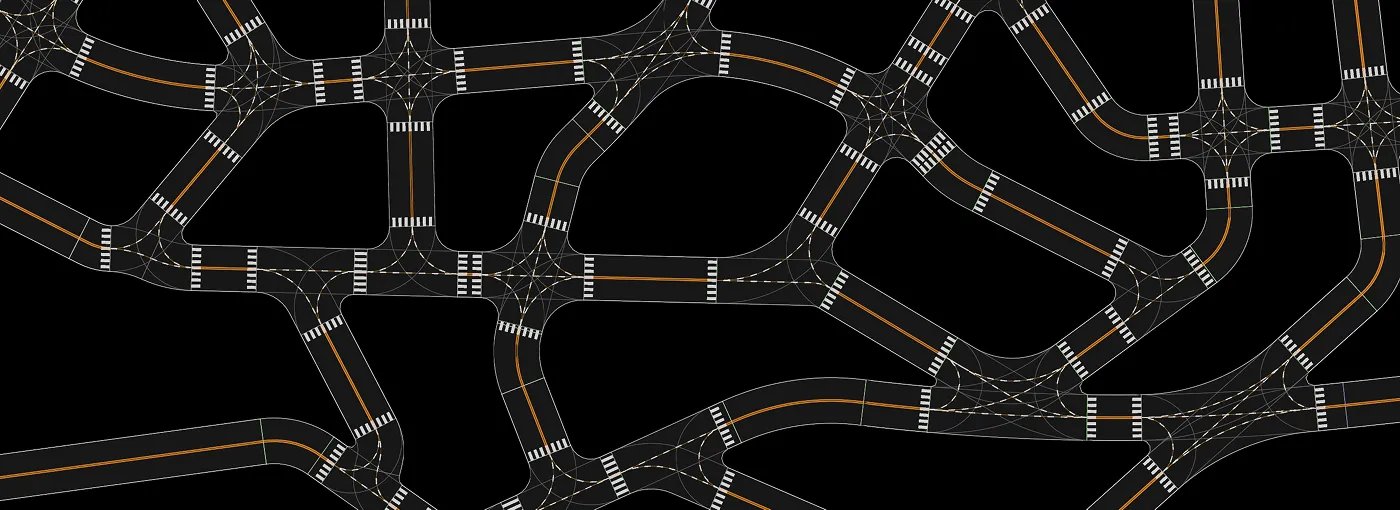
Since SimCity 2000 first introduced players to zoning and infrastructure, each generation of city builders has refined road systems. SimCity 4 added elevation and diagonal roads; SimCity 2013 introduced curves; Cities: Skylines revolutionized the genre with unrestricted placement and modular intersections. Modding communities pushed realism further with detailed markings and smoother transitions. Cities: Skylines 2 recently achieved unprecedented visual fidelity in road rendering. Yet despite these advances, subtle discrepancies persist – unrealistically sharp highway ramps, awkward lane curvature, and geometrically implausible intersections that would horrify civil engineers.
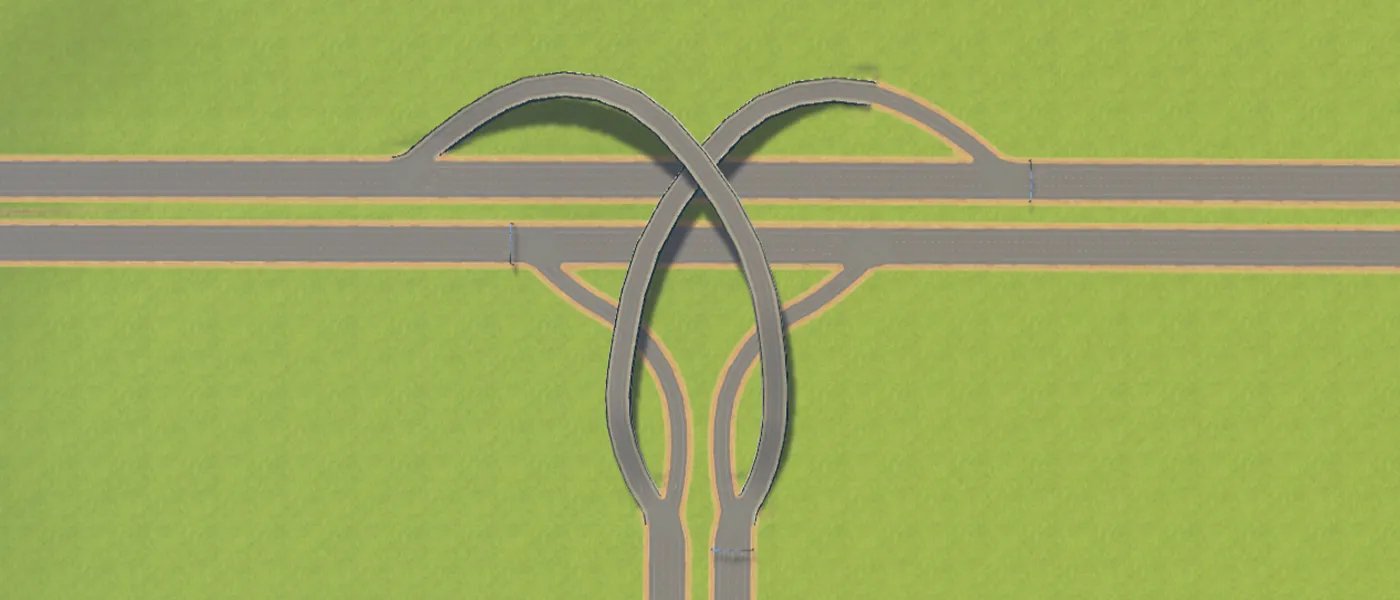
The root issue lies in the mathematical foundations. Most game engines rely on Bezier splines – elegant curves familiar from graphics software that interpolate between points using tangent handles. While visually appealing, they disregard a fundamental constraint: vehicles have fixed axle widths. Real tire tracks remain parallel, while offset Bezier curves warp unpredictably under stress. As curvature increases, the mathematical elegance unravels, causing pinched geometries and self-intersecting meshes at tight angles.
Civil engineers solve this parallelism problem using elementary geometry: circle arcs. Unlike Bezier curves, circles maintain perfect parallel offsets – a kindergarten concept with profound implications. Circular arcs offer computational advantages too, simplifying intersection calculations from complex polynomial root-finding problems to straightforward geometric operations. This efficiency matters when calculating thousands of curve-curve intersections per frame in dense urban environments.
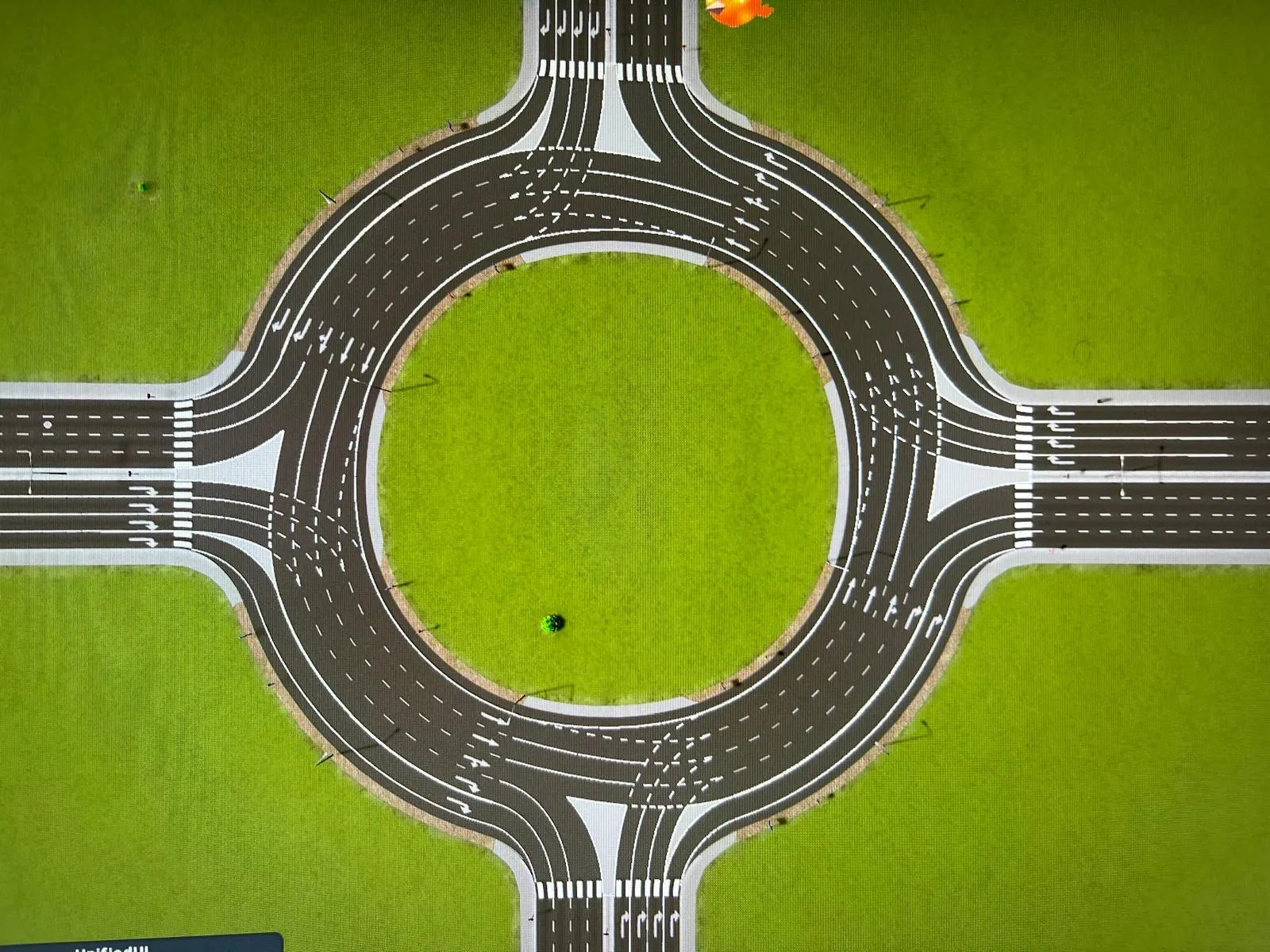
Yet circular solutions introduce new limitations. Constant curvature creates abrupt lateral forces when transitioning from straight paths – tolerable for slow city traffic but problematic for high-speed infrastructure. Real-world engineers employ clothoid spirals (Euler spirals) that gradually increase curvature, allowing smooth steering transitions. These transition curves provide physical comfort but demand complex differential geometry calculations rarely implemented in games.
Counterarguments rightly note that most players won't consciously notice these mathematical nuances. Does perfect road geometry truly impact enjoyment? For the majority, perhaps not. Yet the pursuit matters for two reasons: First, as technological artifacts, games subtly educate players about infrastructure principles. Second, indie developers lack access to the sophisticated tools used by major studios, relying on inadequate Bezier-based assets that limit creative possibilities.
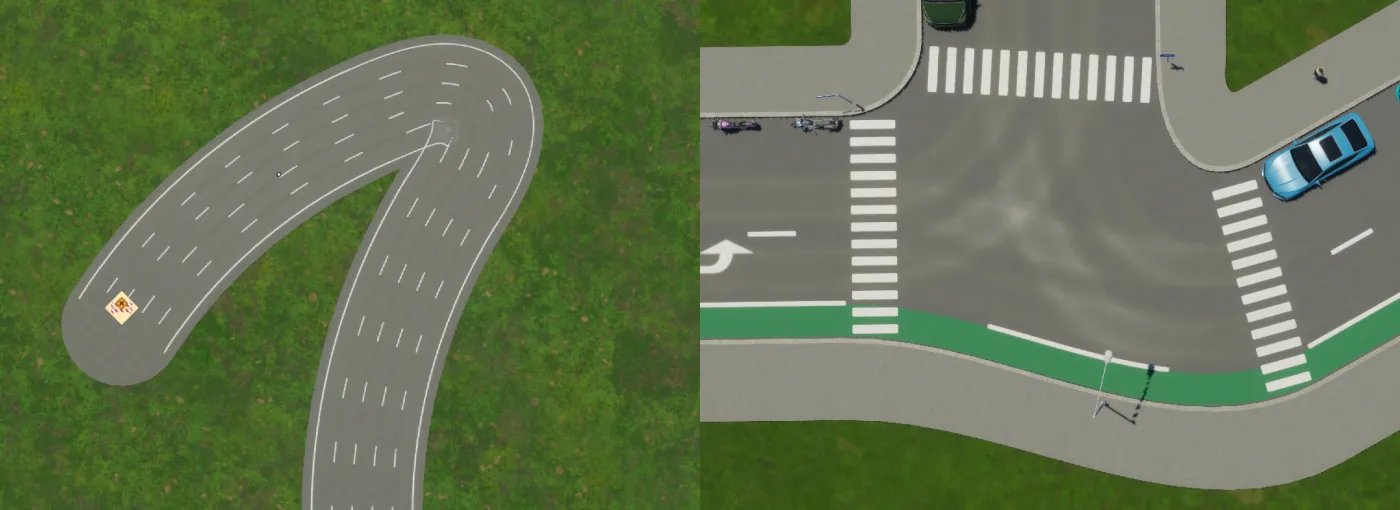
This mathematical reexamination represents more than technical pedantry. It challenges assumptions about how we simulate reality and highlights the invisible constraints shaping virtual worlds. As developers revisit these foundations, we may witness a quiet revolution in how games construct the most fundamental element of urban life: the paths connecting everything.
The quest for better road systems continues, driven by developers who recognize that authenticity emerges from respecting physical constraints – a principle that transcends gaming to reflect how we interact with the engineered world.
Comments
Please log in or register to join the discussion