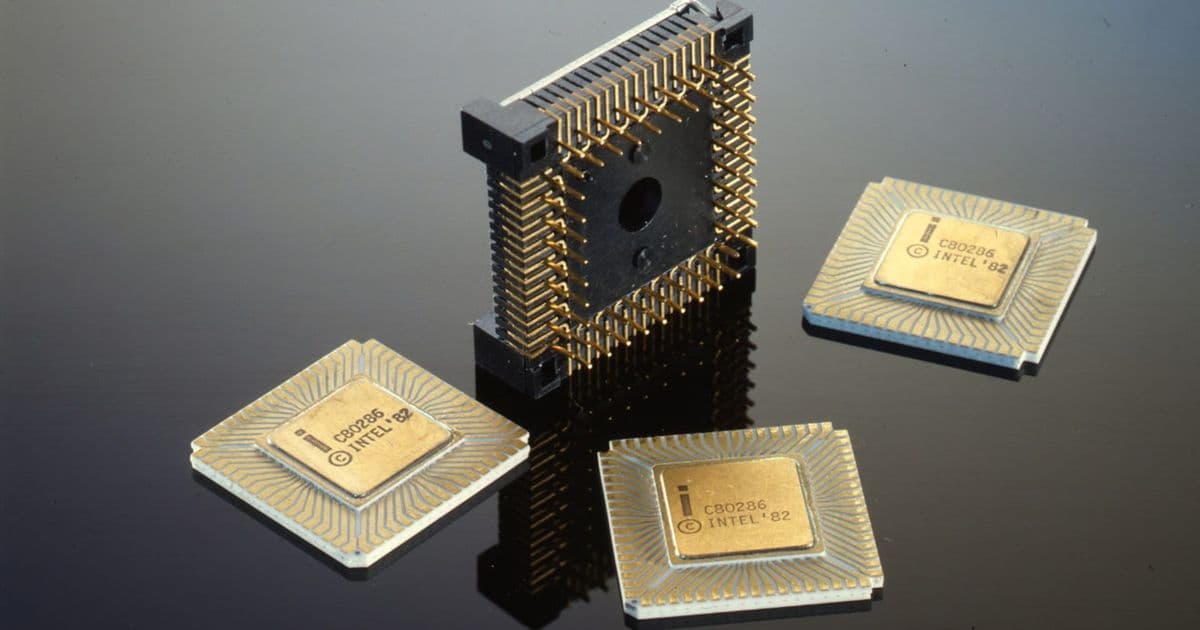
On February 1, 1982, Intel introduced the 80286 processor, a 16-bit x86 chip that introduced protected mode memory, supported up to 16MB RAM, and powered the IBM PC/AT, fundamentally reshaping the PC industry and establishing Intel's dominance for nearly a decade.
Today marks the 40th anniversary of a pivotal moment in computing history: on February 1, 1982, Intel introduced its groundbreaking 80286 processor, a 16-bit CPU that would fundamentally reshape the personal computing landscape and establish the foundation for decades of x86 dominance.
The Birth of Protected Mode and 16-Bit Computing
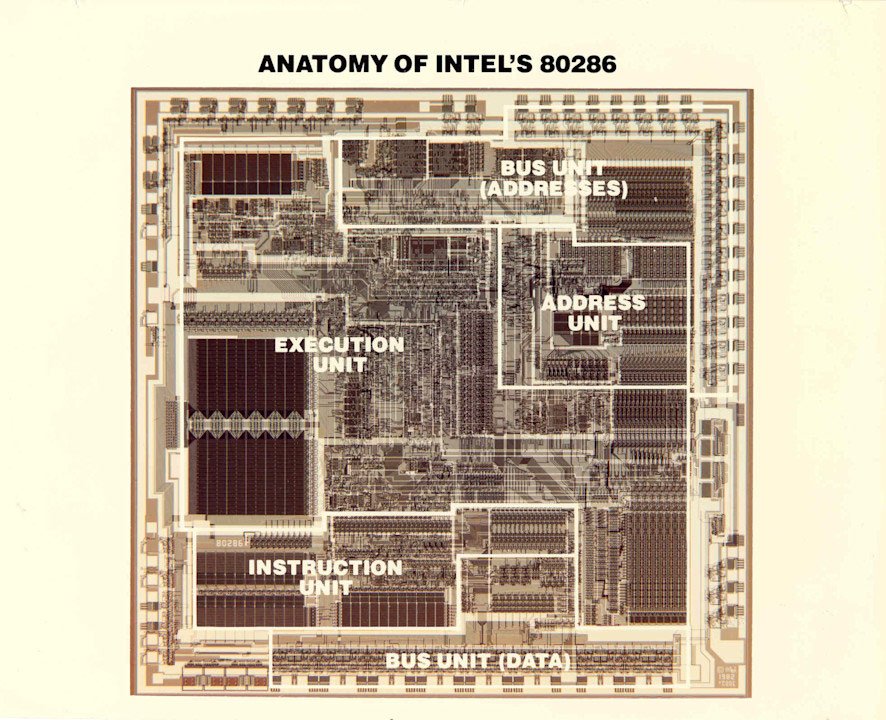
The 80286 represented a quantum leap over its 8086 predecessor, featuring 134,000 transistors compared to the 8086's 29,000. This architectural marvel introduced protected mode memory management, a revolutionary feature that allowed the CPU to isolate applications from each other and from the operating system itself. This wasn't just incremental improvement—it was a fundamental reimagining of how microprocessors could enable personal computing.
The protected mode architecture included a memory management unit (MMU) that could address up to 16MB of RAM, a staggering increase from the 1MB limit of 8086 systems. This expansion wasn't merely theoretical; it enabled the development of sophisticated multitasking operating systems like OS/2 and various Unix derivatives that could truly leverage the 286's capabilities.
Performance Revolution
Clock-for-clock, the 80286 delivered approximately 100% better performance than the 8086, but the real story was in the clock speeds. While typical 8086 systems ran at 5MHz with top-end revisions reaching 10MHz, the 286 family eventually scaled to 25MHz. This meant that by the late 1980s, 286-based systems could deliver 300-500% performance gains over their 8086 ancestors.
The optional 80287 math coprocessor further accelerated applications requiring floating-point calculations. CAD software, complex spreadsheets, code compilation, and scientific applications saw dramatic performance improvements when paired with this floating-point unit. This capability made the 286 particularly attractive for business and engineering applications where computational power mattered.
The IBM PC/AT Standard and Industry Impact
While introduced in 1982, the 80286's true impact exploded in 1984 with IBM's introduction of the PC/AT (Advanced Technology). This system redefined the IBM PC from a simple personal computer into a flexible business workstation. The PC/AT standard included several revolutionary features:
- Hard drive as standard equipment
- Multiple 16-bit expansion slots
- Advanced memory architecture supporting the 286's full capabilities
- New "AT" standards that would persist into the Pentium era
The PC/AT's success triggered a tidal wave of clones, establishing a de facto industry standard that would dominate for over a decade. By May 1988, Intel's Fab 3 had produced and shipped 10 million 80286 chips, demonstrating the processor's massive market penetration.
The Long Reign and Gradual Transition
Despite Intel introducing the 80386 in 1987, the 286 maintained its dominance for nearly a decade. Several factors contributed to this extended lifecycle:
Cost Advantage: 286 systems remained significantly cheaper than 386 systems, making them attractive for budget-conscious buyers and enterprise deployments where the additional 386 capabilities weren't immediately necessary.
DOS Compatibility: The major PC operating system of the era, MS-DOS, couldn't fully exploit the 386's protected mode capabilities. Most applications ran in real mode, limiting the practical benefits of upgrading.
Market Maturation: The PC market was still developing, and many users found 286 performance "good enough" for their needs. The transition to 386 required both hardware investment and software that could leverage the new capabilities.
The End of an Era
The 286's decline began in earnest around 1991 with Intel's introduction of the more affordable 386SX, which eroded the 286's cost advantage. However, the final blow came in 1992 with Windows 3.1.
Windows 3.1 represented a watershed moment for several reasons:
- It eliminated real mode (8086/8088) support entirely
- It established a 386SX as the minimum system requirement
- It popularized graphical user interfaces in business environments
- It cemented the Wintel hegemony that would dominate computing for decades
Legacy and Historical Significance
The Intel 80286's influence extends far beyond its technical specifications. It established several architectural patterns that persist in modern computing:
- Protected mode memory management became standard in all subsequent x86 processors
- The 16-bit architecture served as a bridge between 8-bit and 32-bit computing
- The processor's design influenced how operating systems would manage memory and processes
- It helped establish Intel as the dominant force in microprocessor design
Today, as we look back 40 years later, the 80286 represents more than just a faster processor—it was the foundation upon which the modern PC industry was built. Its protected mode architecture, memory management capabilities, and performance characteristics set the stage for the computing revolution that would follow.
The 80286's decade-long dominance demonstrates how technological transitions in the PC industry often occur gradually, driven by a complex interplay of performance, cost, software compatibility, and market forces. Its legacy lives on in every modern x86 processor, making February 1, 1982, a date that truly changed the course of computing history.
Comments
Please log in or register to join the discussion