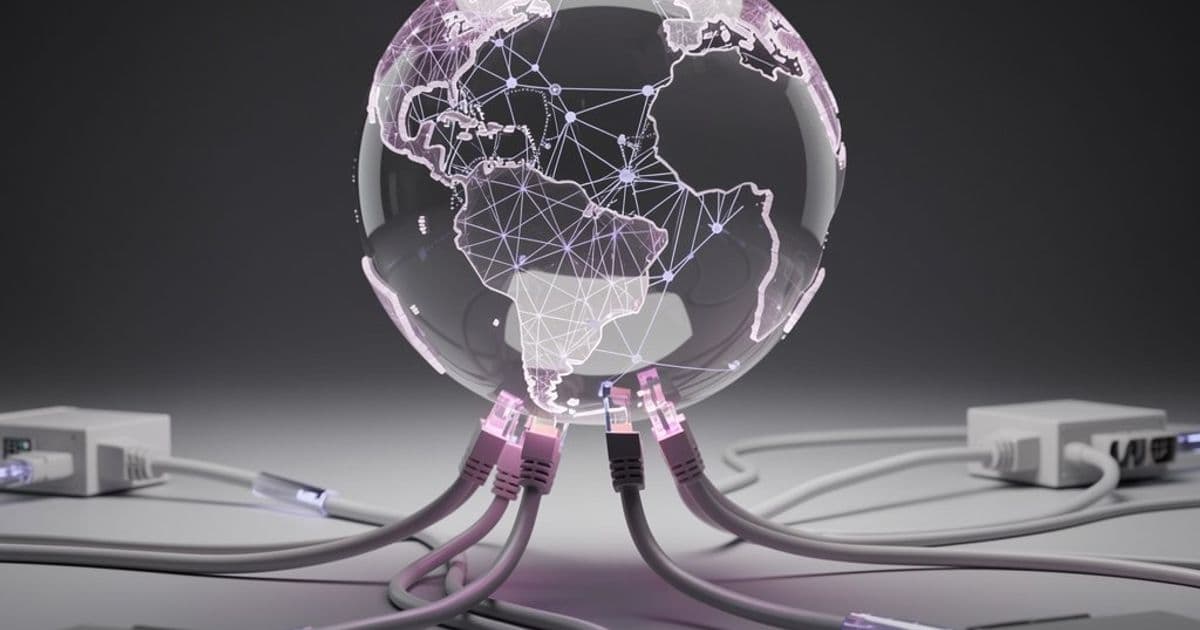
The annual IP address data for 2025 reveals a network at a precarious crossroads. While IPv4 addresses continue to be traded, the market is softening, and the underlying infrastructure is showing signs of strain. The data suggests that the Internet is not smoothly transitioning to IPv6 but is instead fragmenting into a patchwork of NAT-driven islands and IPv6-only enclaves, with profound implications for its future cohesion and openness.
The annual accounting of IP addresses, as compiled by Geoff Huston, is more than a technical ledger; it is a diagnostic tool for the health and trajectory of the global Internet. The data for 2025 paints a picture of a network in a state of protracted transition, where the theoretical inevitability of IPv6 has been supplanted by the gritty reality of market economics, technical workarounds, and strategic corporate maneuvering. The central thesis emerging from this year's analysis is that the Internet is not undergoing a clean protocol migration but is instead bifurcating, with the finite, legacy IPv4 address space becoming a traded commodity whose market dynamics are actively shaping the network's topology and future.
The Stagnation of IPv4 and the Rise of the Address Market
For years, the depletion of the central IANA IPv4 pool was heralded as the catalyst that would force a mass migration to IPv6. Yet, the data shows that the exhaustion of the RIRs' free pools has been a slow, drawn-out process, and the market for existing addresses has taken its place. In 2025, the total span of allocated IPv4 addresses actually contracted slightly, by 0.2%, a subtle but telling shift from the years of near-zero growth. This contraction is not due to a mass return of addresses to the registry but is largely an artifact of inter-RIR transfers and the reclamation of blocks. The "available" pools at the RIRs are now minuscule, with only APNIC and AFRINIC holding any significant reserves, which at current allocation rates could last for years, further dampening the urgency for IPv6.
The real story, however, is in the secondary market. The volume of registered IPv4 address transfers has been substantial, with over 342 million addresses (equivalent to 20.4 /8s) traded since 2012. This market was initially driven by a perception of scarcity, with prices per address skyrocketing from under $10 in 2014 to a peak of over $60 in 2021. This escalation was largely fueled by a handful of major buyers, notably cloud providers like Amazon, who were securing inventory for their enterprise customers who were slow to adopt IPv6. However, this demand has now been met. The data from 2025 shows a dramatic price slump, with the average price per address falling by 50% to around $22, and some large blocks trading for as low as $9. The market has shifted from a seller's to a buyer's market, with supply outstripping demand.
This price collapse has significant implications. It suggests that the speculative bubble in IPv4 addresses has burst. For network operators, the economic incentive to sell off idle IPv4 blocks has diminished, and the cost of purchasing new addresses has become less prohibitive. More importantly, it indicates that the market has not been particularly effective at "flushing out" otherwise idle addresses. The data shows that a significant portion of transferred addresses are "older" blocks (allocated between 2000 and 2012), suggesting that the market is primarily redistributing existing, long-held assets rather than unlocking vast reserves of unused space. The hope that a vibrant market would efficiently recycle addresses back into the routed network has not fully materialized; instead, it has created a secondary economy for a finite resource.
Fragmentation and the Erosion of a Cohesive Address Space
A key concern with a thriving address market is the potential for fragmentation—breaking up large, efficient address blocks into smaller, less efficient ones to meet specific buyer needs. The data from 2025 confirms this is happening, albeit on a limited scale. Of the 56,629 transfer transactions since 2012, 26% involved splitting a larger block into smaller ones. While this represents only about 5.9% of the total allocated address pool, it is a measurable erosion of the original, hierarchical address structure. Each fragmentation event adds another entry to the global BGP routing table, increasing its size and complexity, a trend that has been a persistent concern for network operators for decades.
The routing table itself tells a story of dynamic churn. In 2025, the number of BGP entries grew by over 53,000, but this masks a much larger volume of change: 88,172 prefixes were withdrawn, and 142,118 were newly announced. Only about 7% of these changes correspond to registered transfers, indicating that a vast amount of address space movement is driven by operational re-homing, network renumbering, or other administrative changes rather than pure market transactions. This constant flux, combined with the fragmentation from transfers, contributes to a routing system that is growing in both size and instability.
The Parallel Universe of IPv6: Abundance Without Adoption
While the IPv4 world is defined by scarcity and market mechanics, the IPv6 universe is one of staggering abundance. The 128-bit address space is so vast that conservation is a non-issue. However, the data reveals a paradox: despite this abundance, IPv6 adoption is proceeding at a measured, and in some regions, slowing pace. In 2025, the number of IPv6 allocations decreased by 7%, and the volume of allocated address space plummeted by 80% compared to 2023. This is not necessarily a sign of failure but reflects the maturity of the allocation process; many large networks have already received the address blocks they need for the foreseeable future.
The real metric of interest is not allocation but advertisement—what percentage of allocated IPv6 space is actually being routed and used. Globally, only about 34% of allocated IPv6 addresses are visible in the BGP routing table, a figure that has been steadily rising. This contrasts sharply with IPv4, where over 85% of allocated space is advertised. The difference is philosophical: IPv4 was built on a conservation ethic, forcing efficient use. IPv6 was designed with abundance in mind, allowing for inefficiency. A network can receive a /32 block (over 4 billion /48 end-sites) and only advertise a fraction of it, with no penalty.
However, this abundance masks underlying inequities. When normalized by population, the distribution of IPv6 addresses is highly uneven. Countries like Singapore and the Seychelles appear as outliers, but this is often due to corporate registrations (e.g., a single broker holding a massive block registered in the Seychelles) rather than domestic deployment. More telling is the deployment rate: while countries like Japan, Brazil, and India advertise over 75% of their allocated IPv6 space, others like South Korea and Singapore advertise less than 1%. This suggests that while addresses have been allocated, the actual network infrastructure to support IPv6-only services is lagging.
The Network Paradigm: Client/Server vs. Peer-to-Peer
The most profound implication of the IPv4/IPv6 transition lies not in the addresses themselves, but in the networking paradigm they enable. The IPv4 Internet, constrained by address scarcity, has evolved into a client/server model dominated by Network Address Translators (NATs). NATs allow billions of devices to share a few billion public addresses, but they fundamentally break the original peer-to-peer vision of the Internet. Devices behind NATs cannot be directly addressed from the public network; they can only initiate outbound connections. This has reshaped the Internet's architecture, favoring centralized services (cloud providers, content platforms) over decentralized, direct communication.
IPv6 was designed to restore the peer-to-peer model, giving every device a globally unique address. However, the question is whether the Internet wants to return to that model. The security challenges of an open, peer-to-peer network are significant, and the client/server model, facilitated by NATs, provides a natural firewall. The data suggests that even in the IPv6 world, the client/server paradigm may persist. Some networks are already deploying NATs for IPv6 (NAT66), not for address conservation, but for security and management. The vastness of the IPv6 address space does not automatically translate into a more open or innovative network; it may simply provide more addresses for the same centralized, controlled architecture.
The Outlook: Fragmentation and Centralization
The data from 2025 leads to a sobering conclusion: the Internet is not converging on a unified, IPv6-based future. Instead, it is fragmenting. We are seeing the emergence of:
- IPv4/NAT Islands: Vast swathes of the Internet, particularly in regions with slow IPv6 adoption, will continue to rely on IPv4 and Carrier-Grade NATs. These networks will be increasingly isolated, able to reach the global Internet only through complex translation gateways.
- Dual-Stack Enclaves: Major content providers and cloud platforms will maintain dual-stack infrastructure, serving both IPv4 and IPv6 clients. They will act as the bridge between the two worlds.
- IPv6-Only Networks: New deployments, particularly in mobile networks and some regions, may go IPv6-only from the start, but they will still need to access legacy IPv4 services, requiring translation mechanisms like 464XLAT.
This fragmentation is compounded by the economic and structural trends in the Internet industry. The address market, while providing a lifeline for IPv4, has also concentrated address ownership in the hands of large players like Amazon and cloud providers. The rising cost of IPv4 addresses in the 2014-2021 period was a direct tax on innovation, favoring incumbents who could afford to stockpile addresses. While prices have fallen, the market has entrenched the idea of addresses as a tradable asset, further distancing the network from its technical roots.
The Internet is maturing, and with maturity comes consolidation. A small number of massive content and cloud platforms now dominate traffic. The technical substrate is becoming less flexible, optimized for the client/server model that serves these platforms. The protracted IPv4/IPv6 transition is not just a technical delay; it is a period where the network's architecture is solidifying around a model that favors centralization over decentralization, control over openness.
The annual IP address data, therefore, is a leading indicator. It shows us that the future Internet will not be defined by a clean protocol transition, but by the messy, market-driven, and fragmented coexistence of multiple technologies. The grand vision of a globally connected, peer-to-peer network of devices is being slowly replaced by a more pragmatic, and perhaps more constrained, reality. The challenge for the next decade will be to navigate this fragmentation without losing the core principles of openness and innovation that made the Internet a transformative force.
Related Resources:
Comments
Please log in or register to join the discussion