Researchers at Curtin University explore forensic tracing methods for 3D printed ghost guns, but discover limited chemical differentiation due to concentrated filament manufacturing and white-label practices.
A new study from researchers at Curtin University in Australia, conducted in collaboration with ChemCentre, a statutory forensic laboratory in Western Australia, examines the possibility of tracing 3D-printed "ghost guns" through chemical analysis of the filament used in their production. The research aims to develop forensic methods that could help law enforcement link illegal 3D printed firearm components to the individuals who manufactured them.
The Challenge of Tracing 3D Printed Firearms
Traditional forensic ballistics relies on the unique mechanical markings—"fingerprints"—left on bullets as they pass through a firearm's barrel. These microscopic scratches, created by rifling and firing pin marks, enable investigators to connect spent ammunition to specific weapons. However, this approach faces significant limitations when applied to 3D printed firearms.
Unlike traditional metal firearms, plastic printed weapons may degrade with each shot, if they survive the firing process at all. Additionally, ghost guns—whether 3D printed or assembled from kits—lack the serial numbers required for legally purchased weapons, creating a substantial investigative challenge for law enforcement agencies.
Chemical Fingerprinting Approach
The research team, led by forensic scientists at Curtin University, hypothesized that 3D printed firearms might leave behind tiny polymer fragments at crime scenes or embedded in ammunition. These particles could potentially serve as chemical "fingerprints" to identify the specific filament used in manufacturing.
The study examined 67 samples of both raw and printed filament available in the Australian market. While some samples were donated or purchased specifically for the research, others were seized by the Western Australia Police Force. The collection included PLA color swatches that ship with new Bambu Lab printers, representing a common source material for hobbyists and potential illicit manufacturers.
Notably, the researchers deliberately avoided printing the samples themselves, maintaining that the type of printer used and environmental conditions remained unknown variables in the study. This approach aimed to isolate the chemical properties of the filament itself, independent of printing variables.
Supply Chain Complications
The research revealed a fundamental challenge to chemical fingerprinting: the concentration of filament manufacturing in a few large Chinese factories that produce white-label products for numerous brands worldwide.
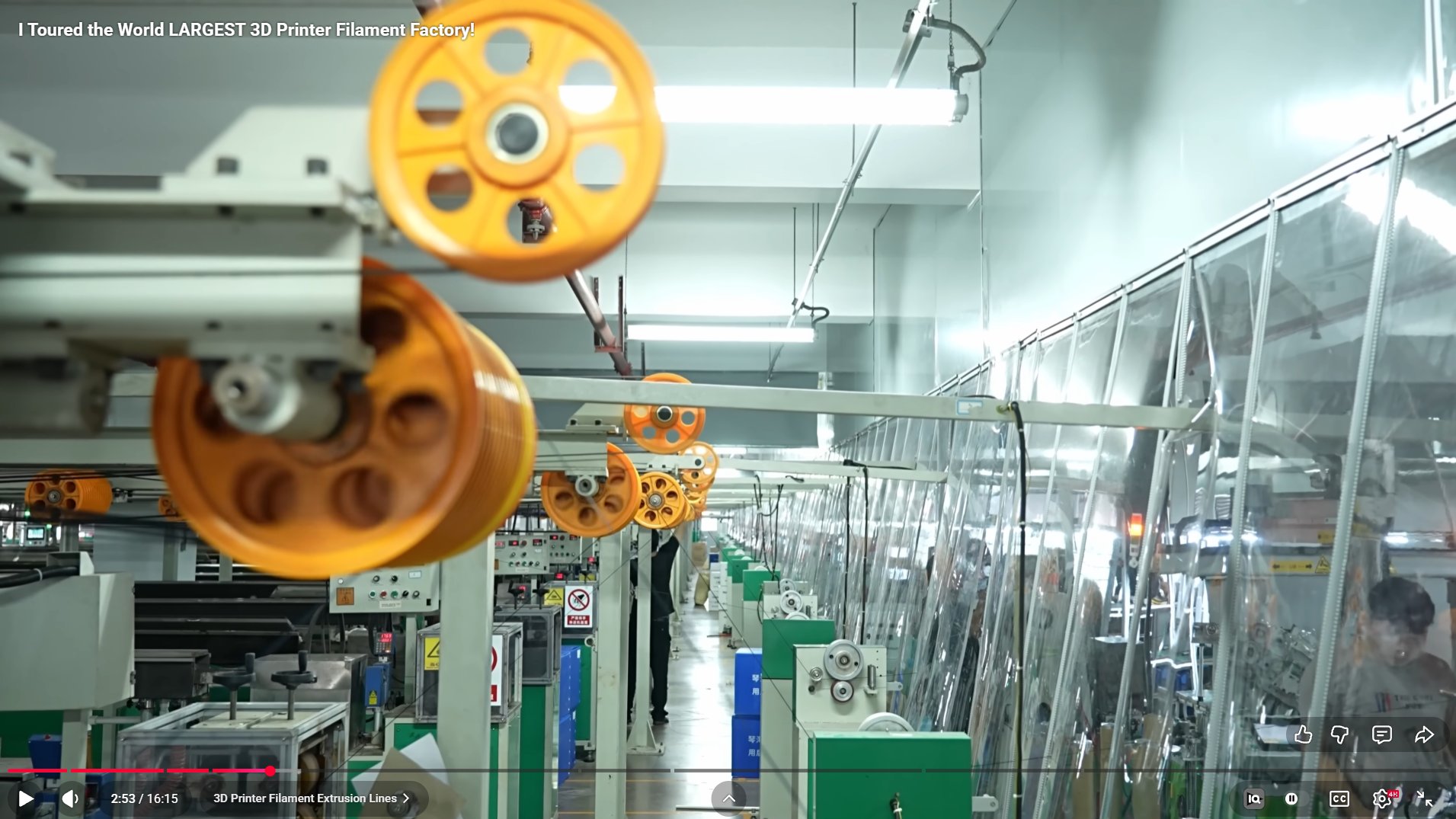
Major manufacturers like eSun, Sunlu, and Polymaker dominate the global filament market, producing enormous volumes of material that countless brands market as their own. For context, Sunlu alone can produce two million spools per month—dwarfing the output of American companies like ProtoPasta and Printed Solid, which appear as boutique manufacturers in comparison.
This consolidation creates a significant forensic limitation. The researchers found limited chemical variability among different vendors, concluding that "the limited variability among different vendors may indicate that they share the same supplier or that there are limited suppliers for the Australian market."
Analytical Methods and Findings
The researchers scraped samples of both raw filament strands and printed materials with a scalpel, then analyzed the resulting shavings using an ATR-FTIR spectrometer—a technique that identifies chemical compounds based on how they absorb infrared light.
The results presented substantial obstacles for forensic identification:
- The spectrometer could not reliably distinguish between different brands of filament
- Color variations within the same material type showed no consistent chemical differentiation
- The analysis could not determine whether a sample came from raw filament or a printed object
- The study confirmed what many in the 3D printing community already know: filament often contains unlisted, sometimes surprising materials
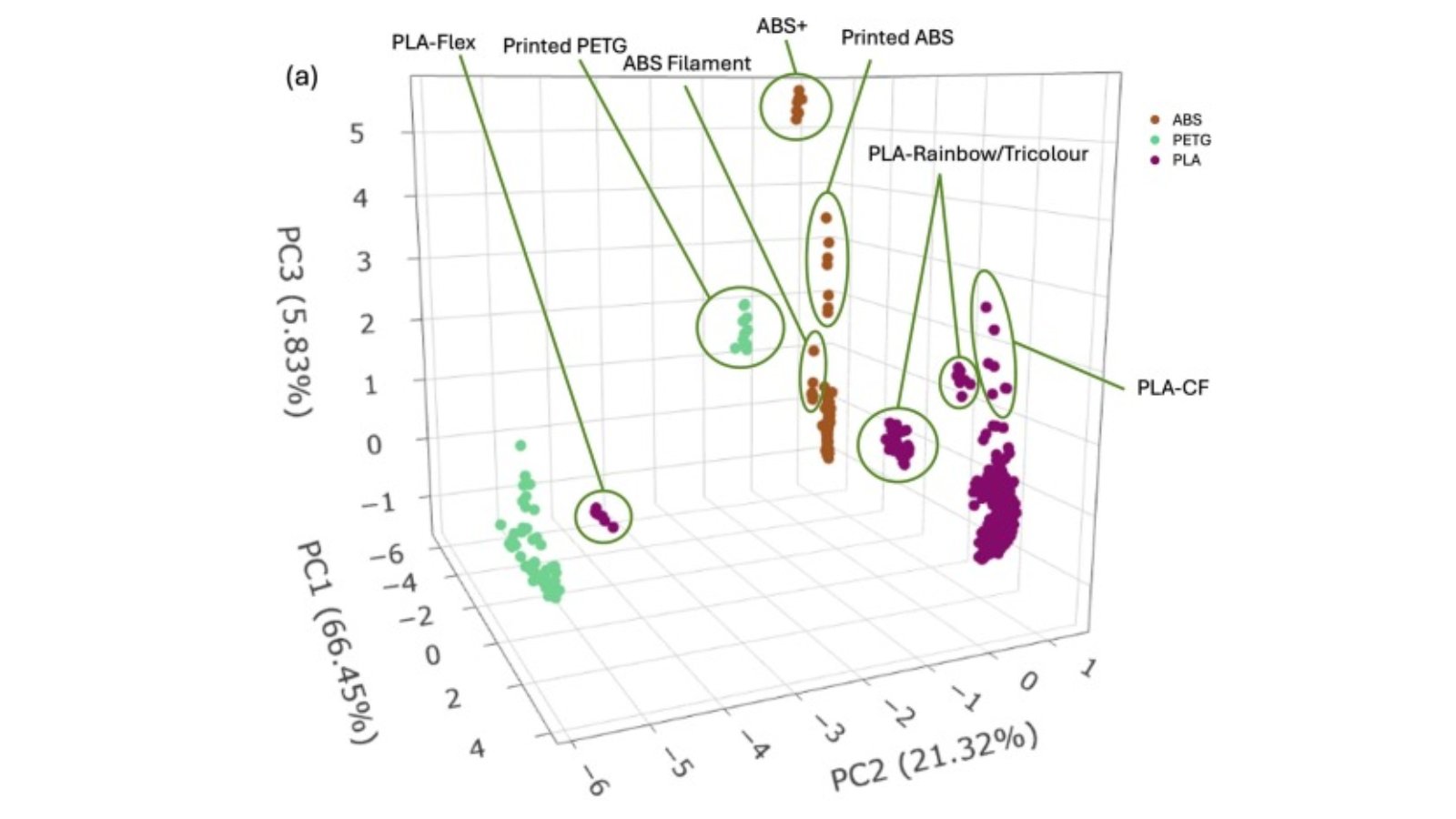
For example, a sample of PLA-Flex from the now-defunct Australian company 3D Fillies was found to consist of PLA and PETG—a blend not disclosed by the manufacturer. Similarly, Rainbow and Tri-Color PLA filaments, known for their durability issues in practical applications, showed complex chemical compositions.
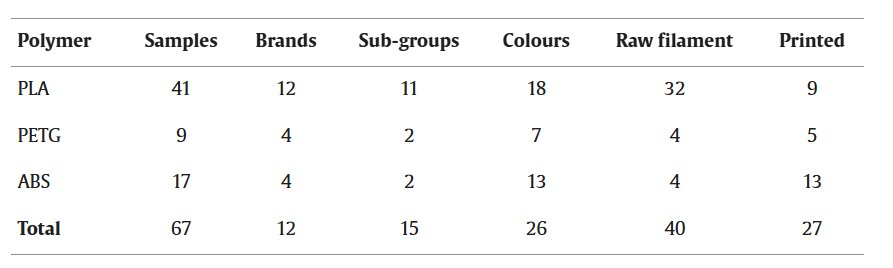
The researchers encountered contamination challenges as well, discovering ABS in a PLA sample. They concluded that nozzle contamination likely occurred when different materials were printed consecutively without proper cleaning. This finding led to an important methodological insight: the first layer of a 3D print may be unreliable for forensic analysis due to potential material cross-contamination.
Implications for Forensic Science and Manufacturing
The study highlights fundamental challenges in applying traditional forensic techniques to emerging manufacturing technologies. The concentration of production in a few large manufacturers creates a situation where "boutique" brands may actually be selling products with identical chemical compositions.
For law enforcement agencies, the findings suggest that chemical fingerprinting of 3D printed firearms may have limited utility unless investigators can identify specific production batches or implement more sophisticated analytical techniques. The study does not preclude the possibility of other forensic approaches, such as identifying unique printer characteristics or print settings.
For filament manufacturers, the research underscores the need for greater transparency in material composition. While white-labeling practices offer market advantages, they create forensic blind spots that could impact broader industry regulation.
Future Research Directions
The Curtin University study represents an important first step in addressing forensic challenges posed by 3D printed weapons. Future research may explore:
- More advanced spectroscopic techniques capable of detecting subtle chemical variations
- Analysis of post-printing modifications that might create unique chemical signatures
- Development of databases of filament compositions across different production batches
- Investigation of how environmental factors affect polymer degradation at crime scenes
As 3D printing technology continues to evolve and become more accessible, the intersection of manufacturing, forensics, and public safety will require ongoing research and collaboration between scientists, manufacturers, and law enforcement agencies.
Comments
Please log in or register to join the discussion