A new book compiles oral histories from the creators of the 1980 comedy classic, revealing the chaotic production and a nostalgic look at a Hollywood that once embraced risk.
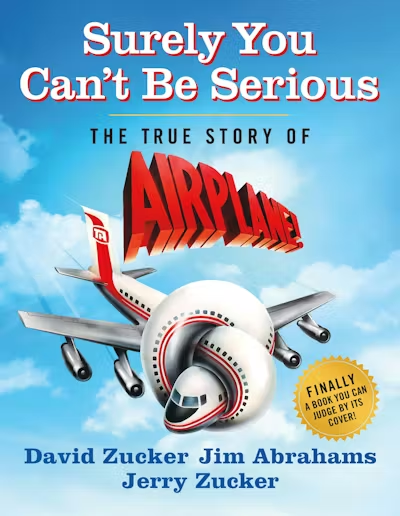
The story of Airplane! is a familiar one in film circles: a low-budget, absurdist parody that became a massive box office hit, redefining comedy in the process. A new book, Surely You Can’t Be Serious – The True Story of Airplane!, attempts to capture that history through the voices of its creators. Compiled from interviews with cast, crew, and industry figures, it reads like an extended director's commentary track—a collection of anecdotes, praise, and behind-the-scenes trivia. For fans, it's a fun, uncomplicated dive into how the film's iconic gags were crafted, from the lovingly ripped-off shots from the 1957 disaster film Zero Hour! to the logistical chaos of shooting on a real Boeing 747.
The book's primary strength is its assembly of firsthand accounts. We hear from the Zuckers, Jim Abrahams, and the cast about the film's pre-history, its frantic production, and its aftermath. The tone is largely celebratory, a "Hollywood love-in" where the participants marvel at their own luck and ingenuity. It's the kind of sycophantic, good-natured retrospective you'd expect from a DVD extra, where everyone gets to look classy through self-deprecating humor. Former Disney executive Michael Eisner, who passed on the film, is quoted as saying, "If I had green-lit every movie I’ve passed on and passed on every movie I green-lit, my track record would probably be about the same." It’s a charming admission that underscores the unpredictable nature of hit-making.
Yet, beneath the surface of this nostalgic celebration runs a current of melancholy. The book isn't just about how Airplane! was made; it becomes a lens through which to view the evolution of Hollywood itself. A glum streak emerges in moments like Jeffrey Katzenberg's reflection: "Airplane! was not like anything else. And Michael Eisner, I think, felt that in his bones. Like, ‘Wow, this is really, really unique, and as such, is the kind of thing we should be doing!’" The implicit question hangs in the air: if the industry once recognized and championed such unique, risky projects, where did that spirit go? The book captures a time when executives were willing to bet on weirdness, a stark contrast to today's landscape dominated by franchise sequels and pre-vetted IP.
This contrast is sharpened by some of the more perfunctory commentary. The inclusion of modern celebrity endorsements, like Quentin Tarantino's praise or Tim Allen's lament about the state of comedy, can feel like filler. They add little to the core narrative, serving more as marketing hooks than substantive insight. The book occasionally veers into "IMDb trivia" territory, recycling anecdotes that seasoned fans may have heard before. The most tantalizing pieces of information are often the ones left unresolved. There's a mention of an original cut that was 20 minutes longer, but the follow-up is a sobering reality: Paramount, like most studios of the era, threw out all the dailies to save physical space on the lot. The physical reels of Airplane! are gone, a casualty of practical logistics, while the studio presumably kept the outtakes from The Godfather. It's a poignant reminder of how much of film history is lost to time and storage costs.
For students of film, the book remains a valuable case study in the mechanics of production. Seeing how a low-budget parody meticulously recreated scenes from a serious disaster film is fascinating. It highlights the craft and ingenuity required to make something feel both authentic and hilariously absurd. The photos throughout the book are particularly effective in this regard, visually demonstrating the film's clever visual theft. However, the book's own verdict, as suggested by its tone and content, is that it's more of a fun compilation than a revelatory work. It's entertaining but not essential, a pleasant souvenir for fans rather than a groundbreaking piece of film scholarship.
Ultimately, Surely You Can’t Be Serious serves as a time capsule. It preserves the voices of those who made a classic, capturing their camaraderie and pride. But in doing so, it also inadvertently documents a bygone era of filmmaking—one where a film like Airplane! could be greenlit by a major studio, become a phenomenon, and leave behind a legacy that feels increasingly distant from the current Hollywood model. The book is a reminder of a specific creative alchemy, one that seems harder and harder to replicate in an industry that has traded some of its wilder ambitions for safer, more predictable bets.
Comments
Please log in or register to join the discussion