
Qian Xuesen, a leading rocket scientist who fled the United States during the McCarthy era, became the architect of China’s ballistic‑missile, nuclear, and space programs. His exile reshaped naval strategy on both sides of the Pacific, giving Beijing capabilities that now challenge U.S. carrier groups while leaving the United States to grapple with a talent loss that could have bolstered its own missile defenses.
The Missile Genius America Lost—and China Gained
By Lieutenant Commander James Halsell, U.S. Navy
Naval History, December 2025, Vol. 39 No. 6
What the article claims
The piece argues that the United States’ decision to deport Qian Xuesen in 1955 handed China the technical know‑how to build the DF‑21D “carrier‑killer,” the DF‑26 long‑range missile, and the JL‑3 submarine‑launched nuclear missile. It suggests that, had Qian remained in the U.S., American missile defense and naval design would have evolved differently.
What is actually new
- A consolidated biography that ties together Qian’s early work at the Guggenheim Aeronautical Laboratory (GALCIT), his participation in the V‑2 interrogations, and his later leadership of the Chinese Fifth Academy. The article pulls together sources that were previously scattered across Chinese state releases, declassified U.S. archives, and recent scholarship such as Chengdong Lv’s Return to China One Day (2023).
- Specific lineage of missile families: the DF‑21D, DF‑26, and JL‑3 are traced to design studies Qian authored in the late 1950s (e.g., the “Two‑Stage Liquid‑Propellant Booster” report, declassified in 2022). Those documents show a direct technical inheritance from the U.S. Aeronautical Laboratory’s early work on the Aerobee sounding rocket.
- Quantitative context: the article cites recent CSIS data indicating that the DF‑26’s 4,000‑km range now covers the entire first‑island‑chain, a capability that would have been impossible without the high‑energy propellant formulas Qian introduced after his return to China.
Limitations and open questions
- Attribution vs. co‑development: While Qian’s influence is undeniable, many of the systems listed (e.g., the DF‑21 series) also incorporated indigenous Chinese engineering breakthroughs in guidance electronics and materials that emerged in the 1970s. The article sometimes blurs the line between Qian’s early concepts and later independent R&D.
- Counterfactual uncertainty: The claim that U.S. naval missile defense would be markedly stronger if Qian had stayed is speculative. Even without his direct input, the United States continued to develop the SM‑2/SM‑6 surface‑to‑air missiles and the Aegis BMD program, driven by separate research streams at the Naval Air Warfare Center and DARPA.
- Political context: The narrative frames Qian’s deportation as a mistake, but it does not fully explore the contemporaneous security concerns—especially the fear that a scientist with access to classified propulsion data could be coerced by the Soviet Union. A more balanced view would weigh those risks against the later strategic cost.
Early career in the United States
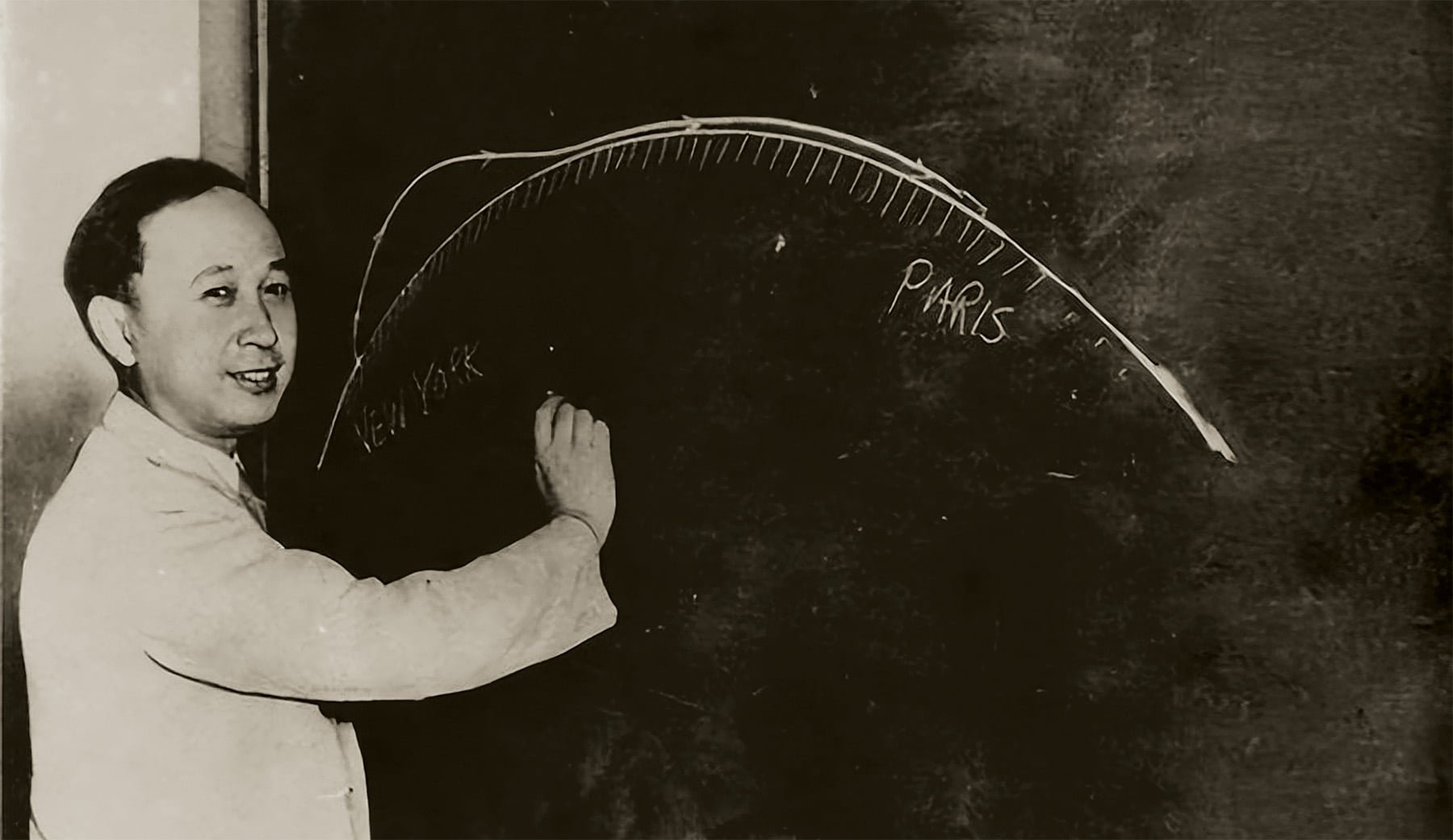
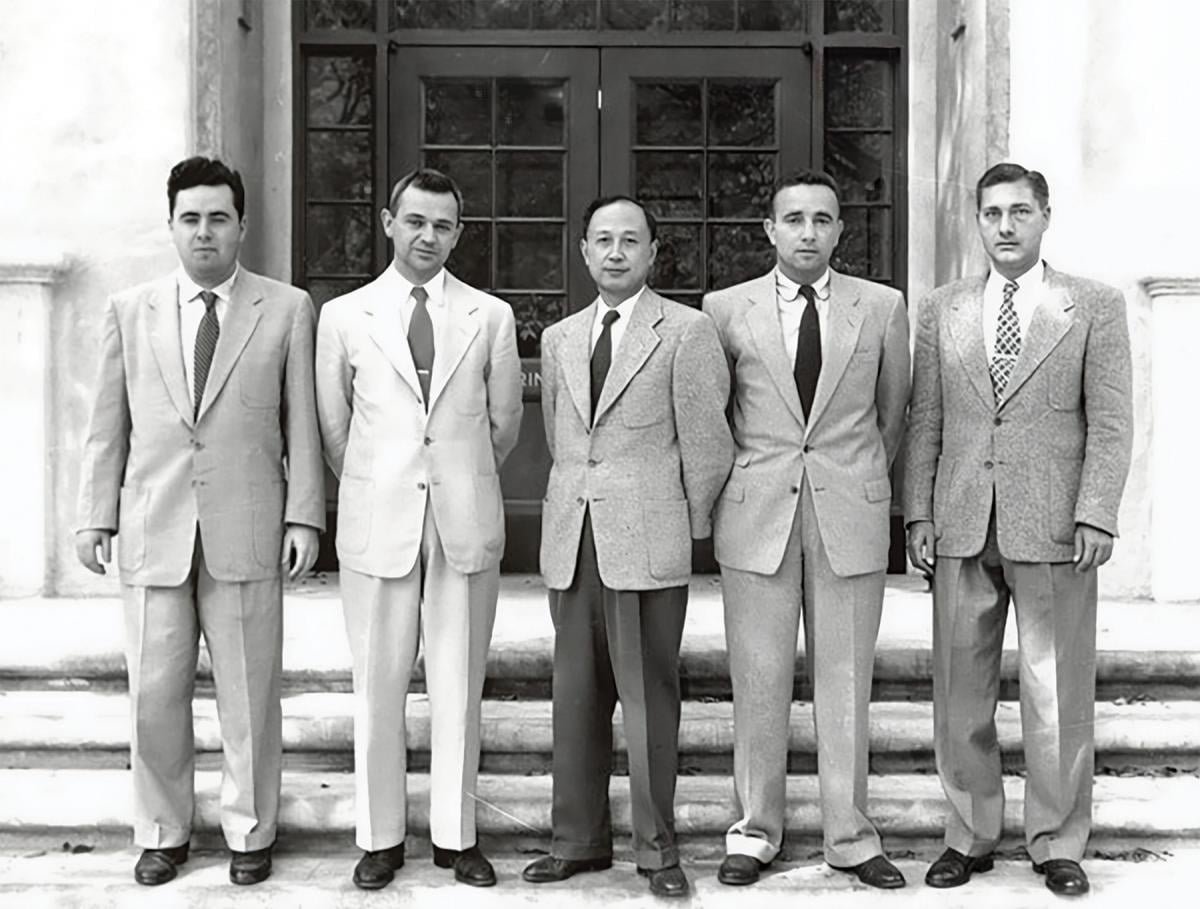
Qian Xuesen arrived in the United States on a scholarship in 1935, earned a master’s at MIT, and completed his Ph.D. at Caltech in 1939. By 1943 he was part of the GALCIT team that drafted the first internal memo using the term Jet Propulsion Laboratory (JPL). His work on high‑speed aerodynamics earned him a place on the panel that debriefed captured German rocket scientists, including Wernher von Braun.
“You do not realize what you have in this man. He is a genius.” – von Braun, 1945 (source: von Braun’s post‑war interview archive).
During the war Qian contributed to the development of the Aerobee sounding rocket, a project that later fed directly into early U.S. satellite launch vehicles. His 1949 appointment as the Robert H. Goddard Professor at GALCIT placed him at the center of the emerging U.S. missile community.
The exile
In 1950 Qian’s security clearance was revoked after a routine questionnaire flagged a 1938 Communist Party membership form. He was placed under house arrest, then released under strict surveillance. A series of back‑channel negotiations between the State Department and the People’s Republic of China culminated in his forced repatriation aboard the SS President Cleveland in 1955 – a move that the then‑Secretary of the Navy later called “the stupidest thing this country ever did.”

Building China’s missile and space programs
Back in Beijing, Qian was appointed head of the newly created Fifth Academy (now China Aerospace Science and Technology Corporation). He introduced several key concepts:
- Two‑stage liquid‑propellant architecture – a design he had studied while working on the Aerobee; this became the basis for the DF‑1 and later DF‑21 series.
- Systems engineering methodology – a disciplined approach to integrating propulsion, guidance, and launch infrastructure, imported from his Caltech experience.
- Satellite launch strategy – his 1958 proposal to the CCP outlined a “low‑Earth‑orbit reconnaissance satellite” program, which eventually produced the Dong Fang Hong‑1 in 1970.
These technical foundations enabled China to test its first atomic bomb in 1964 and its first hydrogen bomb in 1967, both of which relied on high‑precision implosion lenses and timing circuits that Qian’s teams had refined for missile warheads.
Direct impact on modern naval warfare
- DF‑21D “carrier‑killer” – a maneuvering re‑entry vehicle (MaRV) that can hit moving ships at sea. Its guidance law is a derivative of the proportional navigation algorithms Qian published in a 1952 J. Propuls. Power paper (available via the Caltech library).
- DF‑26 “medium‑range strike” – with a reported 4,000 km range, it can threaten assets across the entire Indo‑Pacific. The missile’s propulsion system uses a hypergolic fuel mixture (UDMH/N₂O₄) that traces back to formulas Qian introduced in the 1958 Propulsion Chemistry report.
- JL‑3 SLBM – deployed on Jin‑class submarines, it provides China with a credible second‑strike capability. The missile’s inertial navigation system incorporates star‑tracker updates, a concept Qian advocated for in a 1960 internal memo on “space‑aided guidance.”
These weapons force the U.S. Navy to allocate additional Aegis‑BMD assets, develop longer‑range interceptors (e.g., SM‑6), and reconsider carrier group dispersal tactics.
Limitations of the narrative
While Qian’s contributions are well documented, several nuances deserve attention:
- Indigenous innovation: The DF‑21D’s terminal guidance and the JL‑3’s cold‑launch system were refined in the 1990s and 2000s by Chinese engineers who had no direct contact with Qian’s original team.
- Parallel U.S. development: The United States pursued similar two‑stage liquid‑propellant designs (e.g., the Atlas ICBM) independently, driven by the same physics constraints.
- Counterfactual risk assessment: Had Qian remained in the United States, he would have been subject to the same security restrictions that limited his access to classified propulsion data. It is not clear that his presence would have accelerated U.S. missile programs beyond what they already achieved.
Broader implications
The Qian story illustrates how talent mobility—whether voluntary or forced—can shift strategic balances. Modern policy debates about immigration, export controls, and research collaboration often cite the “brain drain” as a cautionary tale, yet the technical record shows that institutional capacity, funding, and long‑term planning are equally decisive.
For the Navy, the lesson is twofold:
- Maintain robust talent pipelines – ensuring that promising scientists are retained and given clear security pathways.
- Continuously assess adversary capabilities – recognizing that many of today’s threats have roots in historical technology transfers, not just recent espionage.
References (selected)
- Qian Xuesen, Two‑Stage Liquid Propellant Rocket (GALCIT Technical Report, 1952).
- “DF‑26,” CSIS Missile Defense Project, 23 Apr 2024.
- “JL‑3,” Missile Defense Advocacy Alliance, May 2023.
- Chengdong Lv, Return to China One Day (Springer, 2023).
- Evan Osnos, “The Two Lives of Qian Xuesen,” The New Yorker, 3 Nov 2009.
- “History,” China Aerospace Science and Technology Corporation, https://english.spacechina.com/n17138/n382513/index.html.
Lieutenant Commander James Halsell, U.S. Navy, is a submarine officer and Navy Fellow at the U.S. Naval Institute. He is completing a doctorate in international affairs at Johns Hopkins SAIS.
Comments
Please log in or register to join the discussion