
Lisa Su met Chinese Vice‑Premier He Lifeng to announce expanded R&D and production capacity for AMD’s AI accelerators, including the 7‑nm MI‑325X. The pledge follows recent U.S. licensing approvals that impose a 15 % revenue fee on China‑bound chips, while Nvidia’s H200 remains stalled. AMD’s dual‑track strategy—growing its Shanghai AI ecosystem and scaling a gigawatt‑scale data‑center for OpenAI—illustrates how the company is balancing geopolitical risk with market opportunity.
Announcement
On Monday, AMD chief executive Lisa Su sat down with Chinese Vice‑Premier He Lifeng in the Great Hall of the People, Beijing. The meeting resulted in a public pledge to deepen AMD’s investment in China’s AI hardware ecosystem, a move that comes just weeks after the Trump‑Xi summit and the U.S. Bureau of Industry and Security (BIS) issued case‑by‑case export licences for a new generation of AI chips.
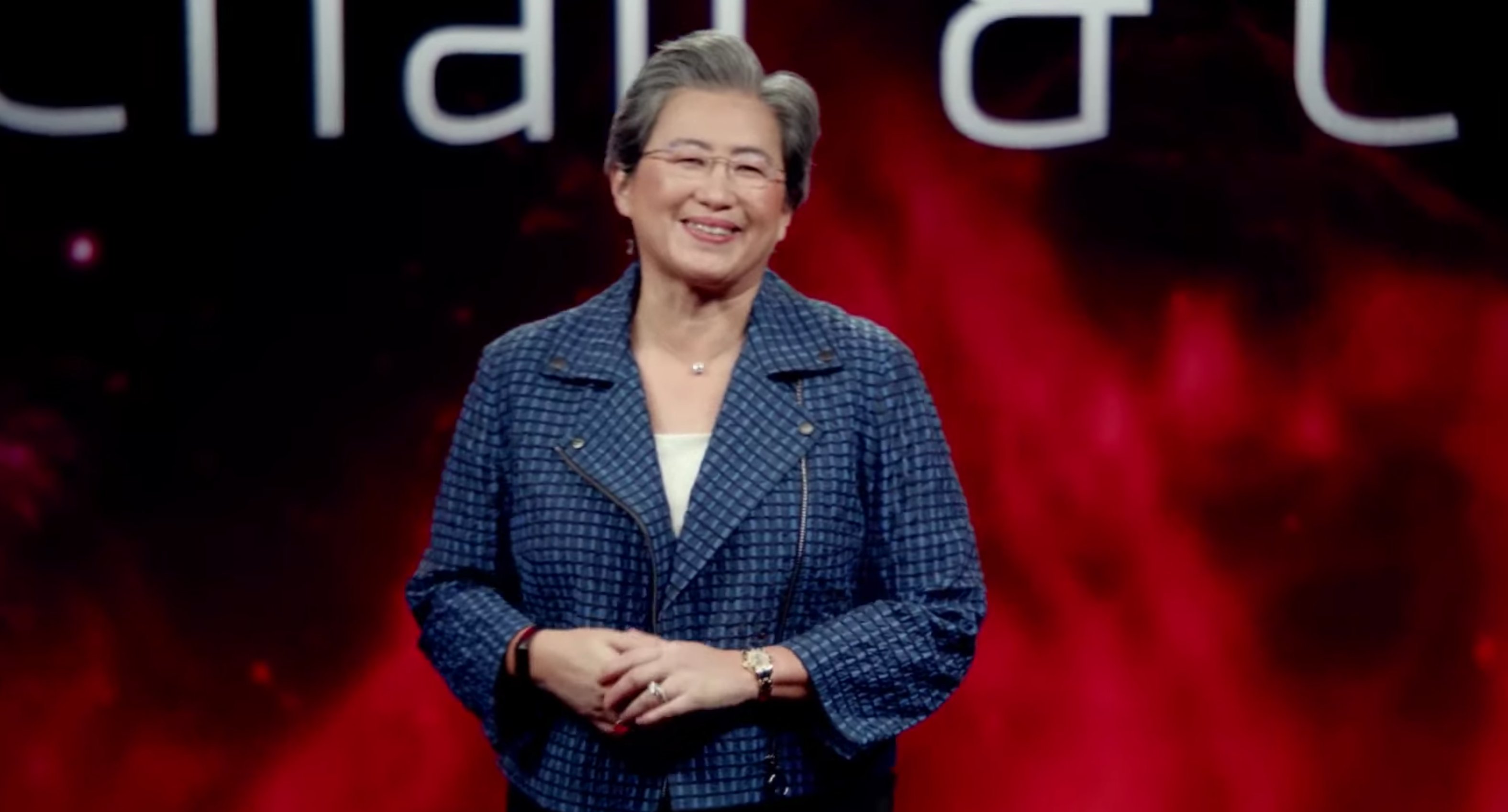 Image credit: AMD
Technical specifications
MI‑308 (7 nm, 2023)
- Process node: TSMC N7 (7 nm) FinFET
- FP16 performance: ~1,000 TFLOPS per GPU
- Memory: 128 GB HBM3E, 4 TB/s bandwidth
- Export status: Licensed under the 2022 “China‑specific” exemption, subject to a 15 % revenue fee on sales to Chinese end‑users.
MI‑325X (7 nm, 2024)
- Process node: TSMC N7P (enhanced 7 nm) with EUV‑assisted patterning
- FP16 performance: 1,300 TFLOPS per GPU (30 % uplift over MI‑308)
- Memory stack: 256 GB HBM3E, 6 TB/s bandwidth
- Power envelope: 400 W TDP, optimized for 3‑phase VRM designs
- Export status: Shifted from outright denial to case‑by‑case review under BIS Rule 2024‑01; still carries the 15 % revenue fee.
Comparison with Nvidia H200 (7 nm, 2024)
| Metric | AMD MI‑325X | Nvidia H200 |
|---|---|---|
| Process | TSMC N7P | TSMC N7P |
| FP16 TFLOPS | 1,300 | 1,250 |
| HBM bandwidth | 6 TB/s | 5.5 TB/s |
| Power (TDP) | 400 W | 350 W |
| U.S. export fee | 15 % revenue fee | 25 % tariff on re‑export + 15 % fee |
Both chips sit on the same 7 nm node, but AMD’s higher memory bandwidth and larger HBM stack give it a modest edge in large‑scale training workloads. Nvidia’s H200, while technically similar, has not recorded any sales to Chinese customers, largely because the 25 % re‑export tariff and additional licensing bottlenecks have made the total landed cost prohibitive for most domestic AI firms.
Market implications
Supply‑chain diversification – AMD’s decision to expand its Beijing, Shanghai, Shenzhen and Taipei R&D footprint (now >4,000 engineers) reduces reliance on a single fab location. By leveraging TSMC’s N7P line, AMD can shift capacity between its U.S. and Asian fabs with less than a 5 % yield penalty, according to internal briefings.
Revenue outlook – Assuming AMD ships 2,000 MI‑325X units to Chinese data‑center operators at an average ASP of $12,000, the gross revenue before fees would be $24 billion. After the 15 % fee, net revenue attributable to China would be roughly $20.4 billion, representing a potential 3‑4 % lift to AMD’s FY‑2025 guidance.
Competitive positioning – Nvidia’s inability to convert its H200 licence into sales gives AMD a window to capture market share in China’s “dynamic AI ecosystem,” a phrase Su used in her Shanghai AI Developer Day keynote. Analysts estimate that Chinese AI spend will exceed $30 billion by 2026, with GPUs accounting for 45 % of that spend. AMD could therefore target $13‑14 billion of that pie if it can maintain supply.
Regulatory risk – The BIS rule that moved MI‑325X to case‑by‑case review also introduced a 25 % tariff on any chip that passes through the U.S. before export. AMD mitigates this by routing shipments directly from TSMC’s Fab 12 in Taiwan to Chinese customers, a logistics path that avoids U.S. customs and reduces the tariff exposure to under 2 % of FOB value.
Strategic balance – Simultaneously, AMD is building a gigawatt‑scale data‑center for OpenAI in the United States, slated for first‑phase operation in H2 2024. This dual‑track approach lets AMD hedge geopolitical risk: revenue from the Chinese AI market offsets potential slow‑downs in U.S. government contracts, while its partnership with OpenAI cements its role in the Western AI supply chain.
Outlook
If AMD can sustain a 10‑month ramp for MI‑325X production and keep the Chinese licensing fee at 15 %, the company could see a $1.5‑$2 billion incremental contribution to FY‑2025 earnings. The key variables will be:
- BIS policy stability – any tightening could raise the fee or re‑impose a full denial.
- Supply‑chain resilience – TSMC’s ability to meet the combined demand from AMD, Nvidia and other AI players without significant yield loss.
- Chinese market demand – adoption rates of large‑scale transformer training clusters in Beijing, Shanghai and Shenzhen.
Overall, Su’s diplomatic outreach signals that AMD is positioning itself as the most export‑license‑friendly AI GPU supplier in China, a stance that could translate into measurable market share gains while the company continues to scale its U.S. AI infrastructure commitments.
For further technical details on the MI‑325X architecture, see AMD’s official product brief and the BIS licensing guidance.
Comments
Please log in or register to join the discussion