The collaboration industry has built an elaborate infrastructure that obscures a simple truth: most meaningful work happens through individual ownership, not collective effort.
The modern workplace is drowning in collaboration tools. Notion documents, ClickUp tasks, Slack channels, Jira tickets, Monday boards, Teams calls - we've constructed an elaborate digital infrastructure to support teamwork. Yet despite this technological sophistication, most organizations struggle with the same fundamental problem: a small fraction of people do most of the work while the majority provide what might charitably be called "structural support."
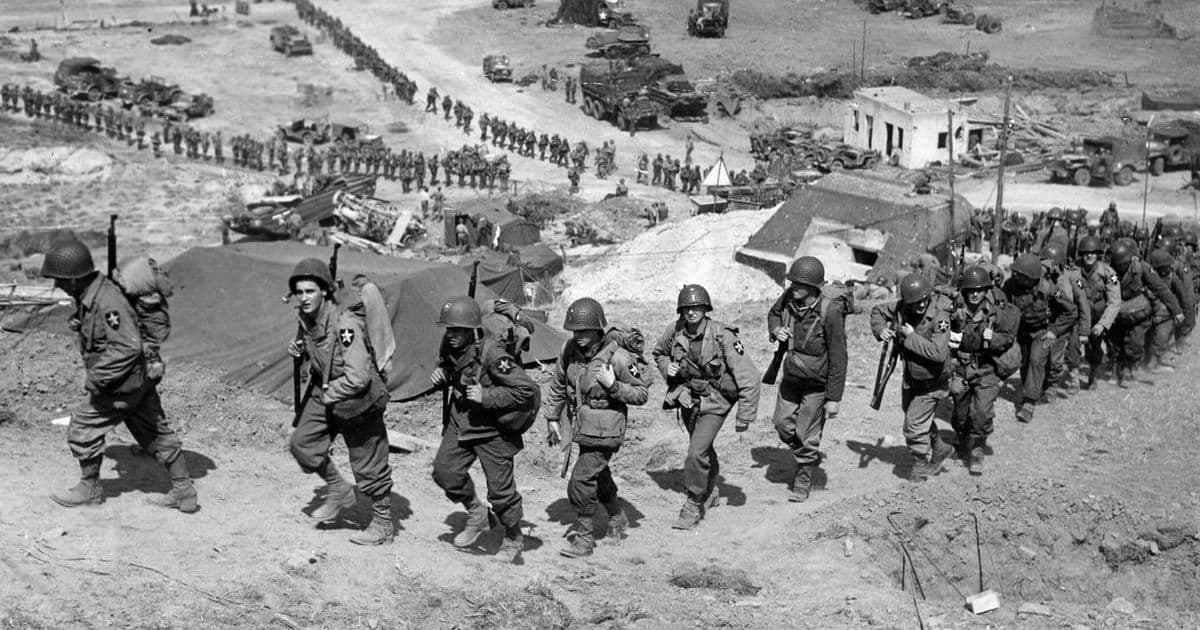
This isn't a new observation. In 1944, Army historian S.L.A. Marshall interviewed infantry companies during the Battle of the Bulge and discovered that only 15-20% of riflemen in active combat positions actually fired their weapons. The rest maintained their positions, moved when ordered, and appeared to be soldiers in battle - but they didn't shoot. IBM stumbled onto the same pattern in the 1960s when they found that 80% of computer usage came from 20% of the system's features.
This distribution appears everywhere because it describes something fundamental about human behavior in groups. Maximilien Ringelmann measured it with ropes in 1913, observing that individual effort predictably decreases as group size increases. Frederick Brooks identified it in software development in 1975, noting that adding people to a late project makes it later because communication overhead grows faster than headcount.
The tech industry's response to this reality was to double down on collaboration. We built Notion for documents, ClickUp for tasks, Slack for conversations, Jira for tickets, Monday for boards, Teams for calls that should have been emails. The average knowledge worker now maintains accounts across dozens of systems, switching between applications hundreds of times per day. We've created a simulation of collective engagement that produces an enormous amount of coordinated activity without corresponding output.
Transparency got confused with progress. Visibility got confused with accountability. Being included in a thread became socially and organizationally equivalent to owning the outcome. Once this confusion set in culturally, it became nearly impossible to dislodge.
The feeling of collaboration is pleasant in a way that personal accountability can never be. Owning something means you, specifically and visibly, can fail at it in ways that attach to your name. Collaborating means the failure belongs to the process. So everyone chose collaboration, and we called it culture.
Marshall's riflemen were ordinary people responding to the diffusion of responsibility that happens inside any group. The presence of others dissolves the sense of personal responsibility in a way that feels entirely reasonable to everyone experiencing it. You're part of a team, you're contributing, you're also (measurably) pulling less hard than you would if the rope were yours alone.
Every single person on the rope is doing this simultaneously, which is why the total force never adds up the way the headcount says it should.
This is why most complex, high-quality work is done by individuals or very small groups operating with clear authority and sharp accountability. Dostoevsky wrote The Brothers Karamazov alone. The Apollo Guidance Computer came from a team at MIT small enough to have real ownership, hierarchical enough that Margaret Hamilton's name could go on the error-detection routines she personally designed.
Communication matters, and shared context matters. But there's a huge difference between communication and collaboration as infrastructure to support individual, high-agency ownership, and communication and collaboration as the primary activity of an organization.
The collaboration industry has spent a fortune obscuring a dirty truth: we've constructed extraordinarily sophisticated machinery for the social management of work without actually doing the work we're socializing about.
Ownership looks like an individual who deeply gives a shit, making a call without waiting for group consensus. That individual will be right sometimes, and they'll be wrong other times, and they'll own it. They won't sit around waiting to find out who has the authority to move a card from one column to another and post about it in the #celebrations channel.
But being that person sucks when "collaboration" is the reigning value, because every unilateral decision gets read as a cultural violation and a signal that you aren't a team player. Collaboration-as-ideology has made ownership and responsibility feel antisocial, which is a hell of a thing, given that ownership is the only mechanism that gets anything across the finish line.
You can see this excess everywhere. Standups where people announce their busy work and as long as everyone's "on the same page" nobody changes course. Documents that are written to perform thinking so somebody else can perform thinking, with no decision in sight. Retros, and kickoffs, and WIP meetings that spawn their own retros, kickoffs and WIP meetings like cells dividing and re-dividing, with zero connection to the work that it's nominally organizing around.
Every project now seems to carry more coordination overhead than execution time, and when it fails the postmortem just recommends more collaboration.
At some point, we have to ask ourselves - what are we actually producing and who is actually responsible for producing it? Because at some level, the answer for "who is responsible for X" has to be one single person, no matter how much the collaborative apparatus layered over modern work has been engineered to make that person invisible and dissolve accountability.
We need to find some path back to trusting that individuals will do their jobs, without every responsibility being visible to an entire organization, without follow-ups being scheduled by a cadre of overpaid managers with their overfed metrics.
Maybe we could make our lives a little easier. Maybe we could let human beings keep their own lists of tasks, and we could let them sink or swim by how they manage those tasks, and we could assign blame to them and to them alone when they fuck up. Maybe we could do it without needing to have team-level views of every Kanban, calendar and task list.
And maybe - if we let go of the warm, expensive fiction of collective endeavor - we could make it a little easier to see who among us are pulling the trigger and who are just keeping their heads down.
Comments
Please log in or register to join the discussion