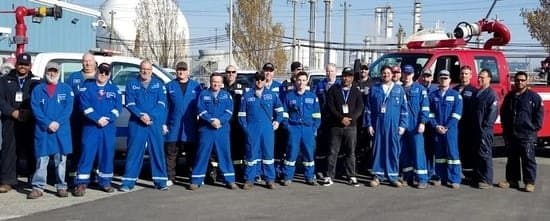
During the COVID-19 pandemic, 80 polypropylene workers volunteered to live in chemical plants for 28 days to keep N95 mask production running, producing enough material for 500 million masks.
When COVID-19 swept across America in early 2020, hospitals faced a terrifying shortage of N95 masks. My sister, working as a medical resident, was handed a single N95 and told to "guard it with her life" - because there weren't any more coming.
These critical masks are made from meltblown polypropylene, a specialized plastic produced in only a handful of chemical plants in the United States. Two of these facilities were operated by Braskem America in Marcus Hook, Pennsylvania, and Neal, West Virginia. The math was simple but terrifying: if COVID-19 reached these plants, the entire N95 supply chain would collapse.
Like companies everywhere, Braskem implemented standard pandemic protocols - staggered shifts, social distancing, temperature checks, and enhanced handwashing. But each shift change created a vulnerability. Someone could bring the virus in from the community, and the whole operation would need to shut down.
Then someone had an extraordinary idea: what if the workers never left?
About eighty workers across both plants volunteered to move into the facilities for four weeks. They worked twelve-hour shifts, slept on air mattresses on the factory floor, and saw their families only through screens. The company offered full wages for the entire time, including when they were sleeping, plus a paid week off afterward.
They had more volunteers than they had space for.
I've researched this extensively, and as far as I can tell, no other factories did anything similar. While other companies retooled to make PPE - Ford and GM converted auto plants to produce ventilators and masks, distilleries made hand sanitizer - no one else volunteered to move into their workplace.
These workers produced 40 million pounds of polypropylene in those 28 days. That's enough material for approximately 500 million N95 masks.
This wasn't emergency planners who came up with the solution. It was ordinary people looking at their specific situation and thinking creatively about how to contribute. They identified a critical vulnerability that no one else saw - that the entire N95 supply chain depended on a few isolated facilities - and solved it in a way that only they could.
When people debate emergency pricing, this is what the economics look like in practice. The work was essential, the plants couldn't run without these workers, and they were compensated accordingly. But notice that Braskem made it possible for people to be heroes. If workers had been expected to do this for normal wages, it wouldn't have happened. The number of volunteers is not independent of the offer.
Their short-term impact was producing materials for 500 million masks. But their long-term impact could be even larger: demonstrating how in an emergency, ordinary people thinking creatively about their specific circumstances can find solutions that no one else would come up with for them.
The polypropylene makers of Marcus Hook and Neal showed us that sometimes the most heroic solutions come not from grand plans, but from people looking at their own situation and asking: what can I do that only I can do?
Comments
Please log in or register to join the discussion