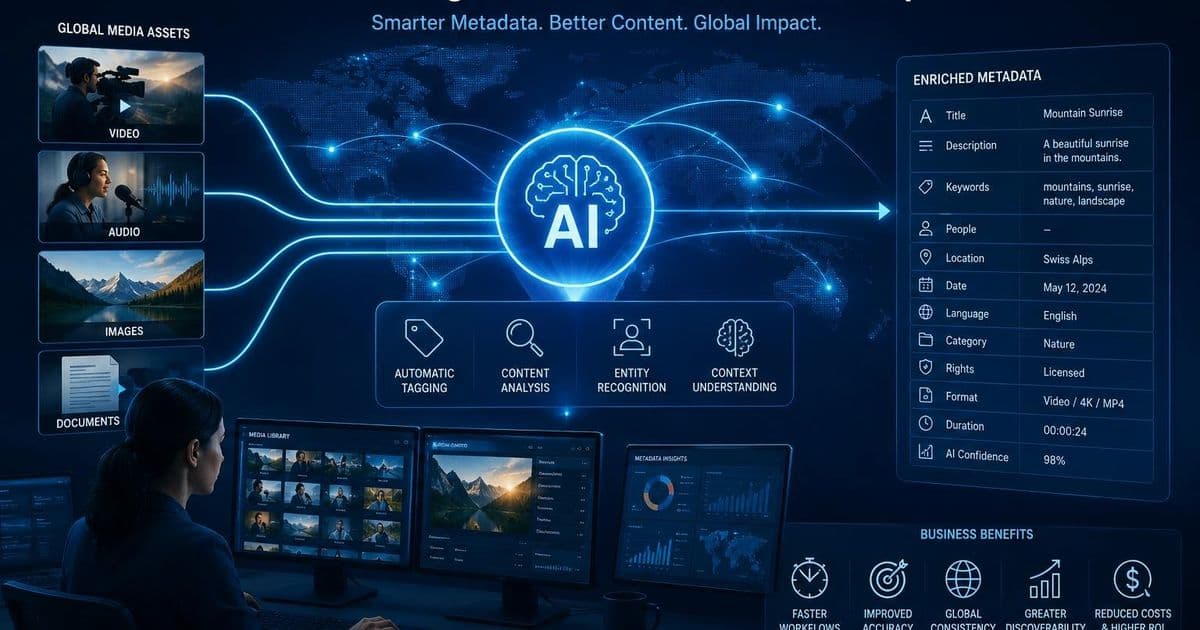
Artificial intelligence is turning the chaotic world of media assets into a searchable, self‑optimising library. By extracting meaning from video, audio and text, AI‑driven metadata systems give broadcasters, studios and streaming platforms faster discovery, better reuse and clearer insight into audience trends.

The problem media companies face
Global media organisations ingest petabytes of raw footage, podcasts, photographs and written reports every day. Traditional workflows rely on human cataloguers who add tags and fill out spreadsheets. That approach breaks down when libraries grow beyond a few thousand items. Inconsistencies creep in, search results miss relevant clips, and the time needed to locate a single asset can stretch into hours. The cost of missed reuse is measurable – analysts estimate that up to 30 % of existing content never gets repurposed because it cannot be found quickly.
How AI reshapes metadata creation
Modern AI models can watch a video, listen to an audio track and read any accompanying text, then output structured descriptors such as:
- Scene type (interview, outdoor, animation)
- Recognised faces and logos
- Speech transcript with speaker diarisation
- Sentiment and topic tags These signals are generated in near‑real time, meaning a newsroom can publish a story and have searchable metadata ready before the broadcast finishes. Companies like Google Cloud Video Intelligence and AWS Rekognition already expose APIs that return this information with a single request.
Learning and improving over time
Unlike static rule‑based taggers, deep‑learning systems continue to refine their predictions as they process more data. When a media house repeatedly edits a series of documentaries, the model learns the visual style and recurring subjects, reducing false positives and surfacing nuanced connections – for example, linking behind‑the‑scenes footage to the final cut without manual input.
Impact on discovery and creative workflows
Search interfaces are moving from strict keyword matching to natural‑language queries. An editor can type “show me all interview clips with the CEO from 2022” and receive a ranked list that includes variations in naming conventions, different file formats and even audio‑only recordings where the speaker is identified by voice.
The richer metadata also fuels analytics. By aggregating tags across a library, a broadcaster can spot trends such as rising interest in sustainability topics or the geographic distribution of on‑screen talent. Those insights inform decisions about what to licence, what to promote on social platforms and where to allocate production budgets.
Building an interoperable ecosystem
A persistent challenge has been the siloed nature of legacy catalogues. AI‑generated metadata is usually stored in open formats like JSON‑LD or embedded directly into industry‑standard containers (e.g., MXF, MP4). This encourages interoperability between asset‑management systems, broadcast playout servers and cloud‑based distribution networks. Projects such as Media Cloud demonstrate how a common schema can link metadata across on‑premise archives and SaaS platforms.
Preparing for the next wave of media assets
The volume of daily uploads is set to increase as 8K video, immersive audio and generative content become mainstream. Scaling human tagging to match that pace is unrealistic. AI provides a path to automatic, high‑quality metadata that keeps pace with creation, protects rights through accurate attribution, and unlocks the hidden value of decades‑old archives.
Takeaway
Artificial intelligence is no longer a nice‑to‑have add‑on for media houses; it is becoming the backbone of metadata management. By turning raw assets into richly described, searchable objects, AI helps global enterprises preserve their heritage, accelerate production and make data‑driven decisions about future content.
Sen Chinnasamy is Principal Product & Technology Leader at Sony. Follow him on Twitter.
Comments
Please log in or register to join the discussion