
Wall Street Raider—a financial simulator built by a Harvard Law graduate over four decades—survived countless modernization attempts until a millennial developer cracked its impenetrable BASIC code.

The Impossible Legacy
For decades, Wall Street Raider existed as software's unconquerable fortress. Teams from Disney-affiliated studios to Commodore Computers attempted to modernize its 115,000 lines of primitive BASIC code. All failed. The creator, Michael Jenkins, had accepted that his life's work—a financial simulator modeling everything from bond covenants to cryptocurrency arbitrage—would die with him. Then in 2024, a 29-year-old developer named Ben Ward emailed with an audacious proposal: "Send me the source code."
Genesis in Graph Paper (1967-1983)
Jenkins began sketching corporate takeover mechanics while neglecting Harvard Law studies in 1967. His vision—Monopoly meets Wall Street—required computational power unavailable until the Kaypro II arrived. 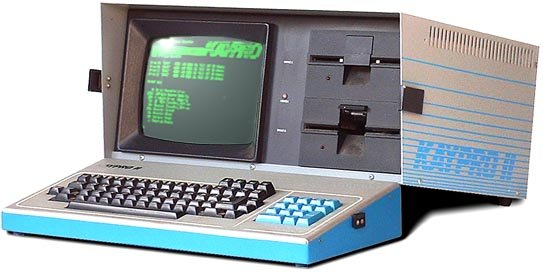 shows the machine that birthed Wall Street Raider: a suitcase-sized computer with a 5-inch screen. Jenkins taught himself BASIC using a manual written by Bill Gates, coding through nights that bled into dawn. "I was sitting in my office programming instead of drumming up business," he admitted, sustained only by royalties from tax guides he authored.
Architecture of Obsession
What emerged was unprecedented: a simulator with 1,600 dynamically interacting companies, IRS-accurate tax modeling, and ethical violation tracking. Jenkins designed during "fits of rationality"—3 AM coding sprints where complex systems like merger arbitrage crystallized before fading at sunrise. 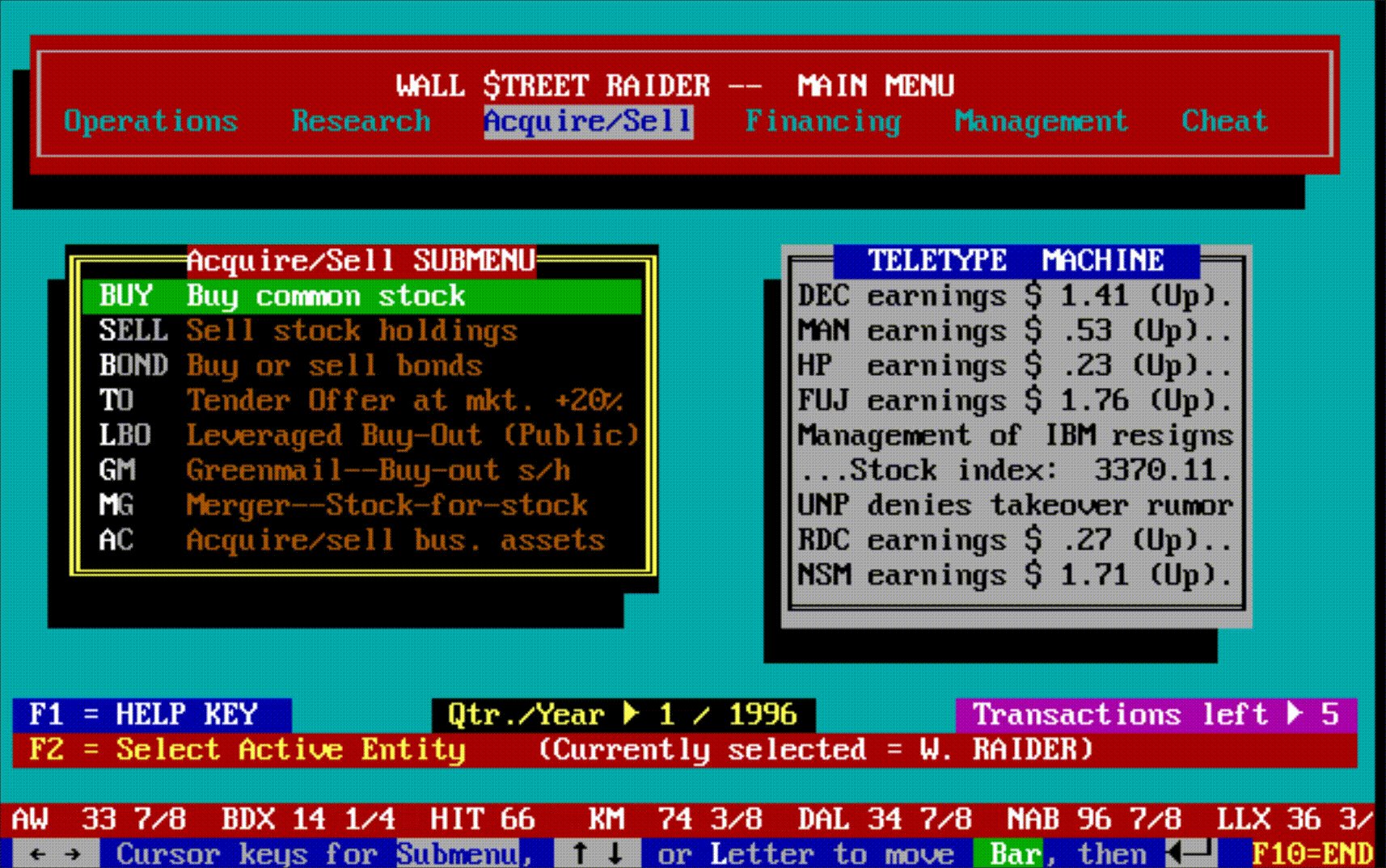 illustrates the dense interface that evolved over 34 years of solo development. The code became so layered that Jenkins himself couldn't decipher parts he'd written decades prior. Ward later theorized this created the "Jenkins Market Hypothesis": asset prices reflected competition between 40 different versions of Jenkins' understanding across his lifetime.
Accidental Academia
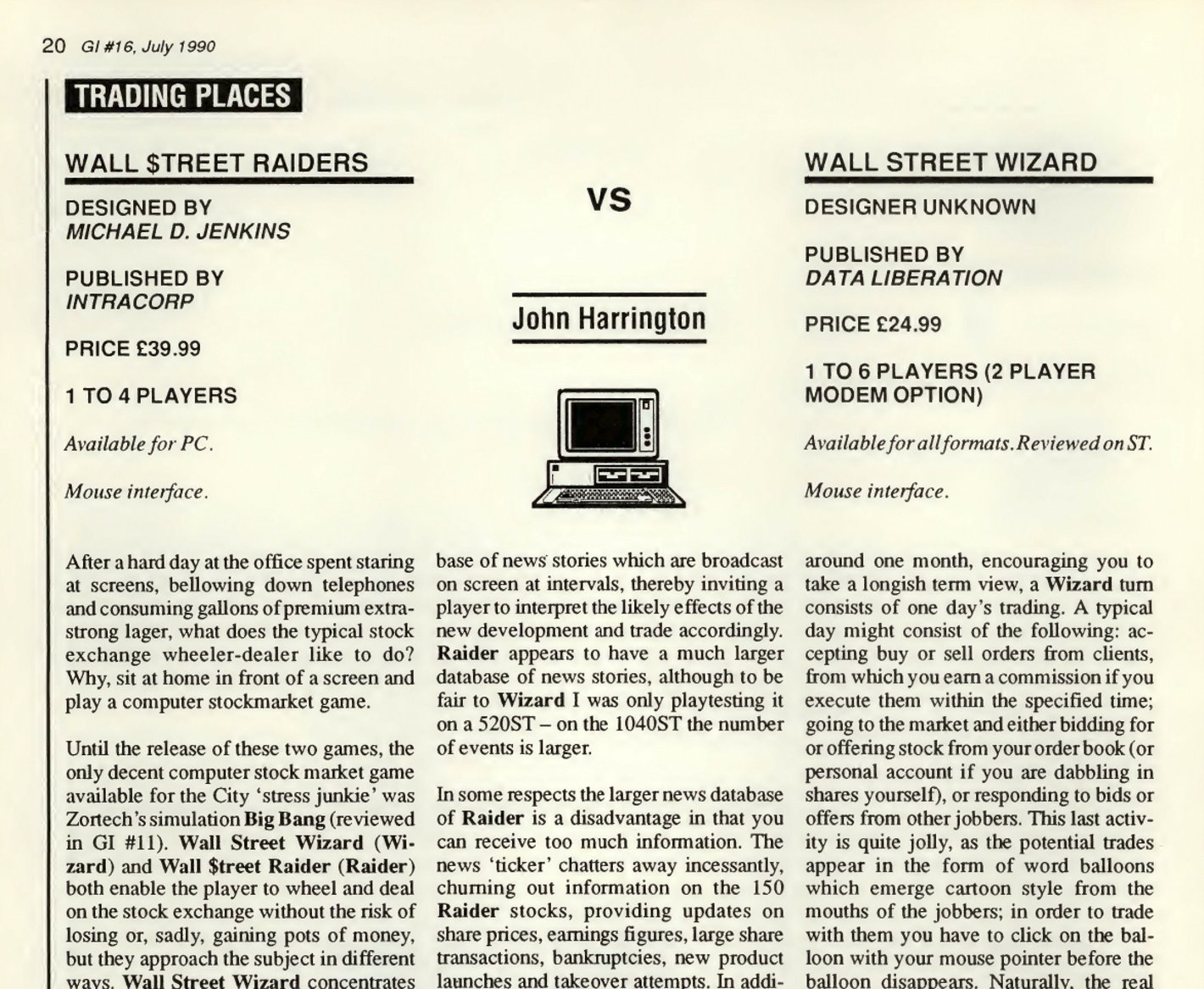 showcases press coverage spanning decades, but the real impact emerged unexpectedly. Emails poured in from Morgan Stanley traders, hedge fund managers, and CEOs crediting the game for their careers. A Philippine player who pirated the demo as a teenager wrote: "Now I'm a forex trader in Shanghai." One fund manager attached audited reports showing 44% annual returns using strategies honed in-game. Over 200 finance professionals reported career transformations—making Wall Street Raider perhaps the most effective financial education tool never designed as such.
The Impenetrable Fortress
Modernization attempts consistently shattered against the code's complexity. A Disney-affiliated studio spent $200,000 attempting an iPad port before abandoning it. Commodore returned the source code after three months of confusion. Steam rejected it as "too niche" during Greenlight. The problem wasn't technical skill but domain knowledge: understanding Jenkins' code required fluency in corporate finance, tax law, and securities regulation that eluded traditional game developers. As Jenkins noted: "My code was indecipherable to anyone but me."
The Ohio Gambit
Enter Ben Ward: an ADHD developer with a history of resuscitating ancient code. His prior feat—porting 1976's Colossal Cave Adventure from Fortran to Lua—proved crucial preparation. Ward's breakthrough came after a year studying the PowerBASIC source code: "Don't rewrite. Layer on top." He built a modern interface atop Jenkins' untouched engine, preserving four decades of financial modeling while adding Bloomberg-terminal efficiency.  maps the global community awaiting this fusion.
The Torch Passes
When Jenkins saw Ward's prototype—a simple button triggering legacy functions—he immediately renamed every variable in the 115,000-line codebase for clarity. Their collaboration spanned just two video calls and countless emails. "This guy entrusted me with 40 years of his Opus Magnum based on email," Ward marveled. The remaster integrates Jenkins' original engine with contextual tutorials, searchable documentation, and hotkey-driven workflows. During beta testing, players logged over 100-hour sessions within weeks.
Eternal Machinery
At 81, Jenkins jokes about mortality while Ward assures Discord communities he "looks both ways when crossing the street." Their solution ensures permanence: by separating the interface from the simulation core, Ward created a system that functions independently of its creators. The Steam release fulfills Jenkins' final wish—preserving a unique artifact of software history that continues educating financiers worldwide. As Ward observes: "The game contains laws written on top of laws that were interpreted wrong. It's grotesquely complex. And it's alive."
Wall Street Raider Remastered is now available on Steam. Join the community on Discord.
Comments
Please log in or register to join the discussion