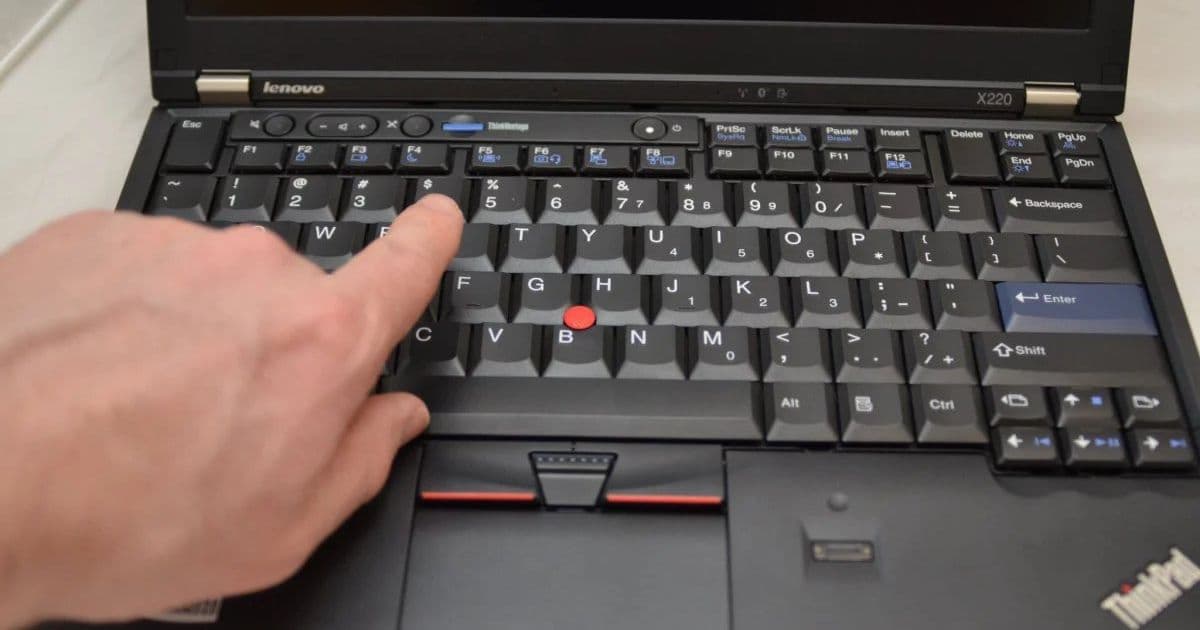
ThinkPad has maintained remarkable design continuity across 34 years and two corporate owners, evolving from IBM's innovative 1992 design to Lenovo's modern AI workstations. The product line's unique blend of functionality, durability, and distinctive design elements has created an unusually loyal following among developers and enterprise users.
ThinkPad represents one of the most remarkable design continuities in personal computing history. From the matte-black IBM 700C launched in October 1992 to the Lenovo P14s Gen 6 AI workstations of 2026, the product line has maintained visual and functional consistency across three decades and two corporate owners. This enduring appeal warrants examination, particularly as the ThinkPad lineage adapts to the demands of artificial workloads while preserving its core identity.
The ThinkPad story begins with a deliberate design philosophy. Richard Sapper's exterior design created a "black cigar box that on the outside shows nothing of what it is," as he described it in a 2008 interview. This matte-black wedge, contrasting with the beige and grey laptops of 1992, established the visual language that would persist through multiple generations. The red TrackPoint, positioned between G, H, and B keys, provided an alternative to trackpads when they were uncommon, and became a defining element of the user experience.
The product's evolution reveals several key patterns. The 1995 701c with its butterfly keyboard represents the last major form experiment before the mainstream chassis design stabilized. By 1998, the 600 series established the template that would define the T-series for years to come: magnesium alloy chassis, 13.3-inch display, and approximately 2.44 kg weight. The 2000 launch of the T20 and X20 marked a pivotal moment, establishing the corporate workhorse and ultraportable product lines that continue today.
Community sentiment around ThinkPad has been remarkably consistent. Enthusiasts celebrate the keyboard quality, serviceability, and distinctive design elements. The X220, released in 2011 with its 7-row keyboard, IPS panel option, and user-replaceable components, became particularly legendary in developer circles. As the author notes, "The cleanest 2011 choice for that exact spec profile was a ThinkPad." This sentiment persists, with modern ThinkPads still commanding premium prices in the used market compared to contemporary business laptops.
The IBM-to-Lenovo transition in 2005 represents a critical juncture. When IBM sold its PC division to Lenovo for approximately $1.75 billion, skeptics predicted the end of the ThinkPad's distinctive qualities. However, the engineering continuity proved remarkable. The Yamato Development Lab continued under Lenovo, and key design personnel like David Hill remained through the transition. By 2010, Lenovo had crossed 60 million cumulative ThinkPad units sold, demonstrating commercial success alongside engineering continuity.
Lenovo's major design innovations under the brand have been significant. The 2008 X300, developed under the codename "Kodachi," represented a new ultraportable direction while maintaining ThinkDNA. The 2012 introduction of the X1 Carbon established a premium line distinct from the traditional X-series. More recently, the P-series evolution from the 2008 W500 mobile workstation to today's thin-and-light P14s demonstrates how the "mobile workstation" concept has adapted to changing needs while preserving core identity.
Counter-arguments to the ThinkPad's enduring legacy do exist. The 2012 transition to the 6-row "ThinkPad Precision Keyboard" replaced the beloved 7-row layout that had been standard since 1992, creating a vocal backlash among enthusiasts. Other controversies include the 2014 T440 clickpad that removed dedicated TrackPoint buttons (later restored), the X1 Carbon Gen 2's Adaptive Keyboard that was poorly received, and the battery whitelist that prevented third-party batteries. The Edge series launched in 2010 was criticized as a consumer-styled dilution of the brand.
The modern ThinkPad faces new challenges with the rise of AI workloads. The P14s Gen 6 AMD with 96 GB DDR5 SODIMMs represents an interesting evolution, addressing the need for local large language model inference. As the author documents, "For a developer running Llama 3.3 70B locally, the 96 GB ceiling is the difference between 'runs' and 'swaps.'" This positions ThinkPad in a specific niche among AI-capable laptops, balancing enterprise requirements with developer needs.
The design continuity from 1992 to 2026 is remarkable. A 700C and a P14s Gen 6 remain visually recognizable as the same design concept. This consistency across corporate boundaries and technological shifts represents a rare achievement in consumer electronics. The ThinkPad's ability to adapt while maintaining core identity—matte-black chassis, red TrackPoint, functional keyboard, enterprise security stack—has created one of the most distinctive product lineages in computing history.
As the author's personal experience demonstrates, the ThinkPad relationship often spans decades. "Between the 701c and the X220, I was frequently using other brand laptops and desktops but always keeping an eye on ThinkPads," writes the author, who has used ThinkPads continuously since 2001. This long-term user loyalty, combined with the product's evolution to address modern needs like AI workloads, suggests the ThinkPad legacy will continue to adapt while maintaining its distinctive character.
Comments
Please log in or register to join the discussion