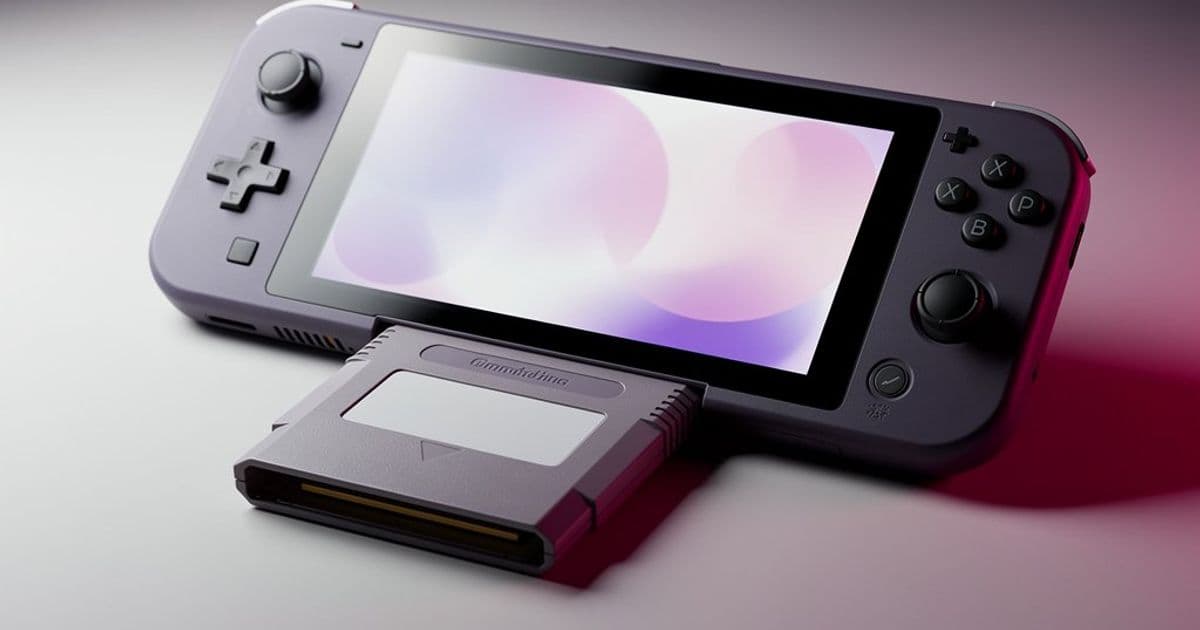
A new hardware modification project enables the ROG Xbox Ally handheld to read and play authentic Game Boy and Game Boy Advance cartridges, bridging decades of gaming hardware through clever engineering.
The ROG Xbox Ally, a handheld gaming PC designed for Xbox Cloud Gaming and local PC titles, has just gained an unexpected capability: playing original Game Boy and Game Boy Advance cartridges. A hardware modder known as "Game Boy Modder" has created a cartridge adapter that physically connects Nintendo's vintage handheld cartridges to the Ally's USB-C port, allowing the device to read and emulate the games natively.
This isn't a simple software hack—it's a hardware bridge that translates the cartridge's physical connection and data protocol into something the Ally's x86 processor can understand. The adapter uses a custom PCB that interfaces with the cartridge's pins, then converts the signal to a USB format that the Ally can process through a custom emulator application. The result is a surprisingly authentic experience: you can insert your childhood Pokémon Red cartridge, and the Ally will load and run it with the same timing and behavior as original hardware.
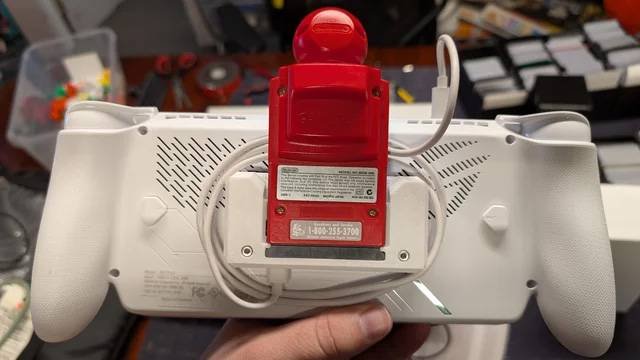
The technical implementation is more complex than it appears. Game Boy cartridges don't use standard storage protocols—they communicate through a proprietary 8-bit parallel interface with specific timing requirements. The modder's adapter includes a microcontroller that acts as a translator, buffering data and converting it to a serial USB stream. The emulator software on the Ally then reconstructs the Game Boy's Z80-like CPU and memory map in real-time. This approach preserves the cartridge's original data structure, including save files stored directly on the cartridge itself, which means your 30-year-old Pokémon save remains intact.
For developers and tinkerers, this project highlights several interesting cross-platform challenges. The ROG Xbox Ally runs Windows 11, but its ARM-based processor (the Qualcomm Snapdragon G3x Gen 2) creates an unusual hybrid environment. The modder had to compile the emulator for ARM64 while ensuring the USB driver could handle the non-standard data stream from the cartridge adapter. The solution involved writing a custom Windows driver that bypasses the standard USB mass storage protocol, treating the adapter as a raw data device instead.
The broader implications for mobile development are significant. This mod demonstrates how modern handhelds can serve as universal gaming platforms, bridging legacy hardware with contemporary systems. For app developers, it showcases the potential of USB-C as more than just a charging port—it's a versatile data interface capable of handling specialized protocols. The project also raises questions about preservation: as original hardware ages, these kinds of hybrid solutions may become essential for accessing classic games without relying on increasingly rare consoles.
From a practical standpoint, the mod requires some technical skill to implement. Users need to 3D-print or source an adapter housing, solder a few connections for the cartridge reader, and install the custom emulator software. The modder has shared detailed schematics and code on GitHub, making it accessible to hobbyists with basic electronics experience. The entire project represents a fascinating intersection of retro gaming preservation, hardware hacking, and modern handheld computing.
{{IMAGE:2}}
For mobile developers interested in similar projects, the GitHub repository includes documentation on USB protocol handling, timing-critical code for cartridge communication, and cross-platform emulator architecture. The project serves as a practical example of how to extend modern devices with legacy interfaces—a skill increasingly valuable as the industry grapples with digital preservation and backward compatibility challenges.
The modder's work continues to evolve, with plans to support Game Boy Color and Game Boy Advance cartridges more fully, and potentially even Nintendo 64 cartridges through similar USB-C adapter technology. As handheld gaming continues to grow, projects like this remind us that the future of gaming isn't just about new titles—it's also about maintaining access to the classics that built the medium.
Comments
Please log in or register to join the discussion