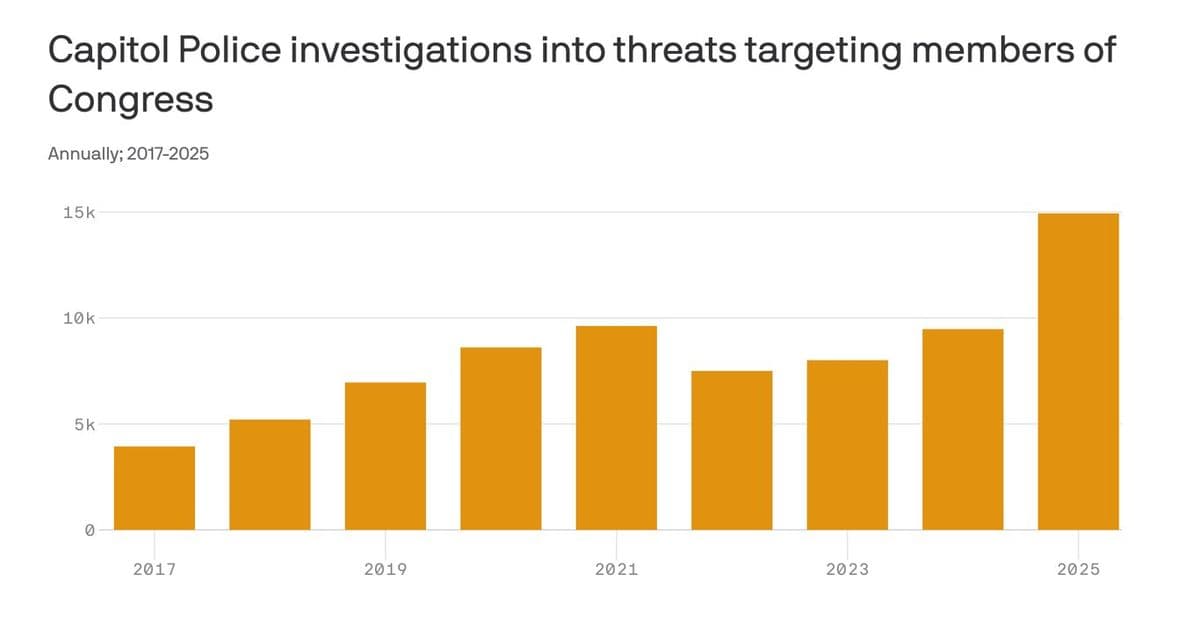
Threats against members of Congress increased dramatically in 2025, raising concerns about political violence and the safety of elected officials.
Threats against members of Congress have increased dramatically in 2025, according to new data that shows a sharp rise in the number of threats directed at elected officials. The surge comes amid heightened political tensions and growing concerns about political violence in the United States.
Rising Threat Landscape
The increase in threats represents a significant escalation from previous years. Law enforcement officials have reported that the volume and severity of threats have both increased, with many involving explicit language and specific threats of violence. The rise has affected members of both major political parties, though the distribution varies by region and political climate.
Context and Contributing Factors
Several factors appear to be contributing to the increase in threats:
- Political polarization: The continued deepening of partisan divides has created an environment where political disagreements are increasingly framed in extreme terms
- Social media amplification: Online platforms have made it easier for individuals to direct threats at public figures, often anonymously
- Economic uncertainty: Financial stress and economic anxiety may be contributing to heightened tensions
- Election cycles: The approach of major elections often correlates with increased political tensions and threats
Impact on Governance
The surge in threats has had tangible effects on how Congress operates. Many members have reported changes to their security protocols, including:
- Increased security details for town halls and public appearances
- Enhanced home security measures
- Changes to travel patterns and public schedules
- Greater reliance on virtual meetings for constituent services
Some lawmakers have expressed concern that the threat environment is deterring qualified individuals from seeking public office, potentially affecting the quality and diversity of representation.
Law Enforcement Response
Federal law enforcement agencies have responded by increasing resources dedicated to investigating threats against members of Congress. The U.S. Capitol Police and FBI have both reported expanding their threat assessment capabilities and working more closely with local law enforcement to provide protection.
However, the sheer volume of threats has created challenges for investigators, who must prioritize the most credible and serious threats while still documenting and investigating others.
Historical Context
While threats against members of Congress are not new, the current surge represents one of the most significant increases in recent decades. Historical data shows that threat levels tend to spike during periods of national crisis or intense political conflict, but the current levels exceed many previous peaks.
Looking Ahead
The trend raises questions about the long-term implications for American democracy. If the threat environment continues to escalate, it could fundamentally alter how elected officials interact with constituents and perform their duties. Some experts suggest that addressing the root causes of political violence may require broader societal efforts to reduce polarization and improve civic discourse.
The data for 2025 suggests that this remains a critical issue requiring sustained attention from law enforcement, policymakers, and civic leaders alike.
Comments
Please log in or register to join the discussion