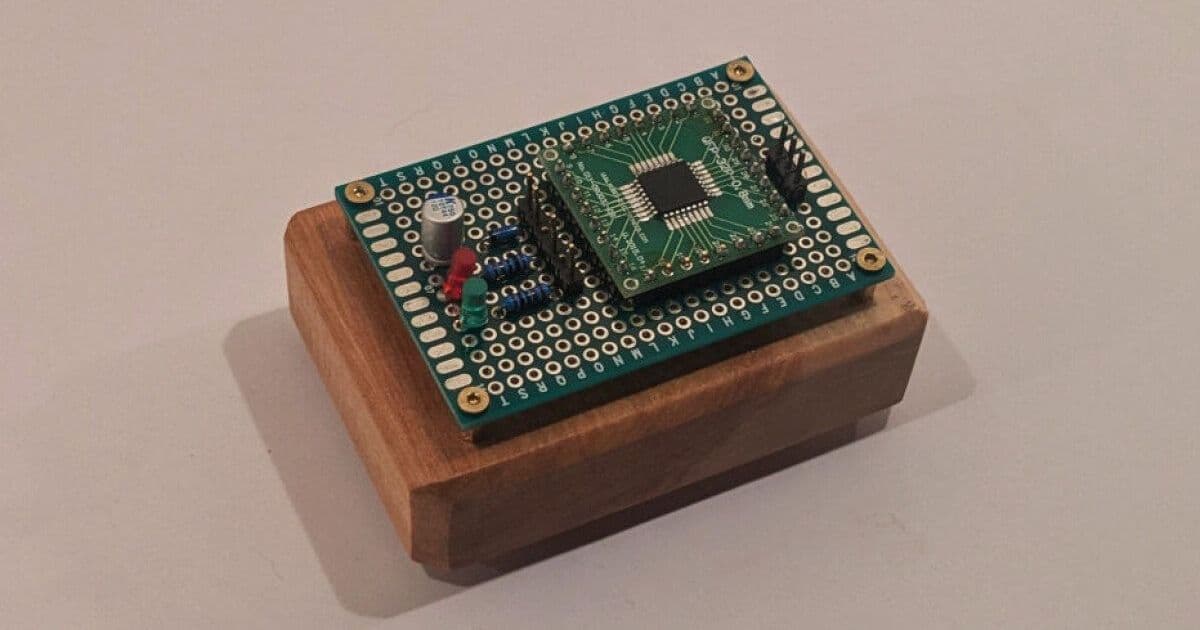
A hobbyist has built a functional web server on a $1 AVR64DD32 microcontroller using SLIP and WireGuard. While the feat is technically impressive, the minimal hardware raises serious data‑protection concerns under GDPR, CCPA and other regulations. This article explains what the project does, why it matters for user privacy, and what developers must do to stay compliant.
Tiny Web Server, Big Privacy Risks: Running a Site from a $1 Microcontroller
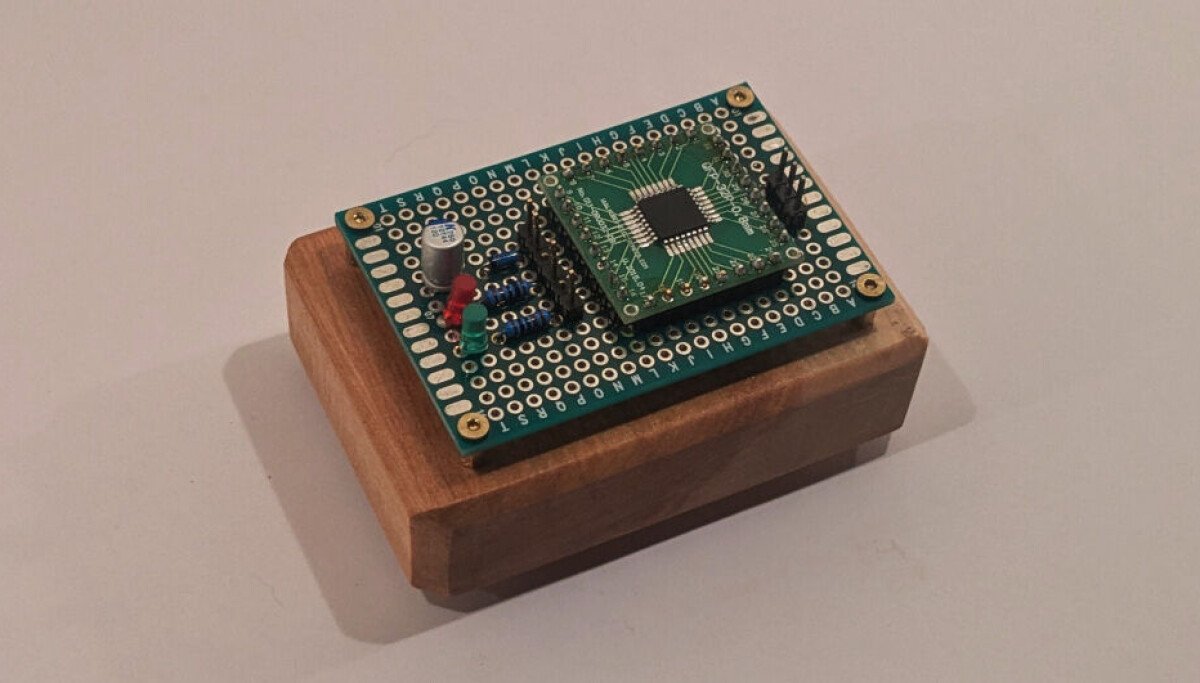
A European hobbyist has proved that a single‑digit microcontroller can serve a web page. The AVR64DD32, a $1.30 8‑bit chip with 8 KB of RAM and 64 KB of flash, is wired to a serial‑line internet connection (SLIP) and tunneled through a WireGuard proxy to the public internet. The result is a functional, single‑URL web server that can respond to HTTP requests.
While the technical cleverness is admirable, the project also highlights a set of privacy and compliance challenges that are often overlooked in maker‑culture projects. Below we break down the legal basis, the impact on users and operators, and the steps required to avoid running afoul of data‑protection law.
What happened?
- Hardware – An AVR64DD32 microcontroller (24 MHz, 8 KB SRAM, 64 KB flash) plus a few passive components.
- Network stack – The board uses Serial Line Internet Protocol (SLIP) to obtain an IP address over a serial link. TCP handling is implemented in firmware; HTTP responses are hard‑coded to a single page.
- Public exposure – Because the AVR cannot hold a public IP, the creator set up a WireGuard tunnel to a VPS in Helsinki. The VPS proxies inbound traffic to the microcontroller’s private address.
- Cost – Roughly $2‑$3 in parts, not counting the VPS rental.
The source code and a pre‑compiled binary are openly available on the developer’s blog.
Legal basis – why regulators care
GDPR (EU)
The General Data Protection Regulation applies to any entity that processes personal data of individuals in the European Economic Area, regardless of where the processing hardware resides. Even a single‑page server can collect:
- IP addresses – considered personal data under Recital 30.
- User‑agent strings – may reveal device type and OS.
- Cookies or query parameters – if the page includes a form or tracking pixel.
If the site stores or forwards any of this information, the operator must have a lawful basis (e.g., consent or legitimate interest) and must provide a privacy notice.
CCPA (California)
The California Consumer Privacy Act treats IP addresses as “personal information.” A microcontroller that logs requests, even for debugging, triggers the requirement to disclose data‑collection practices and to honour consumer rights requests (deletion, access, opt‑out of sale).
Other regimes
Countries such as Brazil (LGPD) and Canada (PIPEDA) have similar definitions of personal data. The low‑cost nature of the hardware does not exempt the operator from these obligations.
Impact on users and companies
| Issue | Why it matters | Potential consequence |
|---|---|---|
| Unencrypted HTTP | The AVR serves plain‑text pages; any data sent by a visitor (e.g., a form submission) is exposed to eavesdropping. | GDPR Article 5(1)(f) – data must be processed securely. Breach could lead to fines up to €20 million or 4 % of global turnover. |
| Limited logging | Minimal RAM forces the developer to keep only a few bytes of request data. If logs are stored on the VPS, the operator may not be aware of the retention period. | CCPA requires disclosure of retention periods; failure can attract civil penalties of up to $7,500 per violation. |
| Third‑party proxy | The WireGuard tunnel routes traffic through a VPS owned by the developer. The VPS provider may have its own logging policies. | If the VPS logs IP addresses and shares them with authorities without a proper legal basis, the site operator could be implicated in unlawful disclosure. |
| No consent mechanism | A single hard‑coded page cannot present a cookie banner or consent dialog. | GDPR requires consent for non‑essential cookies; non‑compliance can trigger supervisory‑authority action. |
What changes are needed to stay compliant
- Enable TLS – Even a modest microcontroller can offload TLS termination to the VPS. The VPS should present a valid HTTPS certificate and forward only encrypted traffic to the AVR over the WireGuard tunnel.
- Publish a privacy notice – Host a separate page (perhaps on the VPS) that explains what data is collected, why, and how long it is retained. Link to it from the micro‑site.
- Implement a minimal consent banner – Use JavaScript on the VPS‑served page to obtain consent before any optional cookies are set.
- Configure log retention – Ensure that any request logs kept on the VPS are automatically deleted after a defined period (e.g., 30 days) and that the AVR itself does not retain data beyond the session.
- Data‑processing agreement – If the VPS provider processes personal data on behalf of the micro‑site, a written Data Processing Agreement (DPA) is required under GDPR Article 28.
- Security testing – Run a basic port‑scan and fuzz test against the AVR’s TCP stack. Known vulnerabilities in custom TCP implementations can be exploited to cause denial‑of‑service or data leakage.
- Document the architecture – Keep a simple diagram showing the AVR, SLIP link, WireGuard tunnel, and VPS. Documentation helps demonstrate accountability to regulators.
Why the watchdog perspective matters
Projects that push the boundaries of low‑cost hardware are valuable for education and innovation, but they also create a blind spot for privacy compliance. Regulators are increasingly focusing on “Internet‑of‑Things” devices, and a $1 microcontroller that serves a web page is just another node on the network. By applying the same rigor to data‑protection that we demand of cloud providers, makers can avoid costly enforcement actions and protect the rights of the visitors who stumble upon their tiny sites.
Further reading
The project’s source code can be examined on the developer’s blog, and the AVR64DD32 datasheet is available from DigiKey.
Comments
Please log in or register to join the discussion