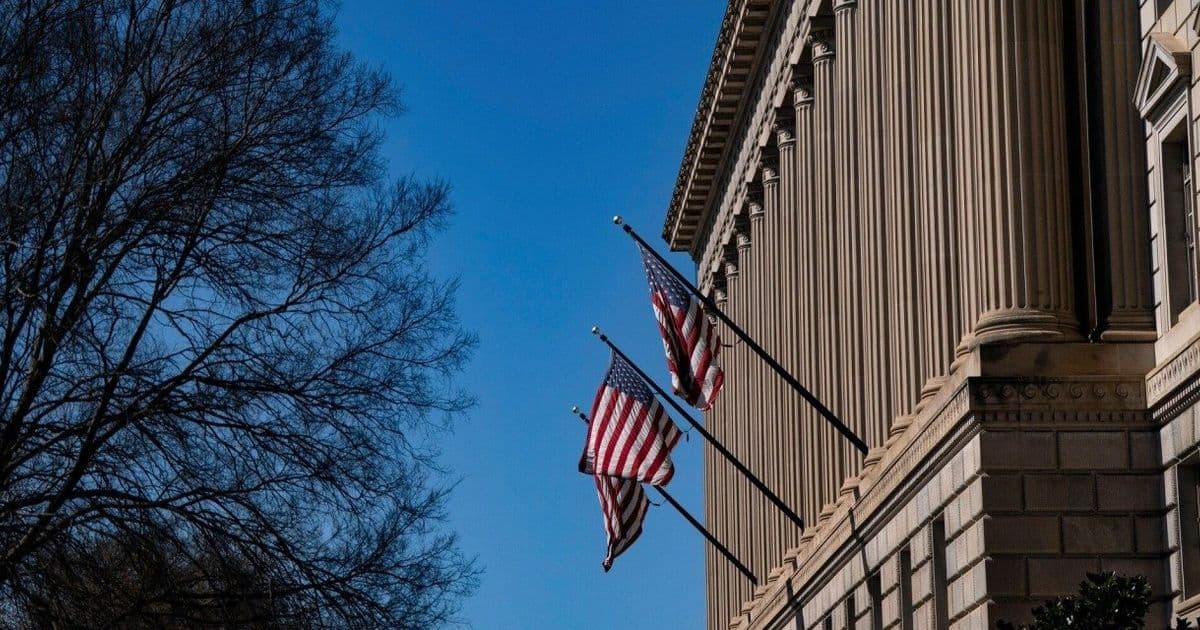
The Trump administration has dismissed two Commerce Department officials who were central to efforts to counter Chinese technological advances, according to sources familiar with the matter. The move has sparked concerns among analysts and lawmakers about a potential softening of the U.S. stance toward Chinese technology threats, particularly in the context of ongoing tensions over semiconductor exports, AI development, and data security.
The Trump administration has dismissed two Commerce Department officials who were central to efforts to counter Chinese technological advances, according to sources familiar with the matter. The move has sparked concerns among analysts and lawmakers about a potential softening of the U.S. stance toward Chinese technology threats, particularly in the context of ongoing tensions over semiconductor exports, AI development, and data security.

The officials in question worked within the Commerce Department's Bureau of Industry and Security (BIS), which is responsible for implementing and enforcing export controls, including those targeting sensitive technologies that could be used for military or surveillance purposes by foreign adversaries. Their departure comes at a critical juncture in U.S.-China tech relations, as Washington has been grappling with how to balance national security concerns with economic competitiveness.
What's Claimed
Sources indicate that the two officials were involved in key initiatives aimed at restricting China's access to advanced U.S. technology. This includes work related to the Entity List, which restricts U.S. companies from selling certain technologies to Chinese firms, and the development of new export controls targeting artificial intelligence chips and other critical hardware. The officials were reportedly part of a team that advocated for a robust, consistent approach to countering China's technological ambitions, which include plans to achieve self-sufficiency in semiconductors and lead in AI by 2030.
The dismissals were not accompanied by public explanations from the administration, leading to speculation about the underlying reasons. Some reports suggest that the decision may reflect a shift in priorities within the Commerce Department, possibly influenced by broader political or economic considerations. Others point to internal disagreements over the scope and implementation of tech restrictions.
What's Actually New
While changes in personnel within federal agencies are not uncommon, the timing and profile of these dismissals are notable. The officials were reportedly involved in high-profile cases, including the ongoing restrictions on companies like Huawei and SMIC, as well as the development of the CHIPS and Science Act, which aims to bolster domestic semiconductor manufacturing. Their departure could signal a change in the administration's approach to tech policy, potentially moving toward a more transactional or less confrontational stance with China.
This development also comes amid a complex geopolitical landscape. The U.S. has been working to strengthen alliances with countries like Japan, South Korea, and the Netherlands to coordinate export controls on advanced chipmaking equipment. At the same time, China has been investing heavily in its own tech ecosystem, with companies like Huawei making significant strides in 5G, AI, and semiconductor design. The dismissals could complicate these efforts, particularly if they lead to a lack of continuity in policy implementation.
Limitations and Broader Context
It is important to note that the full implications of these personnel changes are not yet clear. The Commerce Department has a large staff, and the impact of losing two officials may be mitigated by the presence of other experts and leadership. However, the officials in question were reportedly well-regarded within the national security community, and their loss could create a knowledge gap in a highly specialized field.
Moreover, the U.S. tech policy toward China is not solely determined by the Commerce Department. Other agencies, including the Department of Defense, the State Department, and the Office of the U.S. Trade Representative, play significant roles. The dismissals may also reflect broader political dynamics, including the administration's relationship with Congress, which has been pushing for a tougher line on China.
From a practical standpoint, the effectiveness of U.S. tech restrictions has been debated. While measures like the Entity List have disrupted Chinese companies' access to certain technologies, they have also spurred innovation within China, leading to the development of alternative supply chains and technologies. For example, Huawei has made progress in developing its own operating system and chip designs, though it still faces challenges in producing advanced semiconductors without access to Western tools.
Connecting to Broader Patterns
This event fits into a larger pattern of uncertainty in U.S. tech policy. Over the past few years, the U.S. has oscillated between aggressive restrictions and more collaborative approaches, often depending on the administration in power. The Trump administration initially took a hardline stance on China, but recent actions suggest a possible recalibration. This is particularly relevant as the 2024 election cycle approaches, with tech policy becoming a key issue in the debate over economic competitiveness and national security.
For businesses and investors, these developments add another layer of complexity. Companies operating in the tech sector must navigate an evolving regulatory landscape, with potential shifts in export controls, investment reviews, and trade policies. The dismissals at the Commerce Department may not directly affect day-to-day operations, but they could influence the direction of future policy decisions.
Conclusion
The dismissal of two Commerce Department officials focused on Chinese tech threats raises important questions about the future of U.S. tech policy. While the full impact remains to be seen, the move highlights the challenges of maintaining a consistent and effective approach to countering technological competition with China. As the U.S. continues to grapple with these issues, the role of technical expertise and policy continuity will be critical in shaping outcomes that balance security, innovation, and economic interests.
For further reading on U.S. export controls and China tech policy, see the Bureau of Industry and Security website and recent analyses from the Center for Strategic and International Studies.
Comments
Please log in or register to join the discussion