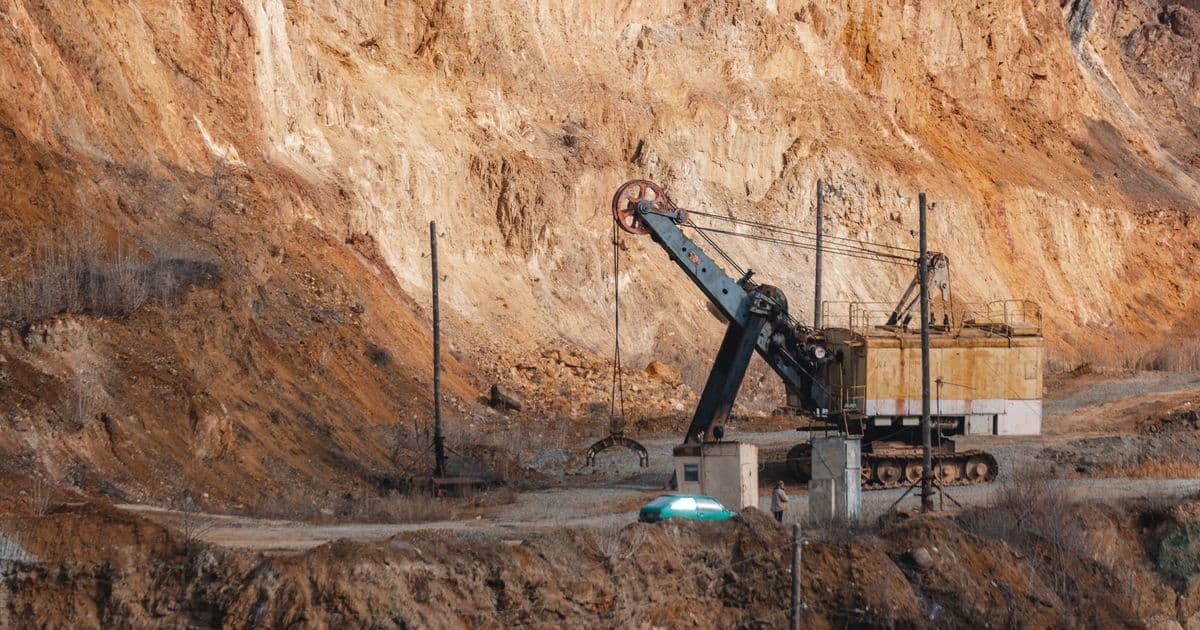
The Trump administration is establishing a 60-day emergency reserve of rare earths and other critical minerals through Project Vault, financed by a $10B Export-Import Bank loan and $1.67B private capital to protect U.S. manufacturing from Chinese supply disruptions.
The Trump administration is moving forward with a massive $12 billion initiative to create a strategic stockpile of critical minerals, aiming to shield U.S. manufacturing from China's dominance in mining and refining essential materials for electronics, automotive, aerospace, and energy sectors.
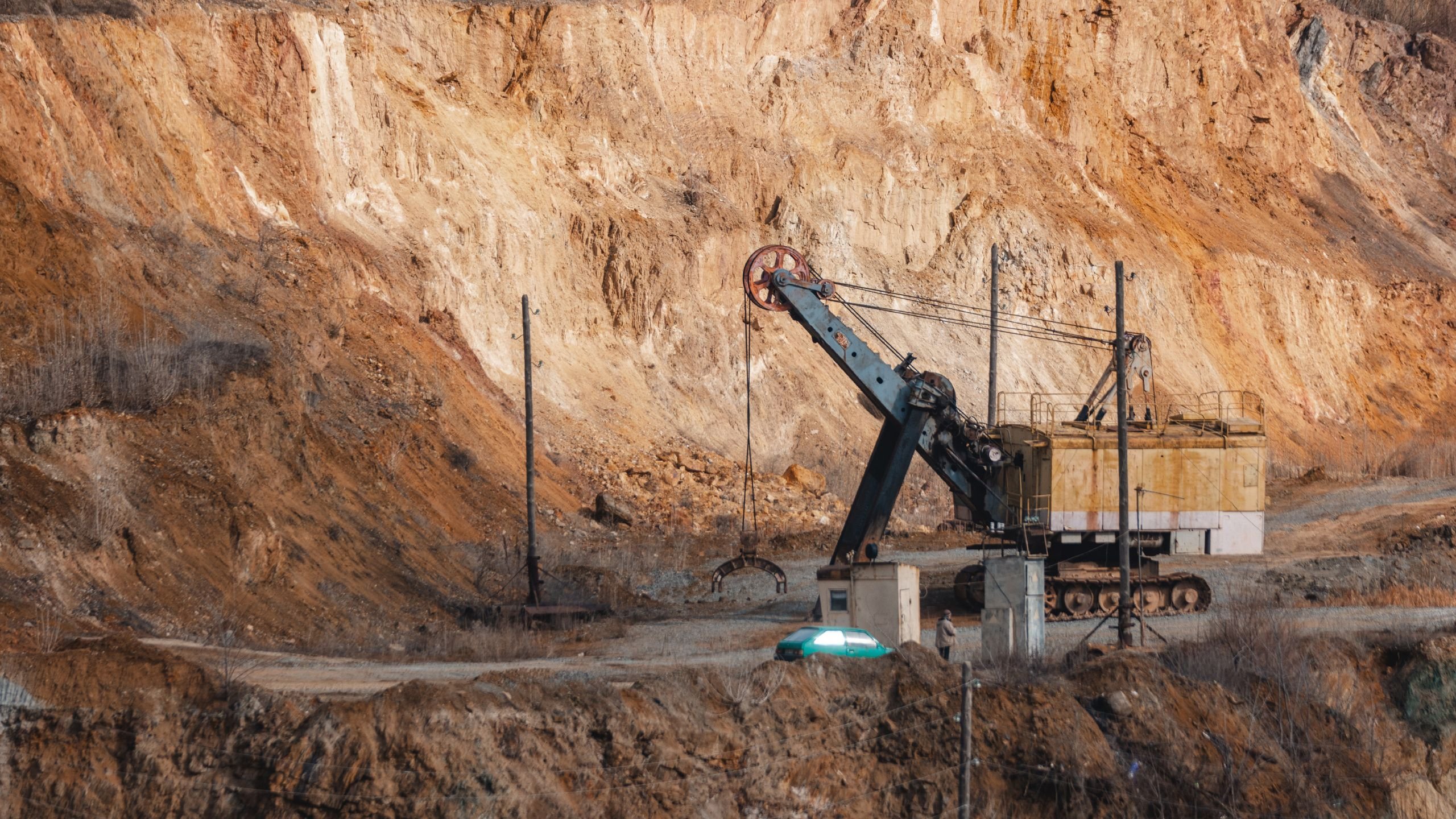
Dubbed Project Vault, the program will establish a roughly 60-day emergency buffer of key minerals that are vital to modern supply chains. The initiative represents one of the most significant moves yet to address the United States' vulnerability to Chinese supply disruptions in materials ranging from rare earth elements to gallium and germanium.
Financing Structure and Scale The project's financing is notably ambitious, with the U.S. Export-Import Bank set to vote on a $10 billion, 15-year loan that would be more than double the largest deal it has ever issued. This will be supplemented by approximately $1.67 billion in private capital, bringing the total commitment to $12 billion.
The scale of this financing reflects the strategic importance placed on securing these supply chains. The Export-Import Bank's involvement also signals the administration's view that this represents a critical national security and economic priority.
Operational Framework Commodity trading firms Hartree Partners, Traxys North America, and Mercuria have been tapped to manage procurement and inventory operations. The program will function similarly to the existing U.S. Strategic Petroleum Reserve, but instead of oil, it will focus on minerals and elements with high price volatility.
Under the framework, participating manufacturers will enter into fixed-price purchase and repurchase agreements. During periods of acute supply disruption, companies will be able to draw down from the inventory. However, they'll be required to replenish these stocks as supplies recover, ensuring the stockpile remains intact for future emergencies.
Market Response and Participation According to senior administration officials, the project is already "oversubscribed because investors are attracted by a credit-worthy group of manufacturers." This strong market response suggests that industry players see significant value in having guaranteed access to critical materials during supply disruptions.
President Trump is scheduled to meet with General Motors CEO Mary Barra and mining magnate Robert Friedland, indicating high-level engagement from both the automotive and mining sectors in this initiative.
Strategic Context The timing of Project Vault comes amid escalating tensions with China over critical mineral supplies. China has repeatedly tightened controls on exports of gallium, germanium, graphite, and other dual-use materials, using licensing regimes and approvals as leverage in broader trade disputes.
While some restrictions were eased late last year, the fundamental concentration of mining and processing capacity in China remains unchanged. This leaves U.S. manufacturers heavily exposed to Chinese policy shifts and potential supply disruptions.
Materials of Focus The stockpile will prioritize materials that are critical inputs for modern technology. Gallium and germanium, for example, are essential for semiconductors used in power electronics and RF components. Rare earth elements are found in the magnets that appear in everything from hard drives to industrial motors.
Currently, the U.S. maintains a national stockpile of minerals for the defense-industrial sector, but lacks a similar reserve for civilian manufacturing needs. Project Vault aims to fill this gap, recognizing that the same materials critical to defense applications are equally vital to commercial technology production.
Legislative Background The initiative follows legislative efforts to address this vulnerability. Last month, a bipartisan group of legislators introduced a bill to create a $2.5 billion stockpile of critical minerals. According to the bill, China has moved to "weaponize its influence over prices and volumes in the contest for access to critical minerals."
This legislative push underscores the growing consensus across party lines about the need to reduce dependence on Chinese mineral supplies. The administration's $12 billion commitment represents a significant escalation of these efforts.
Industry Implications For electronics manufacturers, Project Vault could provide crucial stability in an otherwise volatile supply environment. The fixed-price agreements and guaranteed access during disruptions could help companies better plan production and manage costs.
The initiative may also accelerate domestic mining and refining efforts, as companies look to reduce their exposure to international supply risks. This could lead to increased investment in U.S.-based mineral processing capabilities, potentially creating new jobs and economic opportunities in mining regions.
Global Supply Chain Impact Project Vault represents a significant shift in how the United States approaches critical mineral security. By creating a substantial buffer against supply disruptions, the initiative could alter the dynamics of global mineral markets and potentially reduce China's leverage in trade negotiations.
The 60-day reserve capacity provides meaningful protection against short-term disruptions while giving the U.S. time to seek alternative sources or ramp up domestic production if longer-term supply issues arise.
As the Export-Import Bank prepares to vote on the financing and President Trump meets with key industry leaders, Project Vault appears poised to become a cornerstone of U.S. efforts to secure its technological supply chains and reduce strategic vulnerabilities in an increasingly competitive global landscape.
Comments
Please log in or register to join the discussion