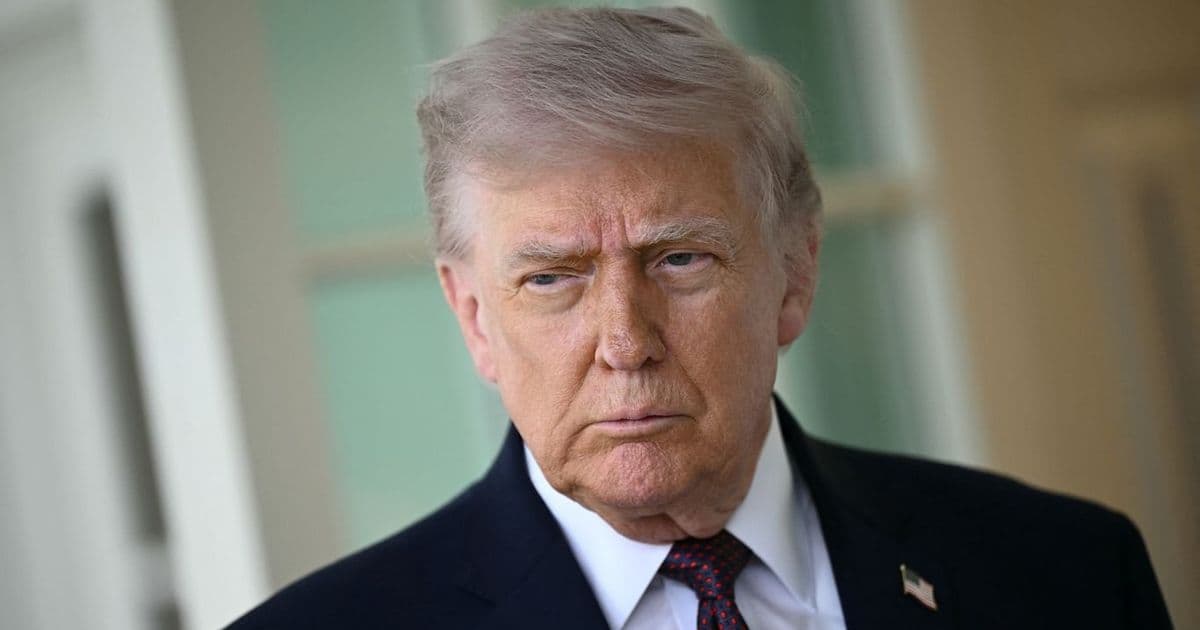
President Trump announced that the U.S. Navy will begin "guiding" commercial vessels through the Strait of Hormuz starting Monday, a significant shift in maritime security operations in one of the world's most critical waterways for oil transportation.
President Trump announced on Thursday that the U.S. Navy will begin "guiding" commercial vessels through the Strait of Hormuz starting Monday, a significant shift in maritime security operations in one of the world's most critical waterways for oil transportation.
The Strait of Hormuz, a narrow passage between Iran and Oman, serves as the only sea passage from the Persian Gulf to the open ocean. According to the U.S. Energy Information Administration, approximately 20 million barrels of oil per day, or about 20% of global oil consumption, pass through this strategic chokepoint. Any disruption to shipping in this area could have immediate and significant impacts on global oil prices.
In a statement made at the White House, President Trump explained that the new initiative aims to "protect freedom of navigation and ensure the safe passage of commercial vessels." The announcement comes amid heightened tensions between the United States and Iran, particularly following recent incidents involving oil tankers in the region.
The "guidance" operation, as described by U.S. officials, will involve U.S. naval ships escorting commercial vessels through the strait, with particular attention to vessels carrying oil and other critical commodities. This represents a significant escalation from previous U.S. naval presence in the region, which has primarily focused on monitoring and responding to threats rather than actively directing traffic.
Market analysts are closely watching the development for its potential impact on insurance costs and shipping routes. Lloyd's of London, the world's specialist insurance market, has already indicated that vessels transiting the Strait of Hormuz without U.S. naval escort may face higher insurance premiums due to perceived increased risk.
"The insurance implications could be substantial," explained Sarah Johnson, maritime security analyst at Global Risk Advisory. "We're likely to see a bifurcation in insurance rates based on whether vessels opt for the U.S. escort or choose alternative routes, which could add significant costs to global supply chains."
The announcement has immediate implications for global oil markets. Brent crude futures, the international benchmark, rose 1.8% following Trump's announcement, reflecting market concerns about potential disruptions. The International Energy Agency estimates that a complete closure of the Strait of Hormuz would reduce global oil supply by 25-30%, causing prices to potentially spike by 50-100%.
From a strategic perspective, the move places the United States in a more direct role in managing maritime traffic in the region. The last major U.S. naval operation in the Strait of Hormuz was the "Operation Enduring Freedom" in 2001, but the scale and duration of this new initiative suggest a more permanent presence.
Iran has responded cautiously to the announcement, with Foreign Minister Javad Zarif stating that "foreign powers have no right to direct maritime traffic in international waters." The Iranian government has previously threatened to close the strait in response to any hostile actions, though such a move would severely impact Iran's own economy, which relies heavily on oil exports.
The economic stakes are particularly high for Asian nations, which import approximately 65% of their oil from the Middle East. Countries like China, Japan, and South Korea, which are major oil importers, will need to carefully consider whether to participate in the U.S.-led guidance program or seek alternative arrangements.
"This creates a complex diplomatic challenge for Asian importers," noted Michael Chen, senior fellow at the East-West Center. "They must balance their economic interests with maintaining diplomatic relations with both the United States and Iran. The decision to accept U.S. naval guidance could have significant implications for regional diplomatic alignments."
From a commercial perspective, shipping companies face difficult decisions. While the U.S. naval guidance may provide security, it also means vessels will be subject to U.S. directives on routing and timing. Some companies may opt for the longer route around Africa, adding 15-20 days to voyages and increasing costs by approximately $1 million per tanker voyage, according to industry estimates.
The timing of the announcement is also significant, coming amid broader U.S. pressure on Iran following the reimposition of sanctions. The U.S. has been working to reduce Iranian oil exports to zero as part of its maximum pressure campaign, though Iran has continued to find ways to export oil through various channels.
"This move appears to be part of a broader strategy to increase pressure on Iran while simultaneously reassuring allies about the security of maritime traffic," explained David Albright, president of the Institute for Science and International Security. "The 'guidance' program allows the U.S. to maintain a visible presence without necessarily escalating to direct conflict."
The implementation of the program faces several practical challenges. The U.S. Navy currently has approximately 50 ships deployed in the Fifth Fleet region, which covers the Persian Gulf and surrounding areas. However, maintaining continuous escort operations through the strait would require significant additional resources and potentially divert ships from other missions.
Logistically, the guidance operation will require coordination with shipping companies, port authorities, and potentially other naval forces in the region. The U.S. has indicated that it will work with allies, though key European powers have not yet committed to participating in the program.
From a market perspective, the announcement creates uncertainty about long-term shipping patterns. If the U.S. guidance program becomes permanent, it could lead to a reorganization of global shipping routes, with potentially significant implications for ports and shipping companies along alternative routes.
The global shipping industry, already facing challenges from the COVID-19 pandemic and trade tensions, now faces additional uncertainty. According to Drewry's World Container Index, container shipping rates have already increased by 15% since the beginning of the year, and any disruption to oil supplies could further impact global trade patterns.
"This is a significant development that could reshape global shipping patterns for years to come," stated Lisa Anderson, CEO of the World Shipping Council. "The industry will need to adapt to new realities in the Strait of Hormuz, which may include permanent changes to routing, insurance practices, and security protocols."
As the implementation date approaches, all eyes will be on how shipping companies respond, how Iran reacts to increased U.S. naval presence, and whether other nations will join the guidance program. The coming weeks will likely see increased diplomatic activity as stakeholders seek to understand the implications and adjust their strategies accordingly.
In the broader context of U.S.-Iran relations, this move represents a significant shift in maritime policy in the region. The Strait of Hormuz has been a flashpoint in U.S.-Iran tensions for decades, with incidents including the 1980-1988 Iran-Iraq War, the 1988 shooting down of Iran Air Flight 655 by the U.S. Navy, and more recent incidents involving oil tankers.
The economic implications extend beyond oil to include other commodities that pass through the strait, including liquefied natural gas, grain, and manufactured goods. According to the U.S. Trade Representative, approximately $1.2 trillion in goods pass through the Strait of Hormuz annually, making any disruption potentially catastrophic for global supply chains.
As the U.S. Navy prepares to implement the guidance program starting Monday, the international community watches with concern and anticipation. The coming weeks will likely see significant developments as this new policy takes shape and stakeholders respond to the changing landscape of maritime security in one of the world's most critical waterways.
Comments
Please log in or register to join the discussion