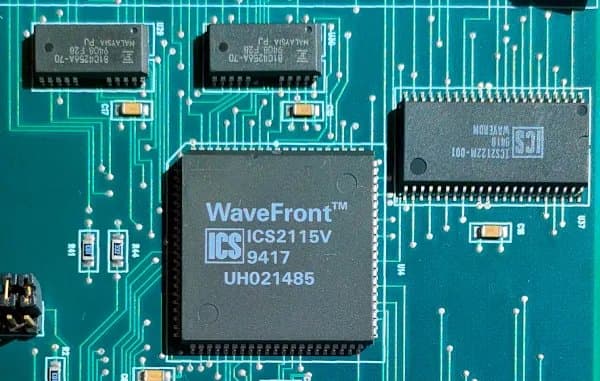
While Linux phases out some legacy hardware support, ISA sound card drivers are seeing renewed development with Turtle Beach WaveFront cards gaining suspend/resume functionality for modern kernels.
In an interesting twist of Linux development in 2026, while the kernel is beginning to phase out support for i486 CPUs, ISDN, and amateur "ham" radio due to diminishing user bases, ISA sound card drivers are actually seeing increased activity. The latest beneficiary of this retro-computing revival is the Turtle Beach WaveFront ISA sound card family, which is set to gain suspend and resume support in Linux 7.2.
The WaveFront hardware, including the Maui, Tropez, and Tropez Plus ISA sound cards, represents some of the higher-end audio solutions from the 1990s. These cards featured unique capabilities including onboard sample RAM and sophisticated synthesis engines that made them popular among musicians and audio enthusiasts of the era.
The recent patch series, queued up within the Linux sound subsystem's "for-next" Git branch, addresses a significant limitation for vintage hardware enthusiasts running modern systems. Without suspend/resume support, these cards would lose their state during system sleep cycles, requiring complete reinitialization upon wakeup.
Technical Implementation Details
The implementation by developer Cássio Gabriel demonstrates the complexity of supporting legacy hardware in modern power management frameworks. The patch description reveals several technical challenges:
- The driver needed to be wired into ALSA Power Management by storing the WSS codec pointer in card private data
- Shared suspend/resume callbacks were implemented to handle the hardware transitions
- A critical issue was that resume couldn't simply rerun snd_wavefront_start(), as the default fx_raw=1 setting would reset the synth and discard uploaded WaveFront RAM contents
The solution involves caching wavefront.os for power management, probing the ICS2115 after resume, and only running the full reset/bootstrap path when the board comes back in a "raw" state. When the firmware is still running, the driver refreshes software slot bookkeeping and restores MIDI routing without forcing a synth reset.
Performance Considerations
For users running these vintage cards in modern homelabs or retro computing setups, this development has significant implications:
- Power Management: Systems with these cards can now properly enter sleep states without losing audio functionality
- State Preservation: Uploaded samples and programs are preserved when the hardware state survives suspend
- MIDI Continuity: The WaveFront MIDI output timer is properly quiesced and restarted across suspend/resume cycles
The implementation does have a limitation: if the board resumes in a raw state, userspace still needs to reload custom synth contents. This is a reasonable tradeoff given the complexity of the hardware's internal state.
Broader Context for ISA Driver Support
This Turtle Beach WaveFront work follows similar improvements made to other ISA sound drivers in recent Linux releases:
- Last month, the AMD InterWave ISA sound card driver gained suspend/resume support for Linux 7.1
- The es1688, gusmax, and msnd drivers also received similar power management capabilities
These developments are particularly noteworthy as they represent a counterpoint to the general trend of removing legacy hardware support. For the small but dedicated community of retro computing enthusiasts and homelab builders working with vintage hardware, these improvements make it possible to integrate 1990s audio components into modern power-managed systems.
Build Recommendations
For those looking to incorporate these vintage sound cards into their Linux systems:
- Kernel Requirements: Linux 7.2 or later will be needed for full suspend/resume support
- Hardware Compatibility: The implementation specifically targets Turtle Beach WaveFront ISA cards (Maui, Tropez, Tropez Plus)
- Userspace Considerations: Applications that rely on persistent synth state should implement save/restore functionality for optimal resume behavior
- Power Management: Users should verify suspend/resume behavior on their specific hardware, as vintage ISA components can have varying power characteristics
The continued development of ISA sound card drivers demonstrates the Linux kernel's commitment to supporting niche use cases while maintaining focus on modern hardware. For retro computing enthusiasts and audio preservationists, these improvements mean that the distinctive character of 1990s digital audio hardware can now be preserved even in power-managed modern systems.
For those interested in following the development, the patches can be tracked in the Linux sound subsystem's for-next branch, with specific WaveFront-related changes likely appearing in the lead-up to Linux 7.2's release.
Comments
Please log in or register to join the discussion