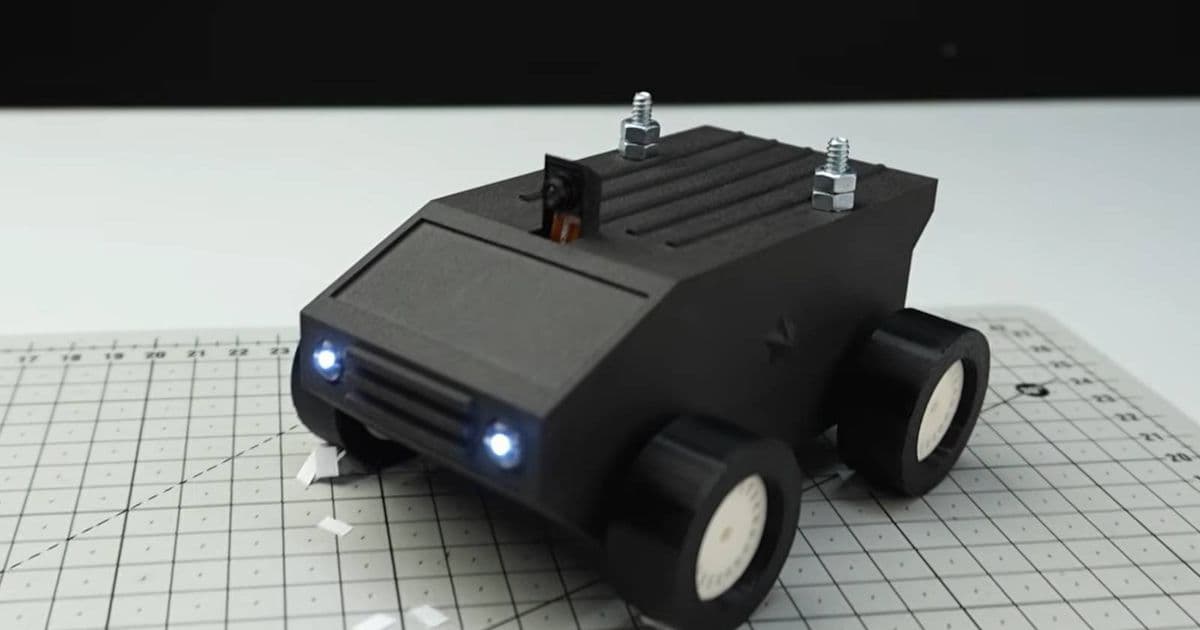
A compact 4WD reconnaissance robot built around the XIAO ESP32-S3 Sense streams live video to smartphones with tactical LEDs, individually controlled motors, and a military-style web dashboard.
The DIY electronics community continues to impress with affordable yet sophisticated projects, and this latest creation is no exception. A new project demonstrates how to build a compact spy car with live camera capabilities for approximately $30, making FPV (First Person View) exploration accessible to hobbyists and developers alike.
Project Overview
This spy car project, showcased by Simple Circuits on YouTube, represents an excellent example of what's possible with modern microcontrollers like the XIAO ESP32-S3 Sense. The device combines mobility with real-time video streaming, creating a versatile platform for various applications from recreational RC fun to more serious reconnaissance-style projects.
At the heart of this project is the XIAO ESP32-S3 Sense, a powerful development board from Seeed Studio. This particular variant includes both an ESP32-S3 microcontroller and a built-in camera sensor, making it ideal for projects requiring image capture and processing. The ESP32-S3 offers dual-core processing with Wi-Fi and Bluetooth capabilities, providing sufficient power for the car's functions while maintaining low power consumption.
Hardware Requirements
The project's affordability comes from using common, inexpensive components:
- XIAO ESP32-S3 Sense - The main controller with built-in camera
- 4 N20 motors - Small DC motors with gearboxes for 4WD movement
- Motor driver - Typically an L298N or similar H-bridge module
- Chassis - 3D printed or pre-made RC car chassis
- Power source - 18650 battery or similar LiPo battery with appropriate protection circuit
- LEDs - White LEDs for tactical illumination
- Miscellaneous - Wheels, screws, wires, and possibly a small servo for camera movement
The total cost for these components comes in around $30, assuming you already have basic tools like a soldering iron and 3D printer access. The 3D printed chassis design files are typically available with the project, making replication straightforward for those with access to a 3D printer.
Software and Programming
The project leverages the Arduino IDE for programming, utilizing the ESP32 Arduino core which provides excellent support for the XIAO ESP32-S3 Sense. Key software components include:
- Camera initialization and capture - Using the ESP32 camera library
- Motor control - PWM signals for speed and direction control
- Wi-Fi streaming - HTTP server for video transmission
- Web dashboard - HTML/CSS/JavaScript interface for control
The code structure typically follows a modular approach, separating concerns like motor control, camera handling, and network communication. This makes the code more maintainable and easier to extend with additional features.
Setup Process
Setting up the spy car involves several key steps:
- Hardware assembly - Mounting the ESP32 board, motors, and other components onto the chassis
- Wiring - Connecting motors to the motor driver, power distribution, and sensors
- Software installation - Setting up the Arduino IDE with the ESP32 board manager
- Code flashing - Uploading the project firmware to the ESP32
- Configuration - Setting up Wi-Fi credentials and adjusting motor calibration
The project documentation typically includes detailed pinout diagrams and wiring instructions to ensure proper connections. Calibration is particularly important for motor control to ensure the car moves straight and responds predictably to commands.
Live Video Streaming
One of the most impressive aspects of this project is the live video streaming capability. The ESP32-S3's camera captures video which is then compressed and streamed over Wi-Fi to a web interface accessible from any smartphone or computer with a browser.
The streaming implementation typically uses MJPEG (Motion JPEG) format, which provides a good balance between quality and bandwidth requirements. The web dashboard displays the live feed alongside controls for:
- Movement (forward, backward, left, right)
- Speed adjustment
- LED control
- Camera angle (if a servo is implemented)
- System monitoring (CPU temperature, battery level)
Military-Style Web Dashboard
The project's "military-style" web dashboard adds a thematic element to the experience while providing practical functionality. The interface typically features:
- Dark theme with tactical color schemes
- Real-time telemetry data
- Control panels with responsive buttons
- Status indicators for various systems
- Camera feed with overlay information
This dashboard is implemented using standard web technologies (HTML, CSS, JavaScript) and served directly from the ESP32's built-in web server. The responsive design ensures it works well on both desktop and mobile devices.
Potential Applications and Customizations
Beyond the obvious recreational use, this spy car platform offers numerous possibilities for extension:
- Autonomous navigation - Adding ultrasonic or LiDAR sensors for obstacle avoidance
- Environmental monitoring - Incorporating sensors for temperature, humidity, air quality
- Home security - Using as a mobile security camera with motion detection
- Educational tool - Teaching programming, electronics, and robotics concepts
- Computer vision experiments - Implementing object recognition or face tracking
The modular nature of the project makes it easy to add new sensors or capabilities as needed. The ESP32's ample processing power and memory leave room for more complex algorithms and features.
Resources and Community
For developers interested in building this project, several resources are typically available:
- Simple Circuits YouTube channel with detailed build videos
- Seeed Studio XIAO ESP32-S3 Sense documentation for hardware specifications
- ESP32 Arduino Core documentation for programming reference
- GitHub repositories with example code and 3D printer files
The project exemplifies how accessible modern microcontrollers have made sophisticated robotics projects. With a modest investment in components and some basic electronics knowledge, hobbyists can create functional mobile platforms with capabilities that would have required much more expensive hardware just a few years ago.
As the ESP32 ecosystem continues to evolve, we can expect to see even more impressive projects leveraging its capabilities. This spy car represents not just a fun weekend project, but a demonstration of the power and versatility of modern development boards in the hands of creative makers.
Comments
Please log in or register to join the discussion